
Plans to allocate forest land in the Karpas peninsula to be used by Turkey’s Istanbul Technical University were passed through the Turkish Cypriot legislature on Monday, though the north’s ruling coalition remained coy regarding what the university will now use the land for.
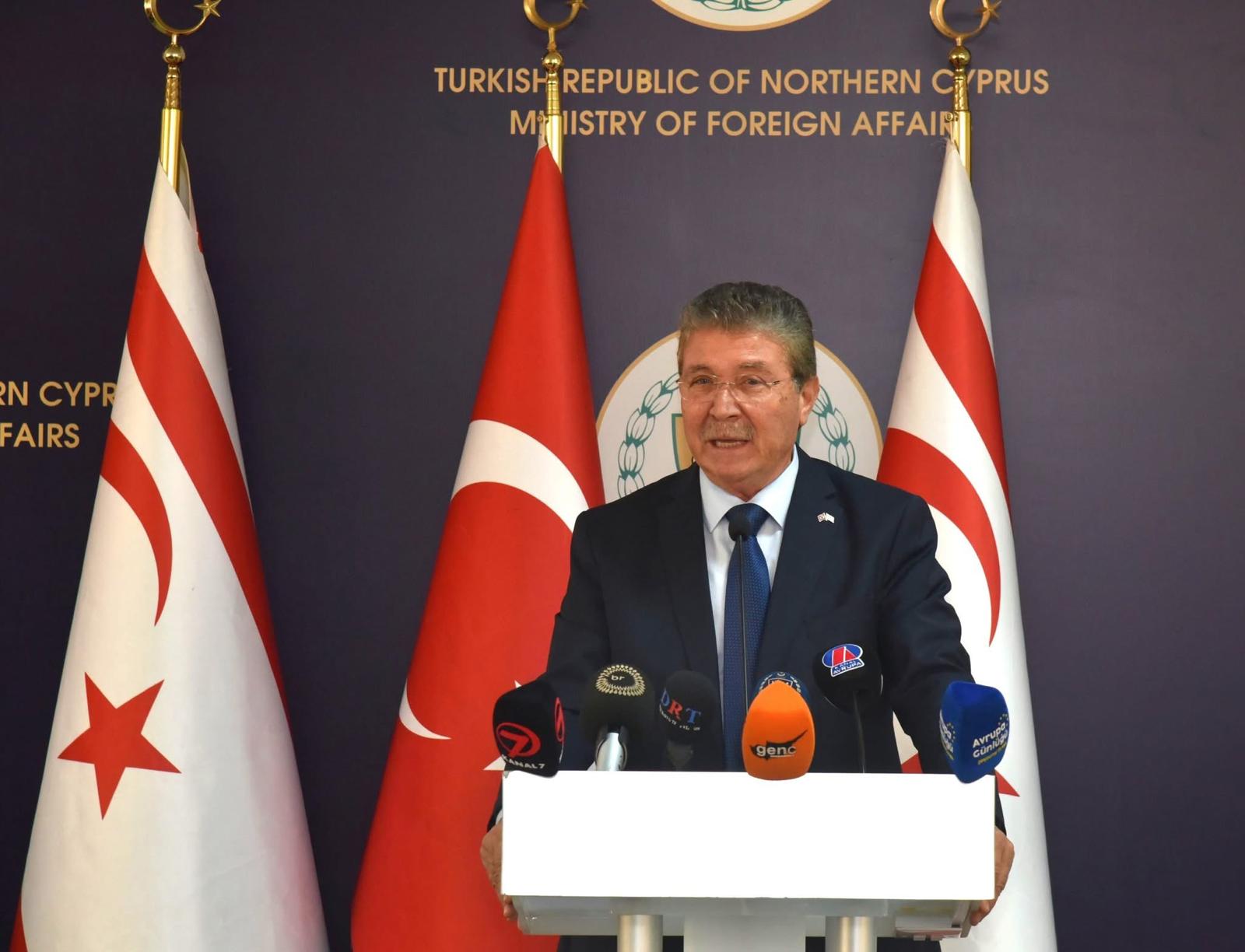
‘Prime minister’ Unal Ustel spoke after the bill had passed through the legislature, firstly promising that “no steps will be taken in the region other than those for education”, and that this is “stated in the law”.
However, he also stated that the matter of the land’s allocation is related to “national security and Turkey’s strategic use for military purposes”.
Asked by opposition party CTP leader Sila Usar Incirli what he meant by this, he answered that “I cannot discuss this because it is a strategic issue”.
“I wanted to explain why such a large area was requested, but I cannot give a detailed explanation,” he said.
The large area in question spans across 3,500 donums, or around 353 acres, or 4.68 square kilometres.
Earlier, he had waved away demands from the opposition for the bill to be withdrawn or reconsidered, pointing out that plans for the construction of a university campus in the Karpas peninsula had first been laid out in 2008, with earlier iterations of the plans having involved Kyrenia’s Girne American University.
Then, too, he made reference to possible underlying military purposes behind the land’s allocation, pointing to the ongoing conflict in the Middle East and prior statements made by Israeli Prime Minister Benjamin Netanyahu regarding the possibility that Iranian missiles could hit Europe.
“Considering all of this, I wanted the members of parliament to think once again about how important these places are,” he said.
Incirli, however, remained less than convinced by the overall plans.
“Our call is for the lands to be delimited before the Istanbul Technical University’s investment. We believe that the issue should be reconsidered with all the stakeholders so as to reduce the size of the land to an acceptable level,” she said.
She pointed out that it was her party’s ruling coalition, under ‘prime minister’ Ferdi Sabit Soyer, which had first invited the Istanbul Technical University to consider opening a campus in Cyprus, saying that Soyer’s decision had been “a strategic step for our party regarding the economic and social development of the Karpasia region”.
As such, she said, “of course, we very much desire the establishment of an Istanbul Technical University campus in the Karpasia region”, but that “the most important criticism here concerns the land delimitation”.
“No one has been able to provide an acceptable explanation on this matter,” she said.
Netanyahu had warned at the weekend that Iran has “the capacity to reach deep into Europe” and that “they are putting everyone in their sights”, with Ustel’s reference to those comments and “military purposes” regarding the land’s allocation suggesting that part of the allocated land may be used for defence purposes.
The Turkish defence ministry had announced at the weekend that it would deploy a second Patriot missile defence unit to the Incirlik airbase, which it operates jointly with the United States, and which has been the ostensible target of Iranian missile fire on three occasions since the conflict broke out at the beginning of the month.
Diplomatic sources in both Turkey and Cyprus had confirmed to the Cyprus Mail that the first missile intercepted in Turkish airspace, which was fired on March 4, had been aimed at the Incirlik airbase, for example.
Two days prior, Cyprus had also been the target of an Iranian-made drone. The drone, which was fired by Lebanese insurgent group Hezbollah, struck a hangar at the United Kingdom’s Akrotiri air force base.
Following that drone strike, Greece, France, Italy, Spain, the Netherlands, Turkey, and the United Kingdom have all deployed naval or aerial assets to Cyprus and its vicinity, with Turkey deploying four F-16 fighter jets and Hisar-A surface-to-air missiles to the north’s Ercan (Tymbou) airport.




Click here to change your cookie preferences