
A total of four members of the north’s ruling coalition have stated their opposition to their own bill which aims to curb disinformation, and is due to be voted upon in the Turkish Cypriot legislature in the coming weeks.
The coalition has an effective majority of nine in the legislature, but with four people already having declared their opposition to the bill, it may now struggle to pass the legislation.
Hasan Kucuk of the UBP, the coalition’s largest party, was the first to announce his intention to vote the bill down, accusing the coalition of “ambiguity” in the language it used when writing the bill.
“Different interpretations of a word by different people will lead to divisions in society. A regulation from which judges, prosecutors, and lawyers derive different meanings will pit the public against each other,” he said during an appearance on television channel Kanal T.
Next was Hasan Tacoy, also of the UBP, who had unsuccessfully challenged ‘prime minister’ Unal Ustel for the party’s leadership in 2024.
Like Kucuk before him, he appeared on Kanal T, and accused the coalition of including “political elements” in the bill.
“If it comes to a plenary session with those articles in it, I will vote against it,” he said.
“Such logic is unacceptable. I want to exercise my freedom of speech. We need to be able to speak our minds.”
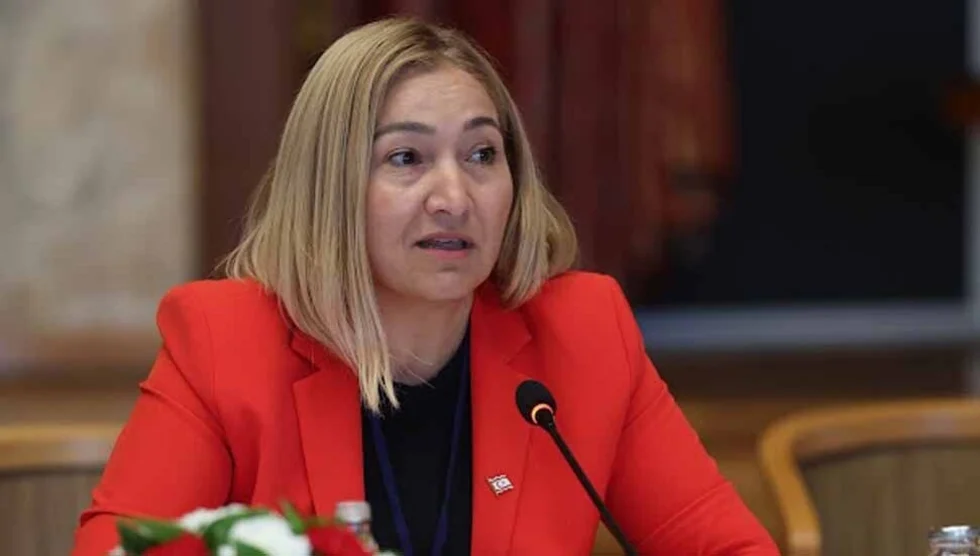
Later, Yasemin Ozturk, who belongs to the UBP and chairs the ‘parliamentary’ legal affairs committee, told Haber Kibris TV that “if there is anything with which I am not satisfied … I, as the committee chairwoman, will not vote yes”.
She also promised that the bill “will not be voted on in its current form”, though she appeared less opposed to the concept of the bill than Kucuk or Tacoy.
“Freedom of expression is not the freedom to insult as you please. There should be criticism, but not expressions which amount to defamation,” she said.
The fourth and final member of the coalition so far to express his opposition to the bill was Hasan Tosunoglu, who sits as an independent but votes with the coalition.
“We must … avoid regulations which would harm freedom of expression and the democratic sphere. The clarity, precision, and predictability of laws, and the absence of arbitrary implementations and applications, are fundamental requirements of the rule of law,” he wrote in a post on social media.
“In this small community, I cannot possibly approve of any text which could serve to create ‘thought criminals’.”
Opposition to the bill is rooted in what many perceive to be ambiguous language, with the definition of “defamatory material” including material which could “expose” the victim to “general hatred or disgust” or “provoke a social reaction”.
Additionally, journalists’ unions in particular have warned that in addition to the new definition of “defamatory material” the new charge of “creating fear among the public” and the criminalisation of publishing false information while “having reason to know it is false” could be weaponised by the authorities for political means.
The coalition currently has an effective majority of nine in the legislature, commanding the confidence of 29 of its 49 current members.
However, were four people to vote against the disinformation bill, that majority would drop to one, and with the UBP’s Izlem Gurcag Altugra having said she will not attend Monday plenary sessions until Ustel resigns, the arithmetic for the coalition becomes harder still.





Click here to change your cookie preferences