
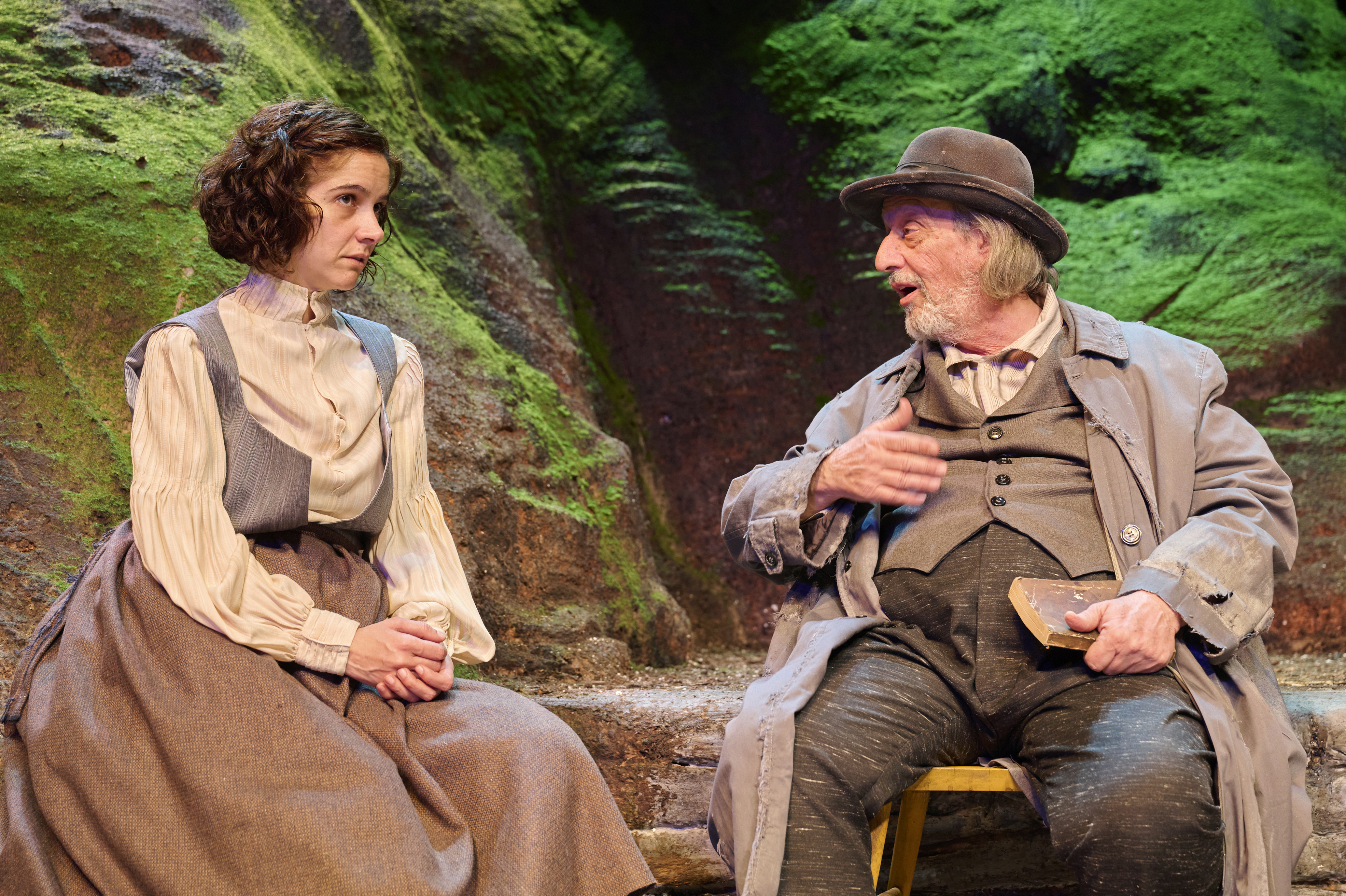
Staging of play about colonialism looks at occupation and subjugation, a powerful nation imposing its will (and language) on a weaker one
Sitting down at Kala Kathoumena in Nicosia, Graham Butler greets me in Greek, then thanks the waitress with a very acceptable “Efharisto” when she brings his coffee. Nigel Hastings does the same, only in English. Partly, it’s personal preference – but it’s also a case of two actors doing research.
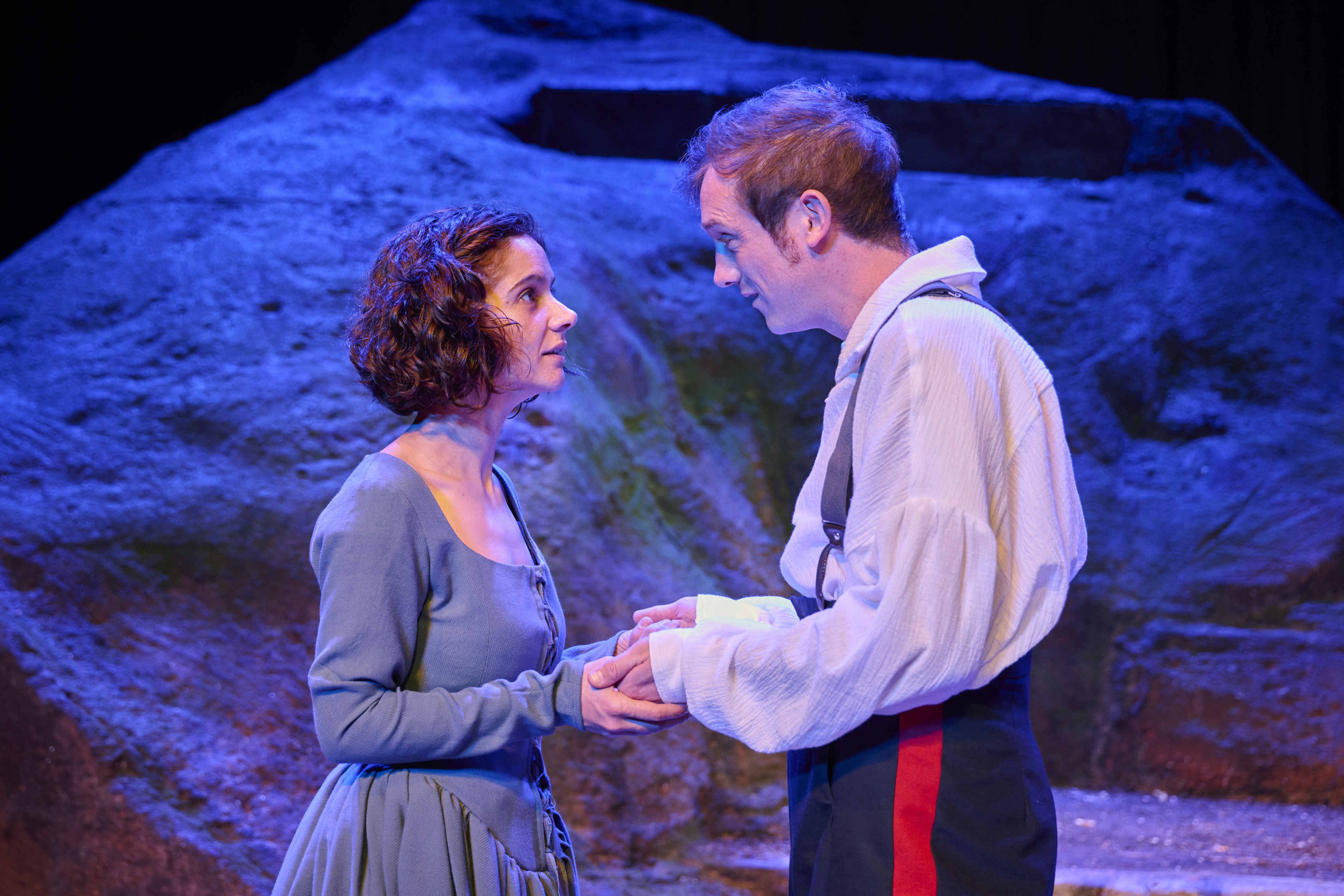
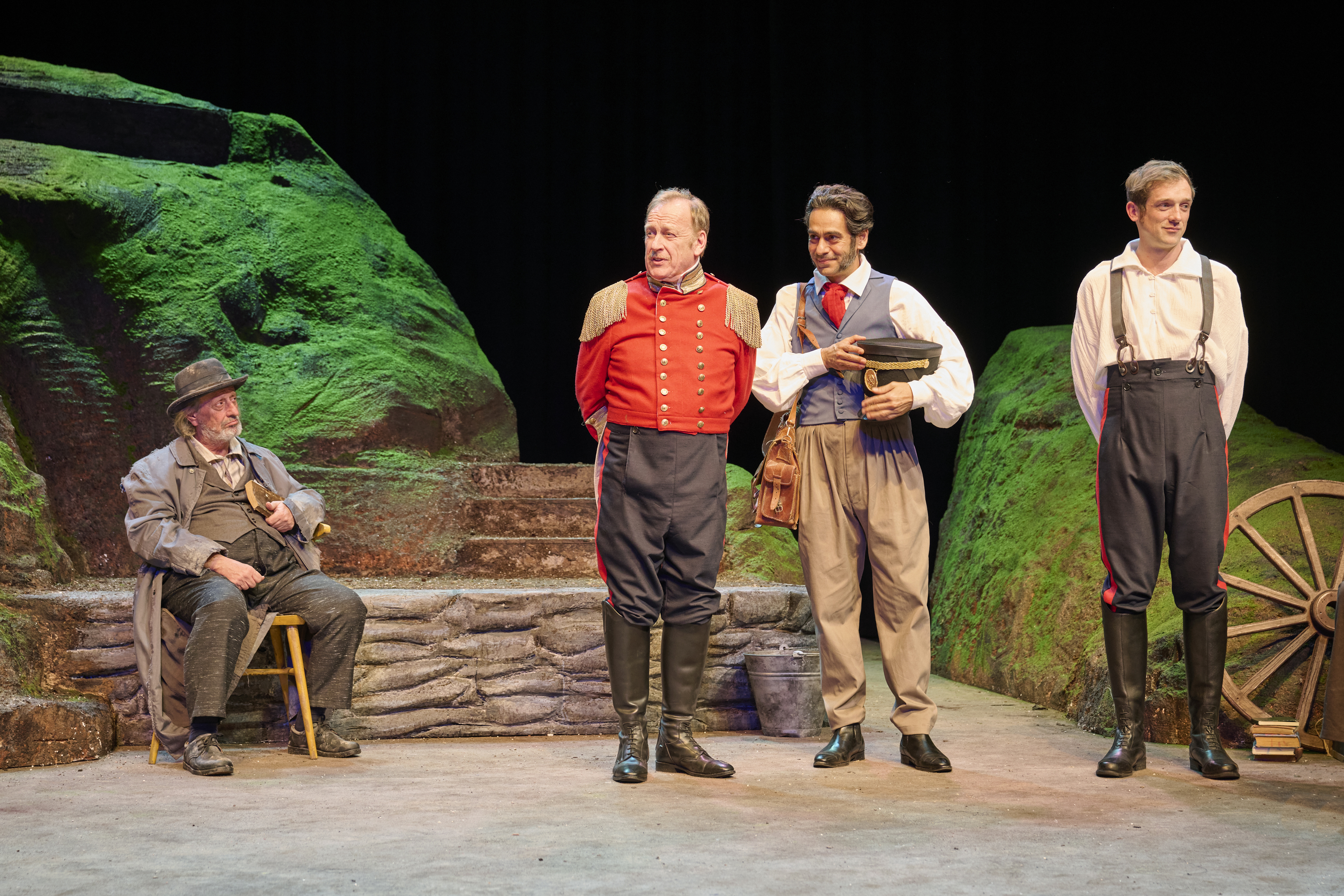
Butler plays Lieutenant Yolland, and Hastings plays Captain Lancey, in Translations by Brian Friel, which premiered on Saturday night at Thoc and runs till May 15, with performances in other cities. (Some are with English and/or Turkish surtitles; check the Thoc website for details.) The play, written in 1980, is set in rural Ireland in the 1830s – and the two actors play British army officers who’ve arrived to map the area, and anglicise local place-names.
Friel (probably best-known for Dancing at Lughnasa) always called Translations ‘a play about language’ – and it’s certainly that, though not only that. “Friel himself, in his diary,” says Patrick Myles, the production’s half-Cypriot director, “said something along the lines of: ‘The ultimate irony of this play is that I wrote it in English, whereas it should’ve been written in Irish’.”
Actually, even that isn’t quite accurate. It should really have been written in two languages, with British officers and Irish locals each speaking in their own tongue – which is exactly what happens (only with Greek Cypriot replacing Gaelic) in this new production.
Butler and Hastings, both highly experienced actors in the UK, are the only imports in the show (having previously worked with the London-based Myles). They deliver their lines in English – but the rest of the cast, playing Irish villagers, are Cypriots conversing in the Cypriot dialect, which the two don’t speak. Or barely speak, hence the research at Kala Kathoumena.
“He’s trying to learn it,” says Hastings, indicating his colleague, “which is what the character does… And I deliberately don’t, which is what [my] character does.” Lancey in the play is more hard-headed whereas Yolland goes native, even falling in love with local girl Maire.
The production in Cyprus is by no means the first outside Britain and Ireland. Translations isn’t just ‘about language’, it’s about imperialism, occupation and subjugation, a powerful nation imposing its will (and language) on a weaker one. In a word, it’s about colonialism – and the play has resonated with the post-colonial experience the world over.
A recent article in The Guardian (29 Oct 2025) focused on a production in the former French colony of Senegal, adding that “Translations has been re-imagined across the world, from apartheid South Africa to Maori and Ukrainian productions”.
That said, the Senegalese show was in French, the language of the coloniser. Myles’ innovation (he co-translated the play with associate director Andreas Tselepos, who also plays Owen) is to allow each camp its own language – but what really makes Thoc’s production singular is the introduction of Butler and Hastings, two actors as creatively lost in their surroundings as the characters they play.
“It’s happened before,” admits Myles, speaking of dividing the language in two: “I think it’s been done in Polish and Czech, I think it’s been done in Spanish and Catalan…”
In both those cases, though, the actors would’ve had some familiarity with the other side’s language. Indeed, even if Myles had cast British actors living in Cyprus there would’ve been some familiarity.
The remarkable feature here (what Hastings calls “the USP [unique selling point] of our production”) isn’t just the use of English and the local language but also the two actors’ visceral sense of alienation, tinged nonetheless with a certain unconscious superiority since English is the original language of the play (and the world’s lingua franca) – a near-exact copy of the mix of trepidation and unconscious confidence British soldiers must’ve felt in the old imperial days.
‘Visceral’ is a word that gets repeated at Kala Kathoumena, especially when Butler speaks of the actors’ impressions of Cyprus. The café is very close to the Green Line, and the sheer physical presence of the island’s division has made a big – as in visceral – impact. “There’s a chap just round there who stands on guard with a gun,” he marvels, pointing. “It’s there, it’s present…
“Arriving here in what’s still a divided city, where the street names are Greek, English, Turkish – I mean, it couldn’t be a more fitting, perfect place.
“I guess the play explores this sort of uneasy peace between two sides. And it feels to me, as somebody who’s been here for eight weeks, like that’s the thing that exists in this city, this country.”
There’s more, of course. Places being renamed does remind us of the old colonial days (‘Nicosia’ itself is an anglicised name) – but also the ongoing occupation, and the wholesale renaming of the north.
“I think it’s not one or the other, but both,” muses Myles when asked which of the two parallels is closer, differentiating between what he calls ‘soft’ and ‘hard’ power. The play does include obvious echoes of Cyprus’ colonial past – but also harsher elements, like overt violence, which are “probably more prevalent in the Turkish invasion and occupation”.
“And of course [there’s] the continued British military presence on the island, which has become a sharp focus over the last month or so…” he adds, looking almost sheepish at how the world has conspired to make his show more relevant.
Occupation and imperialism, which had dwindled to become mere abstractions – at least in the West – have returned with a vengeance in the past few years, from Gaza and Ukraine to even the recent furore about our own British bases, and whether such colonial remnants can still be accepted. 46 years on, Friel’s play has never seemed more trenchant.
“I think both of us feel,” agrees Hastings, “that there’s a sense of importance to this particular production, at this particular time.”
Translations
Brian Friel’s 1980s play presented by the Cyprus Theatre Organisation. March 28 – mid-May. Main Stage of the Cyprus Theatre Organisation, Nicosia. Friday-Saturday: 8pm. Sunday: 6pm. In Greek. With English-Turkish surtitles on April 24 and May 15, and English only on April 4. www.thoc.org.cy/el/events/translations
Click here to change your cookie preferences