
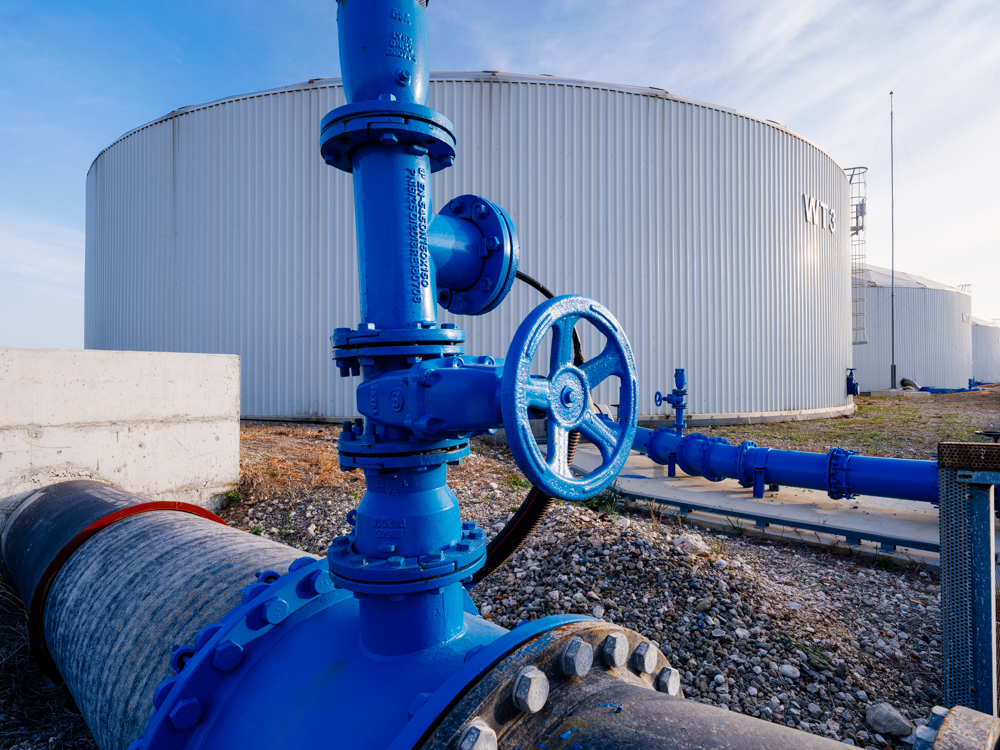
€230 million worth of projects are underway on the island to improve sustainable water management and increase the island’s water resilience, the finance ministry announced on Tuesday.
The projects focus on investments in infrastructure, technology and the sustainable management of water resources and wastewater, in an effort to safeguard Cyprus’ water future against drought.
Co-financed by the EU under the Cohesion Policy Programme Thaleia 2021-2027, along with state funds and contributions from district self-government organisations, the projects form part of a broad, strategic plan to address increasing pressure on natural resources.
“Tackling water scarcity and managing water and wastewater are issues of the highest national importance, with direct impacts on both development and quality of life,” the ministry said.
The programme spans the full spectrum of modern water management, including the construction of new reservoirs and pipelines, replacement of ageing networks, and the use of smart technologies to detect and reduce losses. Emphasis is also placed on wastewater infrastructure and the reuse of treated water.
At the core of the plan are seven major projects.
Among them is a €31m scheme to transfer potable water from the Dhekelia desalination plant to the Kokkinokremmos hill, aimed at improving supply reliability in the Famagusta district, including Paralimni-Deryneia and Ayia Napa, as well as Xylofagou and Ormidia in Larnaca. Expected to be completed in 2028, it will provide an alternative water source and storage capacity for up to 48 hours during peak tourist periods.
A €46m project in Nicosia will transfer water from the Vasilikos desalination plant to urban and suburban areas, including Kotsiatis, Margi and Analiontas. It includes four storage tanks, three pumping stations and 65km of pipelines, and is expected to be completed by the end of 2028, creating a third independent water source for the district.
Another key project is a €25m recycled water dam in Tersefanou, with a capacity of four million cubic metres. It will store surplus treated water from the Larnaca wastewater treatment plant during winter for use in drier periods. Completion is expected in early 2027.
The third phase of the Larnaca sewerage system, budgeted at €84m, involves the construction of around 160km of sewage networks and pumping stations in Dromolaxia-Meneou, Kiti and Pervolia. The project, due for completion in 2027, is expected to reduce pollution risks to groundwater and coastal ecosystems.
In addition, smart water management systems are being introduced in Paphos and Nicosia at a cost of €18m, enabling real-time monitoring, leak detection and more efficient billing through the use of digital technologies.
Further projects include the replacement of ageing pipelines in Limassol, costing €7.5m, and a series of €11m interventions across all five district organisations aimed at reducing water losses through network upgrades and improved maintenance.
Authorities said the combined measures are expected to significantly improve efficiency, reduce waste and enhance Cyprus’ long-term water security.



Click here to change your cookie preferences