
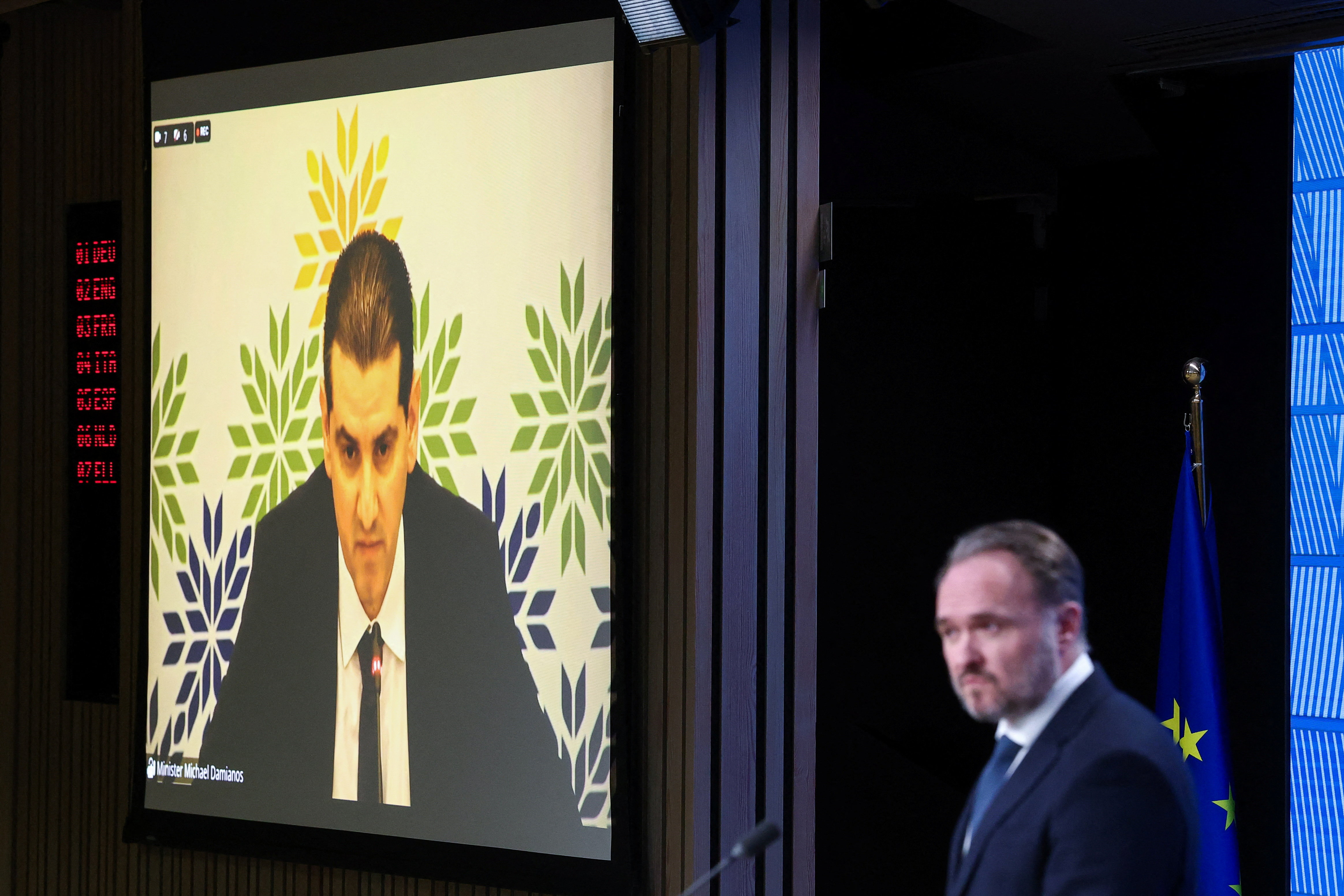
The European Union is “exposed to external price volatility” in terms of its acquisition of energy, Cyprus Energy Minister Michael Damianos said on Tuesday after the bloc’s 27 energy ministers and Energy Commissioner Dan Jorgensen convened to discuss the state of play following the closure of the Strait of Hormuz by Iran.
He said that the ministers had “confirmed that for now, the union’s security of supply remains relatively safeguarded thanks to the EU’s diversification of [liquefied natural gas] and oil sources in recent years, and our already limited dependence on imports from the Gulf area”.
“Nevertheless, ensuring supply security for the 2026 [and] 2027 winter remains a key priority. Ministers also underlined that rising global energy prices are affecting all member states, particularly households and industry,” he said.
He added that the EU’s exposure to “external price volatility” is a consequence of the fact that the bloc is a net energy importer in “a highly interconnected global market”.
As such, he said that his EU counterparts had offered “broad support” for a “coordinated European response” to rising energy prices which have come about as a result of the conflict in the Middle East.
“We agreed that the EU and national measures must be carefully designed, coordinated, targeted and tailored to the current situation while remaining fully consistent with our long-term objectives,” he said.
These objectives, he added, are “decarbonisation, diversification of suppliers, and reduced reliance on fossil fuels”.
He added that he and his counterparts had “recognised the need for stronger coordination at the EU level, especially regarding gas storage targets, to prevent further price pressures”.
In this regard, he also said that he and his counterparts had noted “the need for caution in the use of strategic oil reserves to avoid compromising future supply security”, as well as the need for “closer coordination on gas storage refilling” among the EU’s member states.
He said that this coordination is necessary to “prevent upward pressure on prices”, and that to do this, member states must “ensure access to timely and accurate data”.
This, he said, must be “supported” by the European Commission, which he said will “guide decision making, avoiding measures which may distort the internal energy market”.
On this front, he said that “we agreed that high-quality data and clear guidance from the commission will be essential for member states to respond effectively”.
He then stressed that those planned measures notwithstanding, “reducing energy demand remains central to our response”.
“Improving energy efficiency and promoting energy savings are essential tools to mitigate price spikes, strengthen resilience, and enhance the union’s overall energy security,” he said.
Looking outwards, he said that the EU will “continue working with international partners, including the international energy agency, to ensure coordinated efforts which limit price volatility and reinforce global energy security”.
He then added that any new agreements forged for the supply of energy “must remain fully compatible with our internal market and climate objectives”.
“Our global partnerships should enhance the EU’s strategic position while safeguarding long-term sustainability, resilience, and competitiveness,” he said to this end.
He said that while it continues to hold the Council of the EU’s rotating presidency, Cyprus “remains committed to accelerating Europe’s clean energy transition”, and that this transition “not only shields us from future price shocks, but positions Europe as a leader in global sustainability”.
Earlier, he had said that the ongoing conflict “continues to create uncertainty”, with the price of a barrel of crude oil having reached almost $105 by Tuesday evening, having sat at around $65 before the conflict.
While Damianos asserted that compared to other energy markets, the EU’s dependence on the Gulf is “limited”, the closure of the Strait of Hormuz has nonetheless had an impact on oil prices on the continent and across the globe, given the strait’s salience in global oil trade.
The Strait of Hormuz is a chokepoint between the most northerly point of Oman and Iran’s southern coast, which provides the only seaborne access between the Persian Gulf and the open ocean.
Typically, around 20 per cent of global oil passes through the strait, including European imports from Saudi Arabia, Qatar and the United Arab Emirates.



Click here to change your cookie preferences