
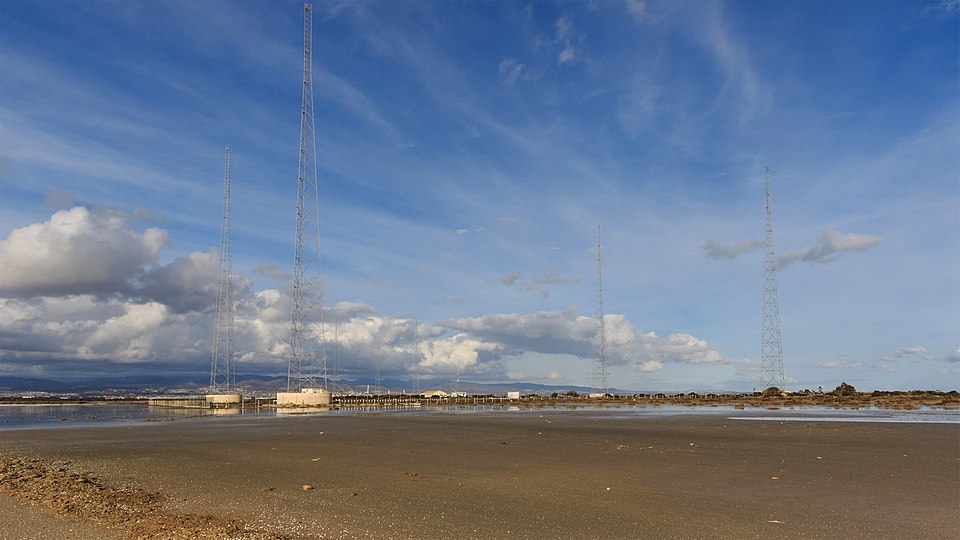
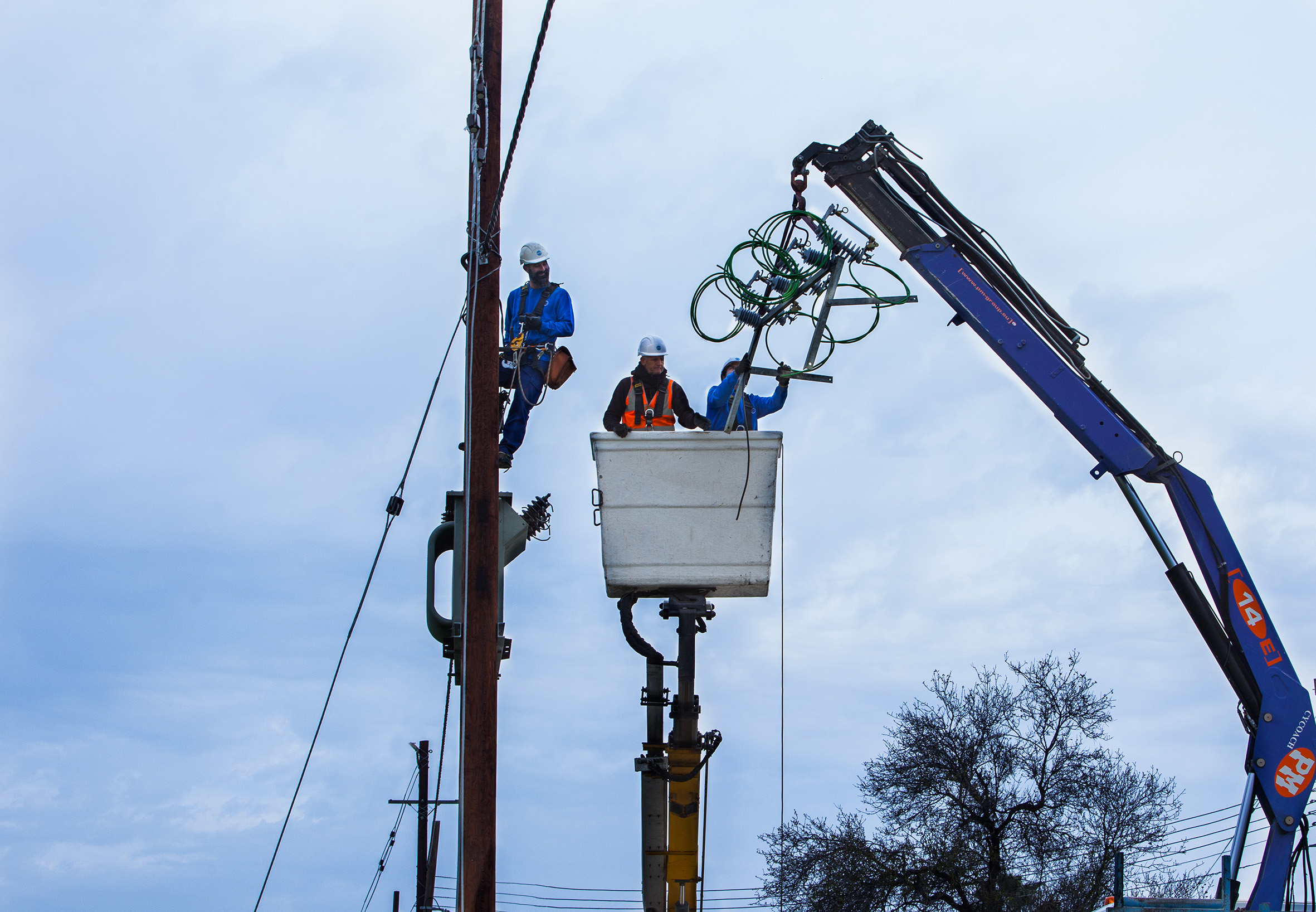
Kourion mayor Pantelis Georgiou on Tuesday stressed what he believes to be an elevated risk of cancer linked to the placement of communications antennae in the British Akrotiri base area, after the United Kingdom had earlier this week announced its intention to install 32 new antennae at the base.
“What is being said strongly in Akrotiri is that now, every household has a person or has someone who is in their very close circle who has cancer. This has increased drastically in recent years,” he told television channel Alpha, pointing out that a “big deal” was made when the large ‘Pluto’ antenna was installed at the base in 2001.
He said that at the time, the UK had made an agreement with the Republic of Cyprus “wherein an epidemiological study should be conducted every ten years on the effects of electromagnetic radiation on cancers”.
“This happened in 2009 and has not happened again since then,” he said.
He also said that in 2018, the UK had informed the Akrotiri village council that a total of 18 temporary antennae would be installed in the base area and then removed in 2025, but with 2025 having since come and gone, the antennae remain in place.
“When the issue came to the surface with this request to install the new antennae, and when we highlighted the fact that the previously installed ones had not been removed, what we were told was that for them to be removed, the new ones have to be installed,” he said.
He also pointed out that the planned site for the installation of the new antennae is on land which belongs to Akrotiri residents, and that for this reason, a committee comprising himself, Akrotiri deputy mayor George Konstantinou, and representatives of central government departments had been formed to examine the expropriation plans.
This committee, he said, had initially been informed that the 18 temporary antennae would be replaced by 20 new ones, but that, “suddenly, on Friday, that became 32”.
“They told us that the removal would take place in a second phase, which would start from 2028 [and] be completed in 2034. Then, there is a third phase, about which they have not informed us, which concerns another part of the system,” he said.
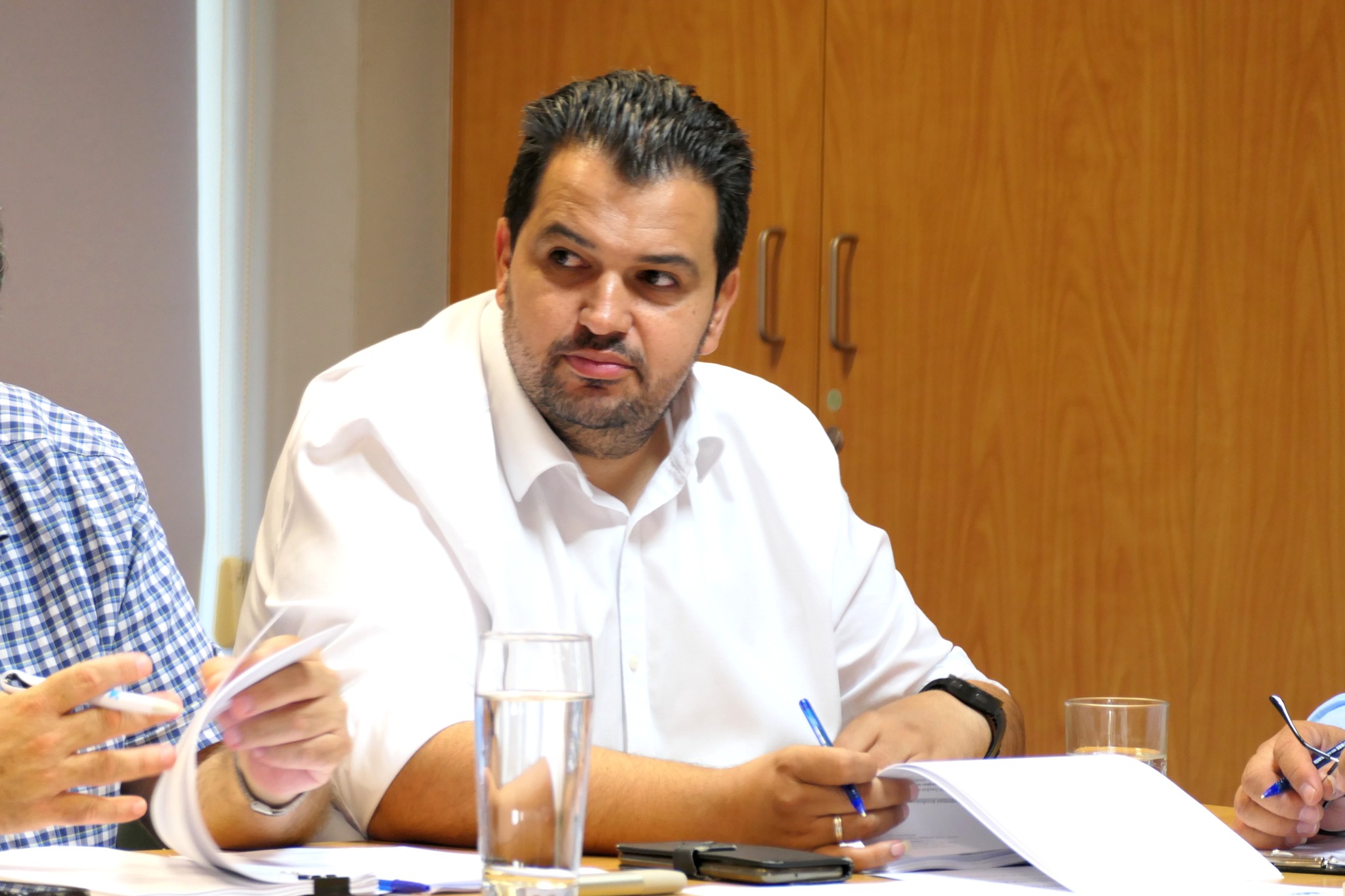
As such, he said his municipality is now recruiting a constitutional lawyer to examine whether the UK’s plans for thew new antennae.
He said the lawyer will examine “under what regime” the land planned to be used for the new antennae can be expropriated, before stressing that this process is vital for the future of Akrotiri.
“Because you understand that if tomorrow morning, for example, the British army can make a requisition to take an area, any area, it means that they can automatically take my entire village,” he said.
A document published by the Council of Europe in 2003 stated that independent tests carried out following the installation of the ‘Pluto’ antenna in 2001 by France Telecom, the Republic of Cyprus’ communications ministry, and the Cyprus telecommunications authority (Cyta) found that radiation emissions in the area were “at least 76 times smaller than the limits set by the European Union”.
It also said that “similar or higher levels of emissions can be found around commercial broadcasting antennae” in other parts of Cyprus, and that “he strongest emissions recorded in Akrotiri village during the 2001 tests came not from a British antenna but from the broadcasts of a Cypriot radio station”.
However, large signs have been placed on the only road leading in and out of Akrotiri as it passes through the field in which the antennae have been placed, warning motorists not to stop.
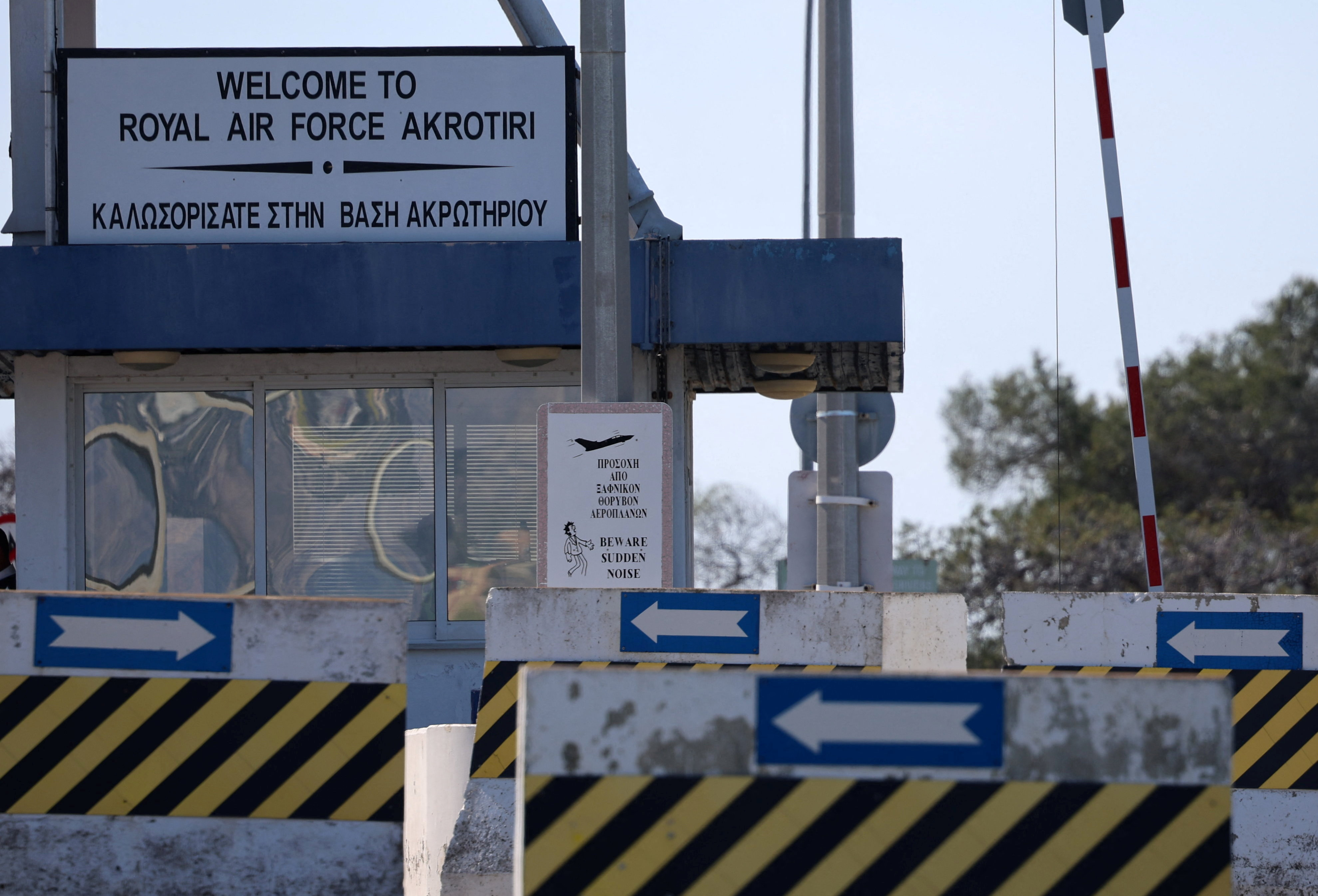
Anxiety over the placement of the antennae comes with the Cypriot government having already stated its intention to renegotiate the status of the British bases after the Akrotiri airbase was hit by an Iranian-made drone on March 2.
Government spokesman Konstantinos Letymbiotis had said that the government is undertaking preparations “at all levels” for such negotiations to take place, while his deputy Yiannis Antoniou had said that he government has sought and received legal advice regarding the treaty which established the bases.
The Treaty of Establishment of the Republic of Cyprus entered force in 1960, having been signed by the leaders of the Greek Cypriot and Turkish Cypriot communities of the day Archbishop Makarios III and Dr Fazil Kucuk, who would go on to become the republic’s first president and vice president.
Its first article states that “the territory of the Republic of Cyprus shall comprise the island of Cyprus, together with the islands lying off its coast, with the exception of the two areas … which shall remain under the sovereignty of the United Kingdom” – the base areas in Akrotiri and Dhekelia.
In a later article, the same treaty states that “the United Kingdom authorities shall have the right for United Kingdom military aircraft to fly in the airspace over the territory of the Republic of Cyprus without restriction other than to have due regard for the safety of other aircraft and the safety of life and property in the Republic of Cyprus”.
Previously, President Nikos Christodoulides had promised upon his arrival a European Council summit that “we are going to have an open and frank discussion with the British government” over the future of the bases.
That summit then ended with the European Council declaring that it stands ready to assist” the Cypriot government in discussions regardingthe bases’ future and stating that it “acknowledges the intention of Cyprus to initiate a discussion with the UK” on the matter.
Christodoulides had earlier described the bases as a “colonial remnant”, though the British government appears thus far to be in no mood to discuss any change to their future.
The country’s parliamentary undersecretary of state for the armed forces Al Carns had earlier told the House of Commons that the bases’ future is “not in question”, and added that when the country’s Defence Secretary John Healey had visited the island, “the Cypriot national guard reaffirmed that our relationship is closer now than ever before”.


Click here to change your cookie preferences