
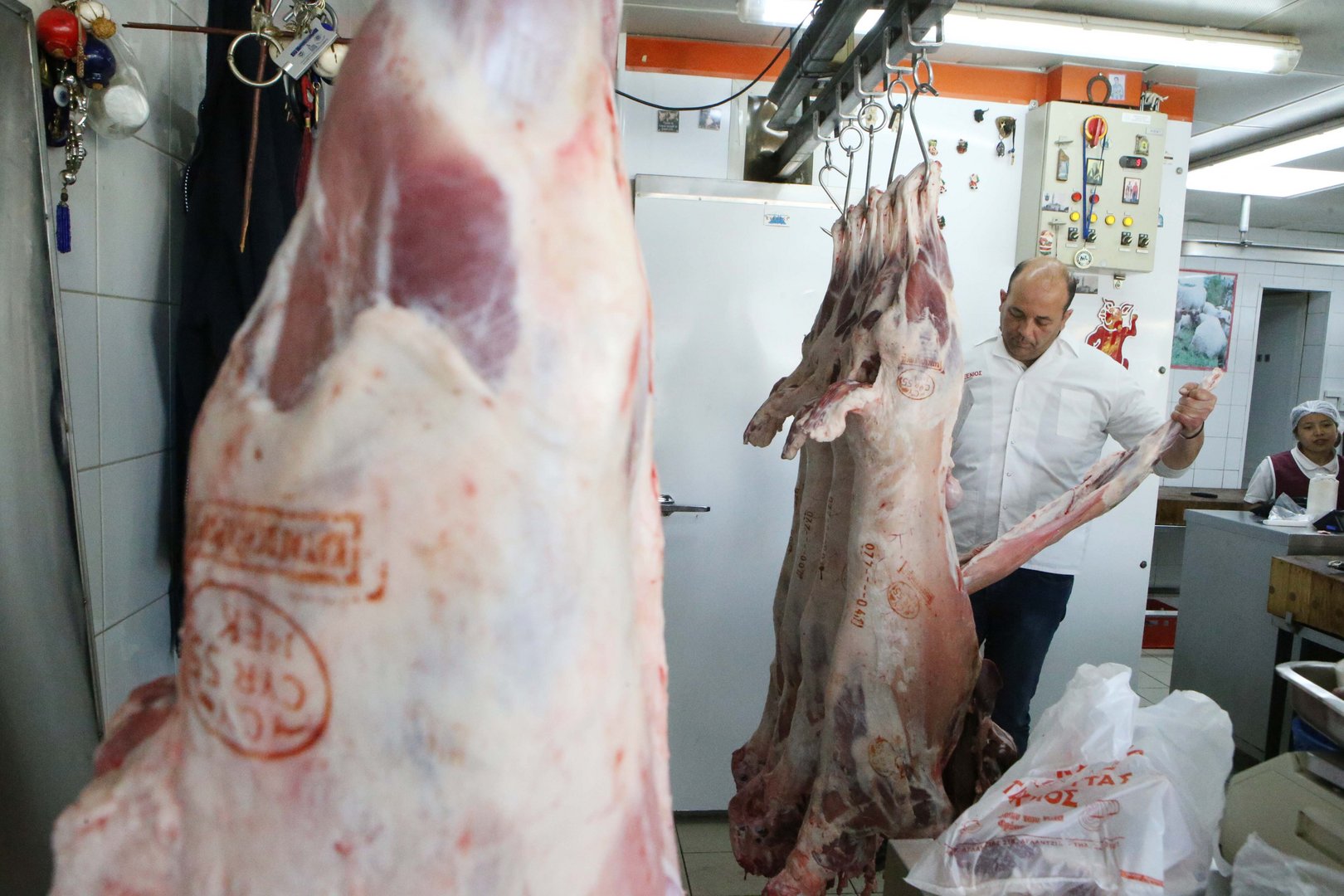
Meat prices during Greek Orthodox Holy Week have remained at roughly the same levels as last year, despite earlier concerns about potential increases, according to the president of the Butchers Association, Costas Livadiotis.
Livadiotis said that although prices initially appeared likely to rise due to foot-and-mouth disease and the culling of animals, this trend was halted thanks to progress in controlling the outbreak.
He explained that improved conditions have encouraged livestock farmers to sell their animals, leading to an increase in supply on the domestic market.
“Despite the culling of animals due to foot-and-mouth disease, there is still sufficient meat available locally,” he noted.
However, according to Livadiotis, challenges remain in the transportation of animals for slaughter. Restrictions linked to the disease prevent livestock traders from moving between farms on the same day or transferring animals from monitored to non-monitored areas.
As a result, traders are forced to delay collection for several days in order to gather sufficient quantities, since animals are not concentrated in a single location.
Livadiotis added that with just three days left before Easter, slaughtering activity has intensified, with approximately 6,000 to 7,000 animals being processed daily in recent days.



Click here to change your cookie preferences