
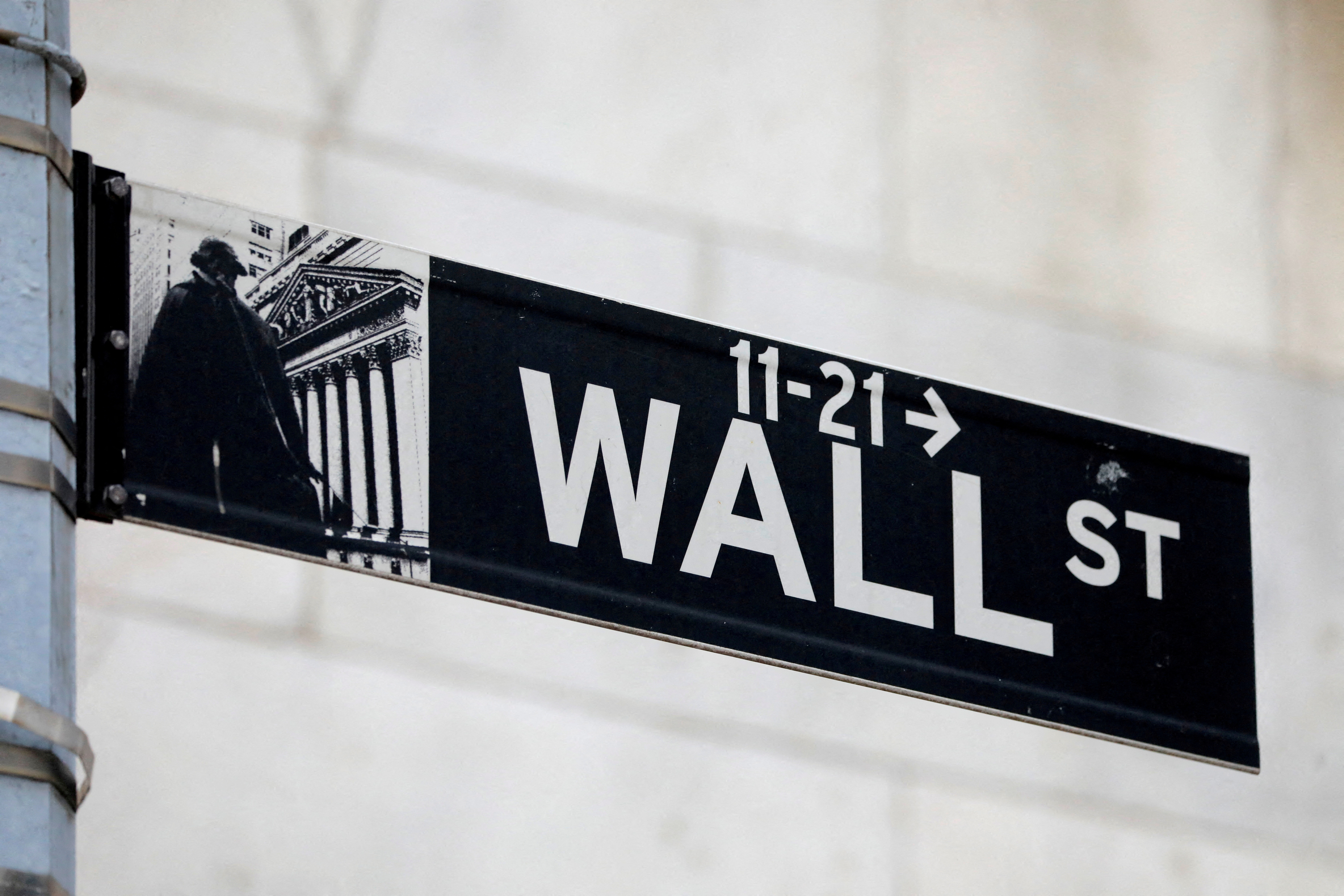
Wall Street’s main indexes fell on Tuesday as investors scrutinized developments for clues on what might come next in the Middle East conflict, before President Donald Trump’s deadline for Iran to reopen the Strait of Hormuz.
Trump threatened that “a whole civilization will die tonight” as Iran showed no sign of accepting his ultimatum to open the Strait of Hormuz by Tuesday evening, Washington time.
The Wall Street Journal reported that Iran had cut off direct diplomacy with the U.S., but state-run newspaper Tehran Times said on X that channels of talks were not closed.
A U.S. official told Reuters that the country had struck military targets on Iran’s Kharg Island, a hub of Iran’s oil exports, in signs that the conflict would not end swiftly.
“Considering the rhetoric that’s coming from President Trump, the markets are nervous but they’re not collapsing … we’re not seeing any signs of panic,” said Peter Cardillo, chief market economist at Spartan Capital Securities.
“It’s a question … markets are waiting to see what the final result of Trump’s threats will be.”
Tech stocks weighed heavily, with the S&P 500 information technology index .SPLRCT down 1.4%. Apple AAPL.O lost 4.2% after a report said its foldable phone has been encountering setbacks in its engineering test phase, which could lead to production delays. The stock was the biggest drag on all three indexes.
A 3.7% gain in Broadcom AVGO.O after the chipmaker signed a long-term deal with Alphabet’s Google GOOGL.O to develop its AI chips and other components helped limit declines.
On the flip side, energy stocks on the S&P 500 .SPNY added 1%.
At 11:48 a.m. ET, the Dow Jones Industrial Average .DJI fell 428.65 points, or 0.92%, to 46,241.23, the S&P 500 .SPX lost 60.97 points, or 0.92%, to 6,550.76 and the Nasdaq Composite .IXIC lost 274.02 points, or 1.25%, to 21,722.32.
Meanwhile, UnitedHealth UNH.N jumped 8.8% and peers Humana HUM.N and CVS Health CVS.N added 6.5% and 6.7%, respectively, after the U.S. said on Monday it would raise payments to private insurers offering Medicare Advantage plans to older adults, an increase from the near-flat change proposed earlier.
Wall Street’s main indexes closed higher on Monday, marking the fourth consecutive session of gains for the S&P 500 and the Nasdaq, as investors digested the Middle East developments and positioned for the upcoming quarterly earnings season.
This week, markets will scrutinize some inflation readings to see if the elevated crude prices stemming from the conflict have impacted price pressures in the economy.
The Iran war has complicated the interest rate outlook for the Federal Reserve as it grapples with fears of revived inflation against the backdrop of a resilient labor market.
Comments from Fed policymakers Austan Goolsbee, Philip Jefferson and Mary Daly will be parsed throughout the day for clues on the future policy path.
Among other movers, Intel INTC.O shares added 2.2% after the chipmaker said it would join Elon Musk’s Terafab AI chip complex project along with SpaceX, Tesla TSLA.O and xAI.
Declining issues outnumbered advancers by a 2.49-to-1 ratio on the NYSE and by a 2.72-to-1 ratio on the Nasdaq.
The S&P 500 posted two new 52-week highs and five new lows, while the Nasdaq Composite recorded 33 new highs and 97 new lows.




Click here to change your cookie preferences