
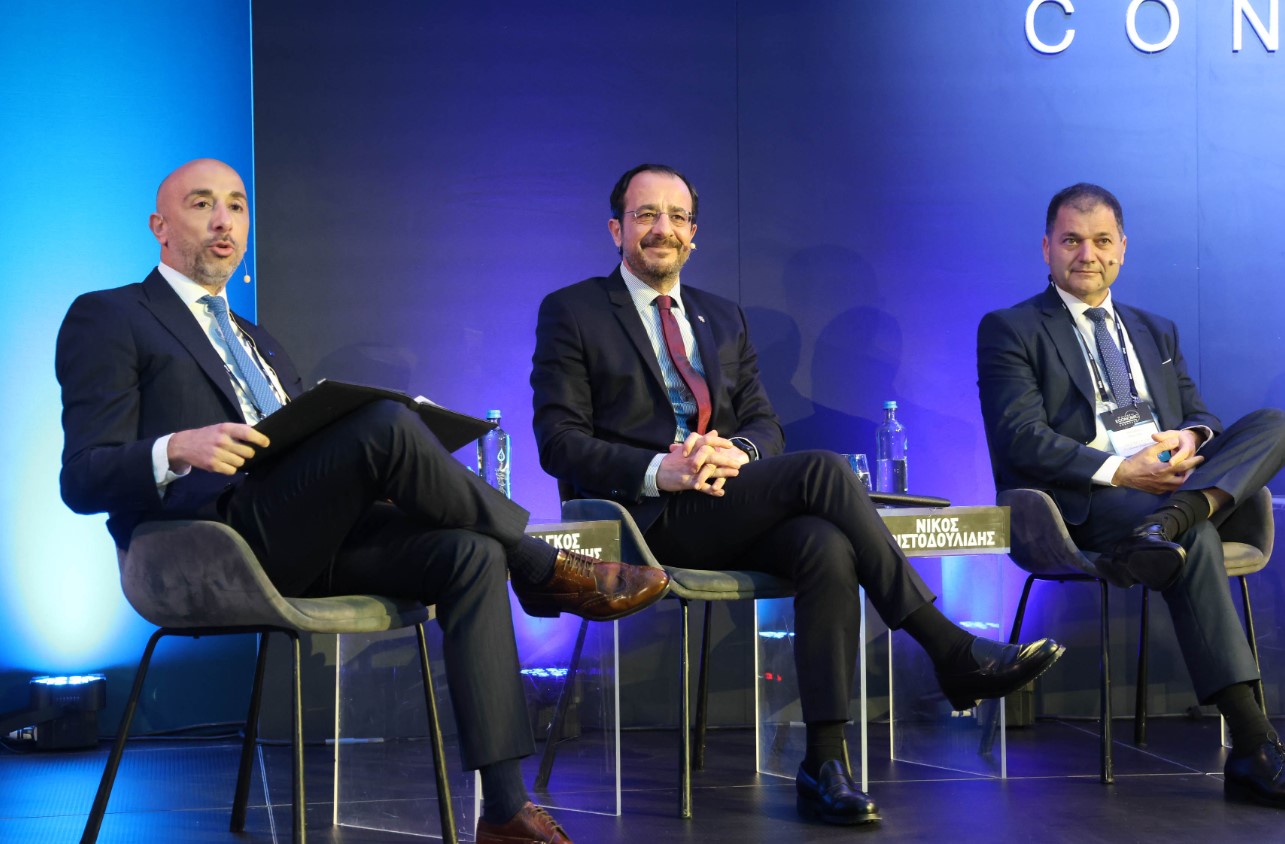
President targets United States, India and Kazakhstan for investment drive
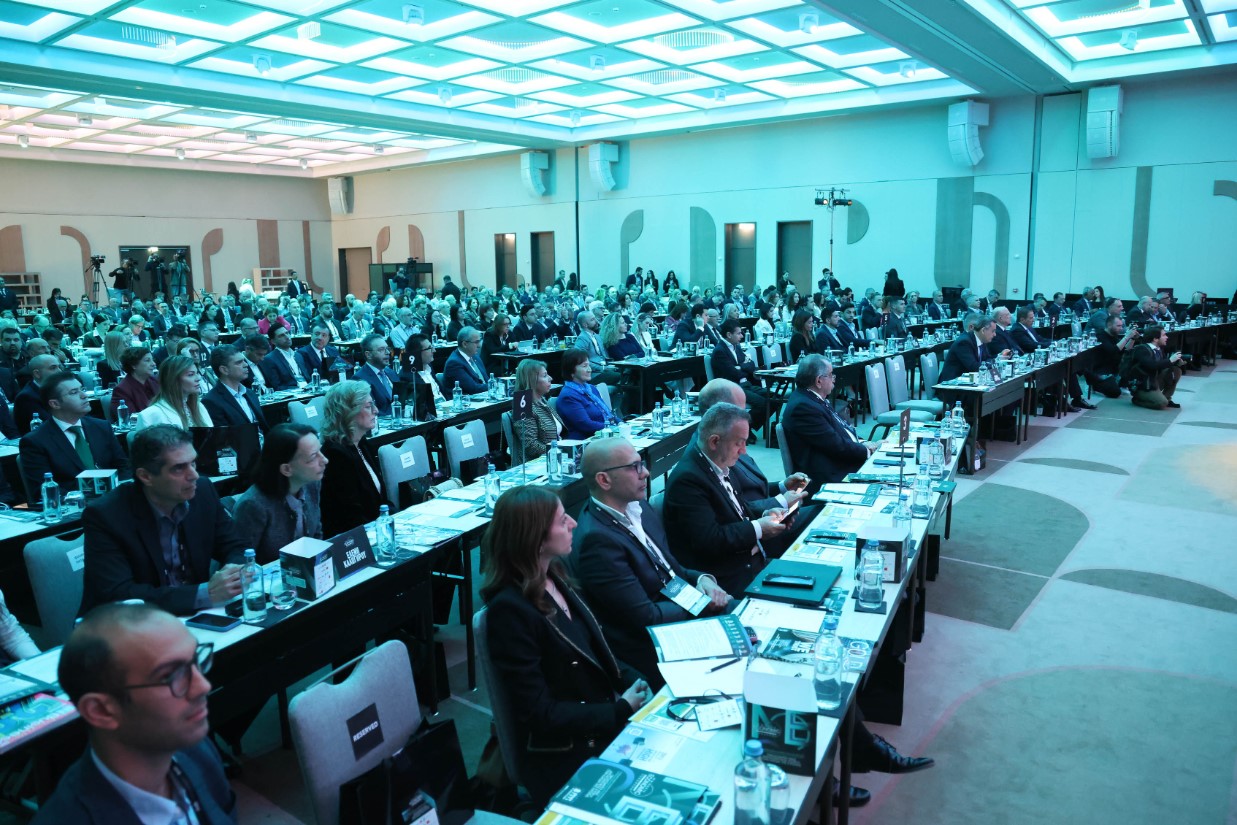
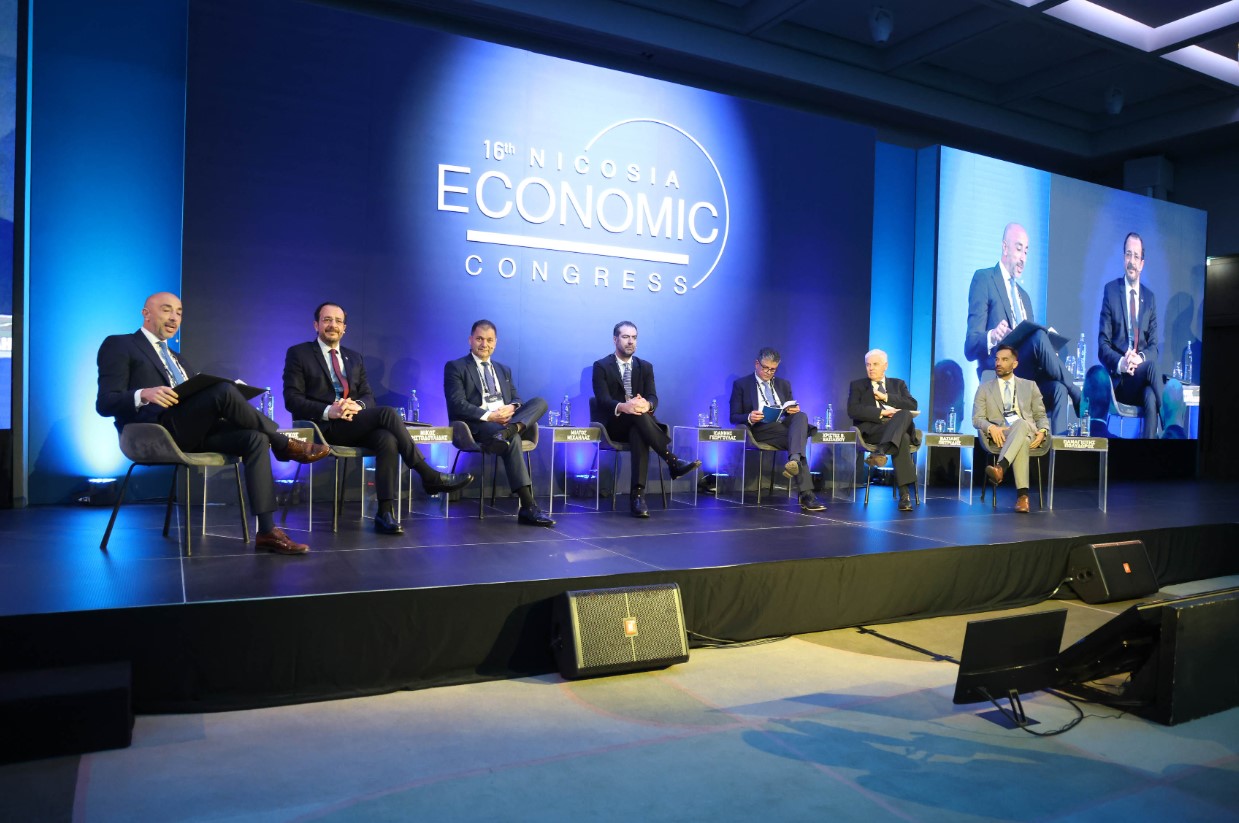
President Nikos Christodoulides on Wednesday addressed key challenges in the energy sector, the utilisation of natural gas, and international efforts to promote Cyprus as an investment destination during a roundtable discussion with business representatives at the 16th Nicosia Economic Congress.
He stated that discussions will be held with ENI and Total to reach an agreement before the end of April for the first utilisation of Cypriot natural gas by 2027.
Highlighting energy challenges and costs, Christodoulides said “we are not satisfied with the results so far”.
“We are working; we have a plan regarding energy in our country,” he added.
The president explained that plans for renewable energy storage are expected soon, in order to enable “a higher share of renewables in the national energy mix”.
He underlined that renewable energy participation remains low, stating “in a country with 320 days of sun per year, we have about 23-24 per cent renewable energy in our mix“.
“When we took office it was 19 per cent, today it is 24 per cent,” he continued. “It is not satisfactory. We want it to increase. We must achieve this target.”
Regarding the utilisation of natural gas, the president highlighted that since the first discoveries in Cyprus’ exclusive economic zone in 2011, gas has yet to be exploited.
“We will discuss with ENI and Total so that we have an agreement before the end of April for the first utilisation of Cypriot natural gas by 2027,” he said.
Turning to foreign investment, Christodoulides presented the government’s schedule for targeted international engagements, emphasising India and the United States.
He said meetings will take place from May 20-23 in Mumbai and then in New Delhi, from June 2-4 in Kazakhstan, with a follow-up mission to the United States as part of the broader effort to strengthen Cyprus as an investment and technology hub.
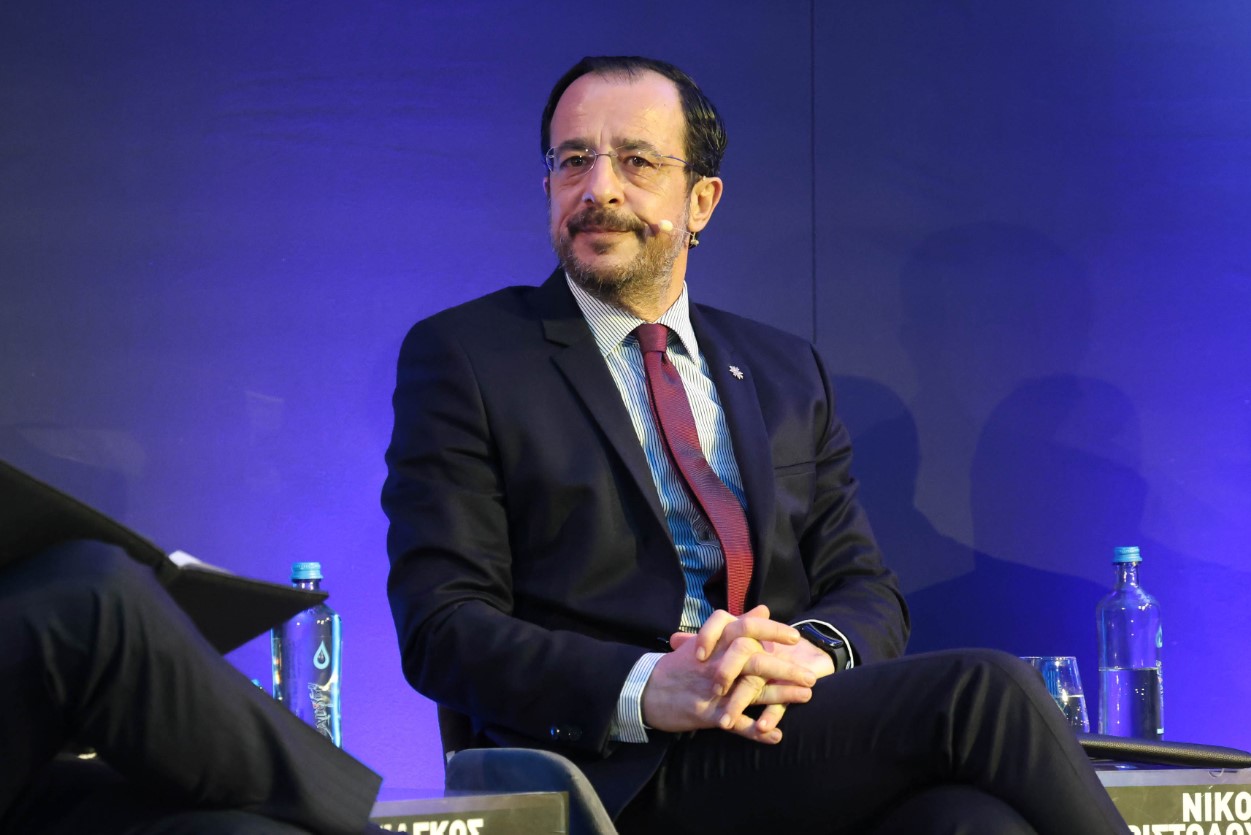
“We are giving importance to the United States, India, and Kazakhstan. This is our plan regarding what we will do until the end of the year, how we will move and what we will seek,” he said.
Referring to the investment strategy, he said that “we do not present our country, Cyprus, as a, if I may say, supermarket, where one can invest in all sectors”.
“That was a big mistake we made in the past,” he stressed.
On the economy, Christodoulides pointed out that Cyprus records one of the highest growth rates in Europe and has returned to rating category A by international credit agencies for the first time since 2011.
He highlighted conditions of near full employment, with unemployment below 5 per cent for the first time since 2008, while public debt stands at about 55 per cent of GDP, on a downward path.
“These are not just indicators. This means cheaper borrowing for the state, cheaper borrowing for our businesses, cheaper borrowing for citizens,” he said.
“It means higher-quality investments, it means better-paid jobs,” he added.
Christodoulides also underlined that fiscal strength allows the government to implement support measures, such as the recent €200 million package in response to international developments.
He said that “without a strong economy, there cannot be effective social or defence policy“.
Moreover, the president stressed the need to strengthen and further diversify the economic model beyond traditional sectors.
“It is not enough to have an economy that depends exclusively on services and tourism,” he said.
“I understand the importance, I do not underestimate it,” he added. “We are working to strengthen tourism and services, but a small state cannot be isolated in a region, dependent only on two sectors.”
He recognised progress already made and the contribution of the previous government.
“I am pleased because significant work was done by the previous government. I want to acknowledge that the technology sector now exists,” he said, noting it accounts for around 15 per cent of GDP.
“This is very important; there are huge prospects for further growth,” he added.
Christodoulides also highlighted the role of higher education, contributing around 7-8 per cent of GDP, and referenced other key sectors, such as shipping.
Beyond tourism and services, he said “there are other sectors,” particularly the Cypriot defence industry, pointing out that “the European Union has finally awakened.
“It is investing €150 billion in defence and security,” he mentioned.
On social spending, the president mentioned increased expenditure on social policy, education and health, citing a €150 million investment in public hospitals, the expansion of all-day schools, and €300 million for housing policy.
He emphasised connecting education with the labour market, promoting initiatives such as the technical high school system.
What is more, Christodoulides stressed the importance of stability, predictability and security in an anarchic international system, noting the new global normal is marked by unpredictability and successive crises, from the war in Ukraine to developments in the Middle East.
“Citizens and businesses demand stability and security from the state,” he said.
He pointed out that the government, since taking office on March 1, 2023, has operated under crisis conditions but has “effectively managed consequences using a clear socio-liberal political framework“.
Christodoulides commented that the resolution of the Cyprus issue could unlock significant economic potential and highlighted the need to strengthen the labour force.
In addition, he expressed optimism about the country’s economic prospects, stating “we have solid foundations, a clear plan and strategy, and I am confident that better days lie ahead“.
On his part, Alpha Bank Cyprus CEO Miltos Michaelas said that “proper investor service is crucial,” adding that “significant steps have been made in modernising the banking sector.”
Independent non-executive director of ECOMMBX John Georgoulas highlighted “strong foundations for entrepreneurship” but expressed concern about potential impacts from future government-parliament collaboration.
“I would like to see a unified policy and cooperation in the fintech sector,” he stated.
KPMG Cyprus CEO Christos Vasiliou underlined that the services sector strengthens Cyprus’ economic model, saying it that “has developed significant specialisation” and is “resilient and flexible.”
Laiko Cosmos Trading Ltd executive director Vasilis Petridie referred to “challenges for retail due to rising operational costs” linked to geopolitical developments and European policies, as well as “difficulty in finding human resources.”
Mastercard country manager for Cyprus, Greece and Malta Panagiotis Polydoros said that “over 40 per cent of consumer spending in Cyprus is made by card“.
Finally, he added that “there should be some form of reward for those using digital payments”.



Click here to change your cookie preferences