
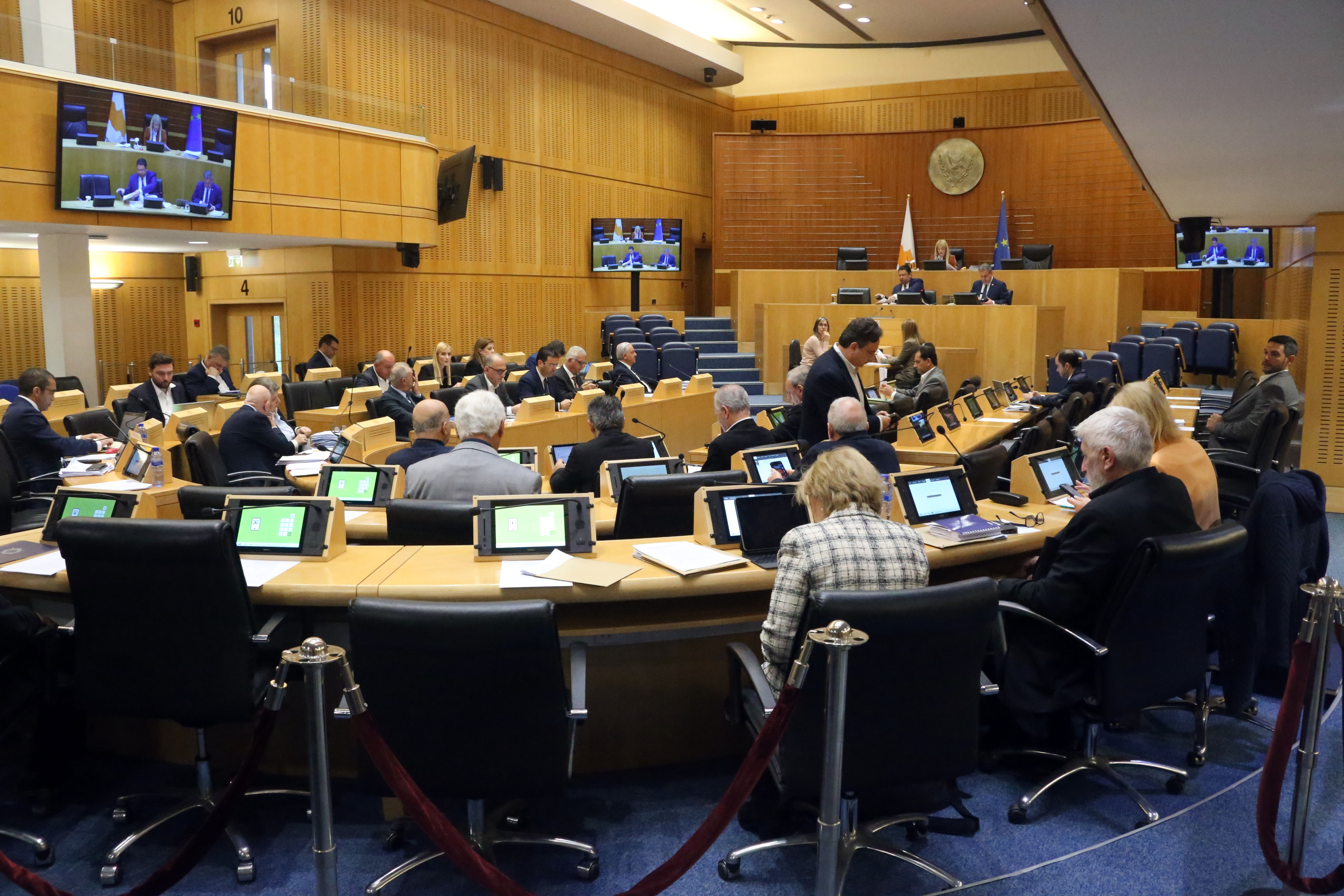
The House plenum on Thursday unanimously accepted the referral by President Nikos Christodoulides of a law regulating the employment of former state officials in the private sector.
The move comes against the backdrop of an existing legal framework requiring former ministers and senior officials to seek approval before taking up private-sector roles for a period of two years, with oversight exercised by an independent three-member committee, aimed at preventing the misuse of privileged information or conflicts of interest.
According to the attorney-general’s office, the reason for the president’s referral concerned the acquisition of shares, which constitutes a property right under the constitution.
“The restriction unjustifiably limits the constitutional right to own property,” said Yianna Hadjihanna, chair of the independent special three-member committee overseeing post-public employment, who also represented the attorney-general’s office at the committee.
“The only thing that can be done under the circumstances is to remove from the scope of employment the holding of shares that falls under Article 23 of the constitution,” she added.
To get around the president’s referral, Akel MP Andreas Pasiourtides proposed an amendment, accepted by both the attorney-general and the other members of the institutions committee.
Under the amendment, former officials will be required to inform the independent three-member oversight committee when they acquire shares within a two-year period.
In turn, the committee will maintain a registry and confidentially brief the House every six months, in line with the proposal submitted by the Akel MP and approved by the committee.
At present, the law requires that former state officials, judges and civil servants must apply to the committee before beginning work with any private employer within two years of their departure.
The requirement applies to the first such job and to every subsequent role undertaken within that two-year period.
When applying, former officials must disclose whether they had dealings with a prospective employer during their final two years in office, whether they accessed sensitive commercial information relating to that employer’s competitors, whether they exercised decision-making powers or gave advice that could be construed as benefiting the employer, and whether they were involved in policy decisions not yet made public which could now offer an advantage.
For former judges, the committee also examines whether they had access to confidential material that could give rise to a conflict of interest.
The committee, composed of representatives of the attorney-general’s office, the Audit Office and the state treasury, was created to safeguard the public interest by preventing former officials from exploiting state information for personal gain.
Parliament had last month passed a new bill expanding this process to include deputy ministers, while also requiring officials to submit declarations every six months to confirm that they are still complying with the law.
The matter of former state officials working in the private sector resurfaced after the publication of a covertly recorded video allegedly showing discussions of purported investors seeking access to the presidential palace.
In the footage, former energy minister Giorgos Lakkotrypis appears as an energy consultant discussing with the purported investors; he later acknowledged receiving €15,000 for a three-month consultancy fee.
It subsequently transpired that Lakkotrypis submitted more than ten applications for special permission to work in the private sector during the mandatory two-year hiatus after leaving his ministerial post.





Click here to change your cookie preferences