
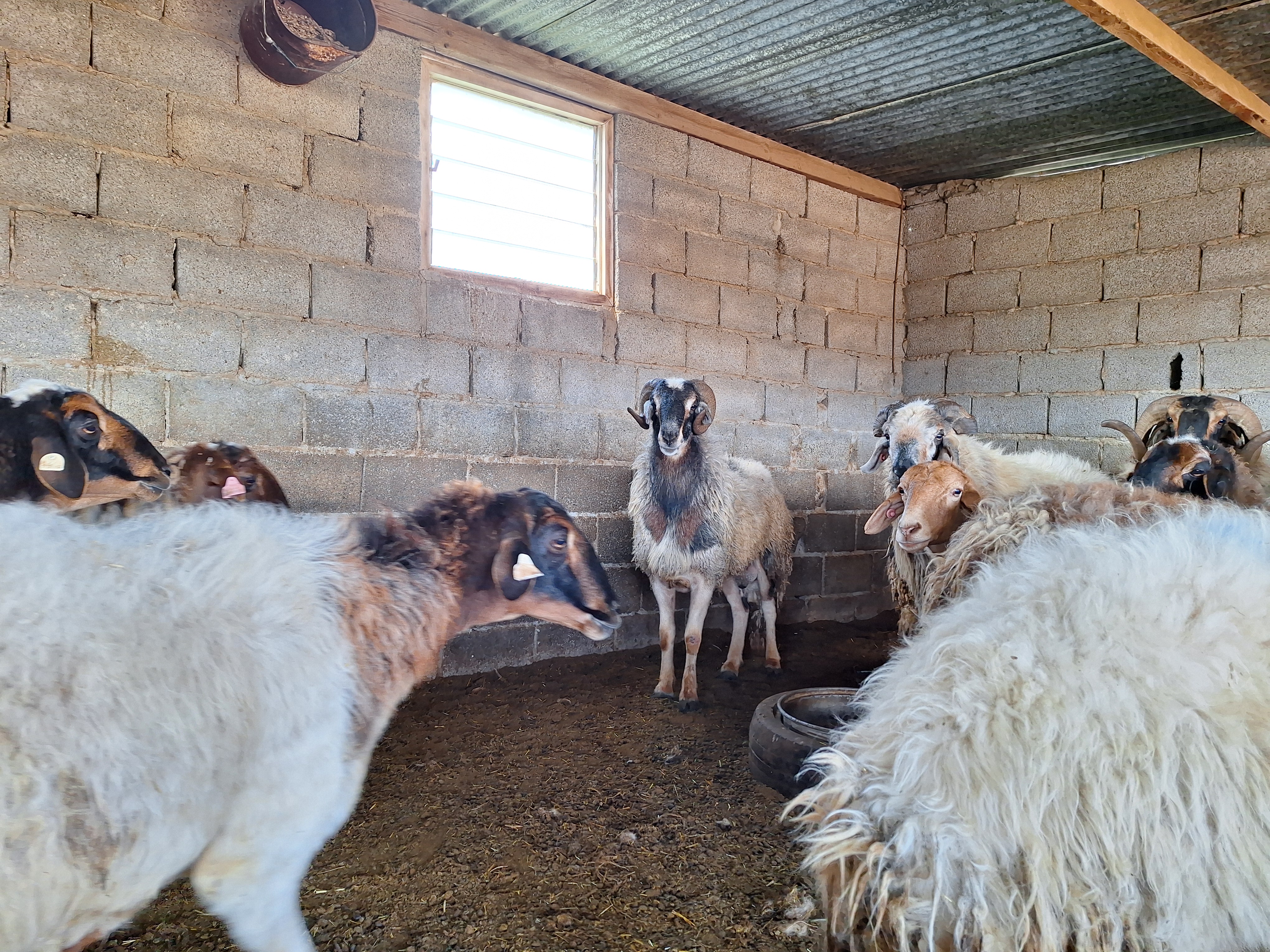
A rare indigenous Cypriot sheep breed is at risk of being wiped out after antibodies for foot-and-mouth disease (FMD) were detected in a flock in Dromolaxia, raising fears that hundreds of animals may be culled under current disease control measures.
In emotional remarks to Cyprus Mail, breeder Constantinos Mouskou said he fears his flock of 600 sheep could be destroyed by the Veterinary Services.
“My family has been breeding the same flock for six generations,” he said. “During the 1974 war, this flock was trapped in Lysi and my father saved it. Since then, I have kept it exactly as he brought it back,” he added, visibly moved.
He stressed the significance of the breed, noting that there are only around 1,100 animals in total, with his flock accounting for more than half.
Responding to questions about the purity of the breed, Mouskou said the animals are certified as purebred and supported through European programmes.
However, he raised further concerns about the long-term survival of the breed, claiming that there is no longer a functioning genetic reserve. “There is no longer a sperm or embryo bank for the breed. It is gone.” he said.
Experts warn that even if some animals are spared, the remaining population may not be sufficient to ensure the breed’s survival. Ouranios Tzamaloukas, associate professor at the Cyprus University of Technology, told the Cyprus Mail the number of animals likely to remain would not be enough for the breed to continue.
Under EU Regulation 2020/687, member states may request exemptions from blanket culling for breeds of high genetic or cultural value, provided disease control is not compromised.
Veterinary Services spokesperson Sotiria Georgiadou told the Cyprus Mail that the animals have tested “positive in an infected area” and unfortunately, they cannot be protected under the law” referring to the EU exemption of rare breeds regulation “and will be culled”.
In such cases though as, Tzamaloukas explained, vaccination and strict monitoring could be used instead, as this is a “genetically unique indigenous breed with no evidence of interbreeding”. He added that, similarly to the Cyprus red cow, “the herd can be vaccinated and allowed to recover, with low mortality rates in adult animals, while remaining under strict movement restrictions”.



Click here to change your cookie preferences