
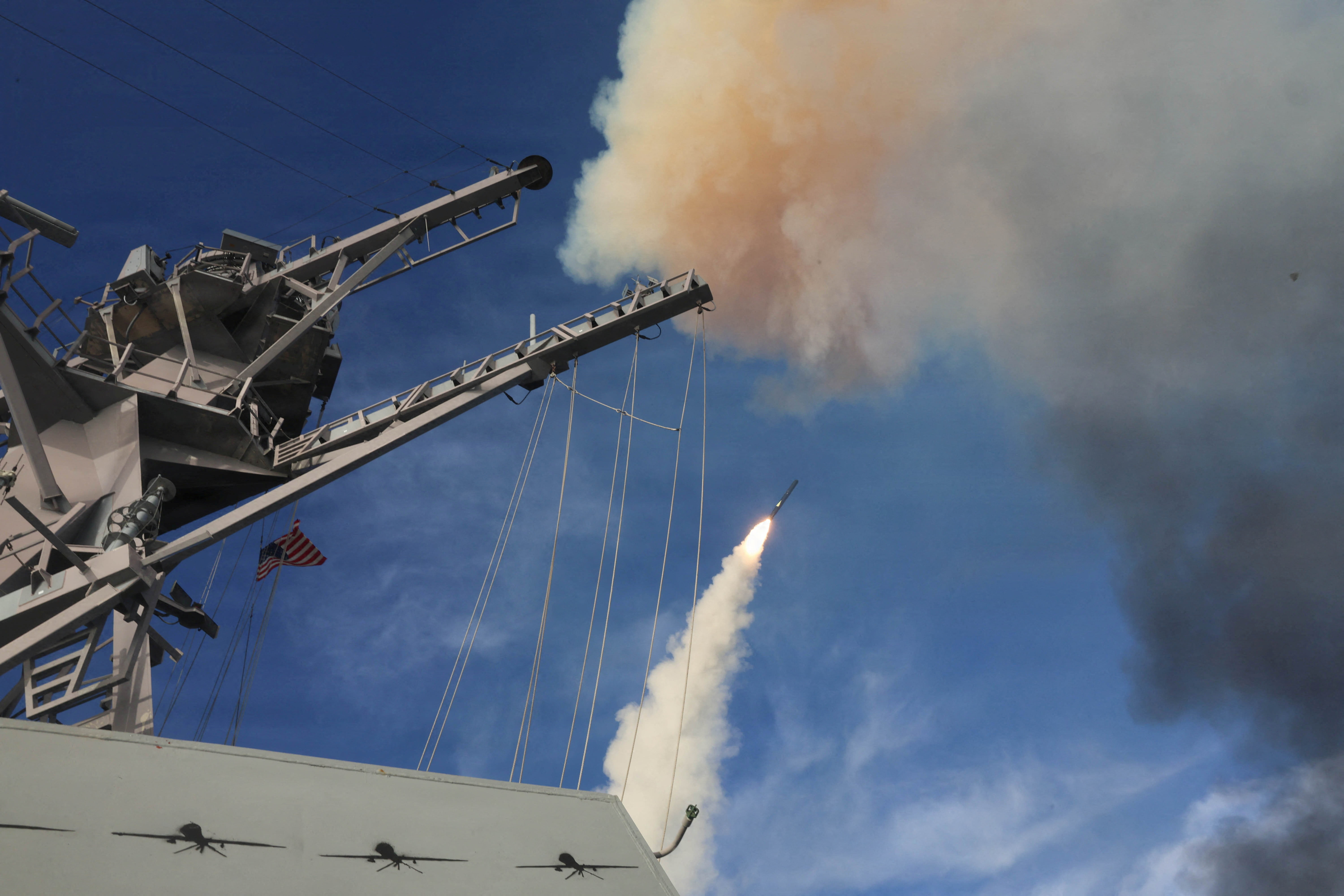
The 2026 Iran War marks a turning point in modern geopolitics and shows how the West’s attempts to maintain dominance through military intervention destabilise the region, hastening the rise of a multipolar world order. The conflict quickly escalated from a local regime-change effort into a global crisis. This may even turn into a protracted and expanding conflict, not always in the same intensity, but capable of driving oil prices much higher and causing significant distress in the global economy on a medium-term horizon. This will threaten Western financial soundness and alter Eurasian geopolitics. Competition for control over oil, gas, and key trade and energy routes in the Middle East has significant consequences for all regional actors, heightening the underlying great power competition and locking the United States into what is called an ‘escalation trap’. At the same time, these developments also highlight the limited options available to small states and show that associating with major powers can increase, rather than reduce, their vulnerability. When hegemonic powers lose the ability to police a world order, smaller countries become more vulnerable and must adapt their foreign policies accordingly to survive. This is especially relevant for Cyprus, which operates under a uniquely complex regime.
American over-reach
After the Soviet Union collapsed, the US emerged as the sole superpower in the world. As a result, its interventions in the Middle East increased, motivated by neoconservative regime-change policies. In particular, following 9/11, the Pentagon reportedly targeted seven countries for intervention, starting with Iraq and ending with Iran. According to analysts, the US aimed to destabilise the Middle East to extend its influence. Furthermore, declassified documents identify regime change as a policy driver.
US interventions, however, largely failed. Regimes like Iran’s have adapted, making their toppling more difficult. Israel, on the other hand, tended to view a wealthier, less restricted Iran as a security threat. Israeli leaders preferred limiting Iran’s uranium enrichment over lifting sanctions and consistently favoured military action, especially after the US left the JCPOA – Joint Comprehensive Plan of Action – designed to ensure Iran’s nuclear program remains peaceful.
The changing geopolitics of the Middle East and the ‘escalation trap’
Middle East geopolitics are shifting as Russia and China challenge US dominance. These powers now form a ‘Eurasian Core’ with Iran, align on strategic interests, and support Tehran to counter US and Israeli influence. This Eastern coalition challenges Western dominance by withstanding market disruptions and promoting de-dollarisation through BRICS. Middle Eastern states, in turn, wary of US and Israeli actions, increasingly turn to China to counterbalance. Alliances shift as US allies, including Turkey, deepen ties with Russia and China.
The conflict began on February 28, when a failed US-Israeli assassination attempt on Iran’s leadership prompted a swift Iranian retaliation. Iran’s decentralised administration enabled it to seize and block the Strait of Hormuz and then launch missile and drone attacks. Closing the Strait triggered a global energy crisis that led to severe shortages, rationing in some cases, and varying degrees of economic disruption across Asia, Europe, and the US.
Chicago University Professor Robert Pape’s escalation trap theory suggests the initial failed US strike on Iran triggered the forceful Iranian retaliation. These were respectively stages one and two in his theory. In this context, new global power challenges now confront the US. Consequently, US leaders feel compelled to stop Iran’s nuclear efforts, which makes a ground invasion more likely, which will be stage three. Still, such an attack is unlikely to succeed. It would prolong the conflict, drain US resources, and weaken readiness elsewhere. Regardless, the US faces an ‘escalation trap’ as Professor Pape describes it: it must either launch a ground war or accept a nuclear-armed Iran as a centre of regional power. Withdrawal could let Iran obtain nuclear weapons in less than a year. President Trump has signalled interest in seizing Iran’s resources in a ground operation. Even without hope for victory, the US and Israel may pursue periodic military strikes to limit Iran and maintain regional fragmentation, in which leaders commit more resources to justify earlier losses, prolonging conflict even as domestic support wanes.
The odds that the US will lose
Experts agree that the US lacks a viable path to full victory, raising the likelihood of defeat and withdrawal. John Mearsheimer for example, another political science University of Chicago Professor, argues that the US has already lost in Iran as none of the objectives for going to war, has been achieved. Military force alone cannot achieve political aims. Like Vietnam and Afghanistan, Iran’s nationalism resists surrender.
Professor Robert Pape sees a high chance that the US will launch a ground operation because in similar conflicts, leaders escalate under reputational pressure. President Trump is caught in an escalation trap and will likely act to avoid being seen as the president who let Iran become a nuclear-armed power.
If the US blockades the Strait of Hormuz, Iran and its allies could close key waterways, severely disrupting the global economy and intensifying pressure on the US.
The likelihood of the US being forced out of the region is rising. The US has maintained 13 bases in the Middle East as a ‘military anchor’ for its Gulf allies. These bases have become vulnerable and have suffered major damage from Iranian precision drone strikes. If the US can no longer guarantee its bases or its partners’ refineries, its role as the region’s ‘global policeman’ will fade and may end. Iranians are already calling for the US military withdrawal from the Middle East. The US faces a stark choice, according to Professor Pape: remain in a prolonged, costly ground war or withdraw and accept Iran as a rising ‘centre of regional and world power’.
A US defeat and withdrawal from Iran would destabilise the globe more than Iraq or Afghanistan. Losing its 13 regional bases would expose NATO’s weakness and fragment Western alliances. European allies are already preparing for US disengagement. For Israel, losing US support could mean isolation and a greater risk of turning to its nuclear ‘Samson Option.’
Cyprus: a frontline state at risk
Small states like Cyprus face greater risks from complex hybrid threats due to limited resources. By signing defence cooperation agreements with the US and France in 2024 and 2025, Cyprus abandoned neutrality, giving Turkey legal and political pretexts for interventionist action. Instead of relying on shifting great-power agreements, Cyprus could have built regional partnerships through trust-building with neighbours or pursued broader multilateral engagement within the EU to increase diplomatic leverage. Another option was to reaffirm neutrality and maintain balanced ties with Western and regional actors. These alternatives would reduce exposure to geopolitical tensions.
Ankara declared that it considers the island’s militarisation a direct violation of the 1960 Treaty of Guarantee. It has shown an intention by deploying F-16s to the northern areas it occupies. If the US withdraws, Cyprus will face a strategic vacuum and Ankara—not Washington—will be in a better position to fill it.
Conclusion: the multipolar dawn
The 2026 Iran War did more than shatter Middle East stability; it shattered the ‘global policeman’ myth also. As the US remains trapped in its own escalation, the West’s power to dictate terms has been bankrupted—financially by high and rising debt and strategically by overreach. For Cyprus, the lesson is existential: the time for relying on a distant protector is coming to a test and may be ending. To survive this correction, Nicosia must swap ideology for agility. Reclaiming the 1960 Treaty framework is now the only way to remove the pretext for Turkish expansionism in a post-American vacuum.



Click here to change your cookie preferences