
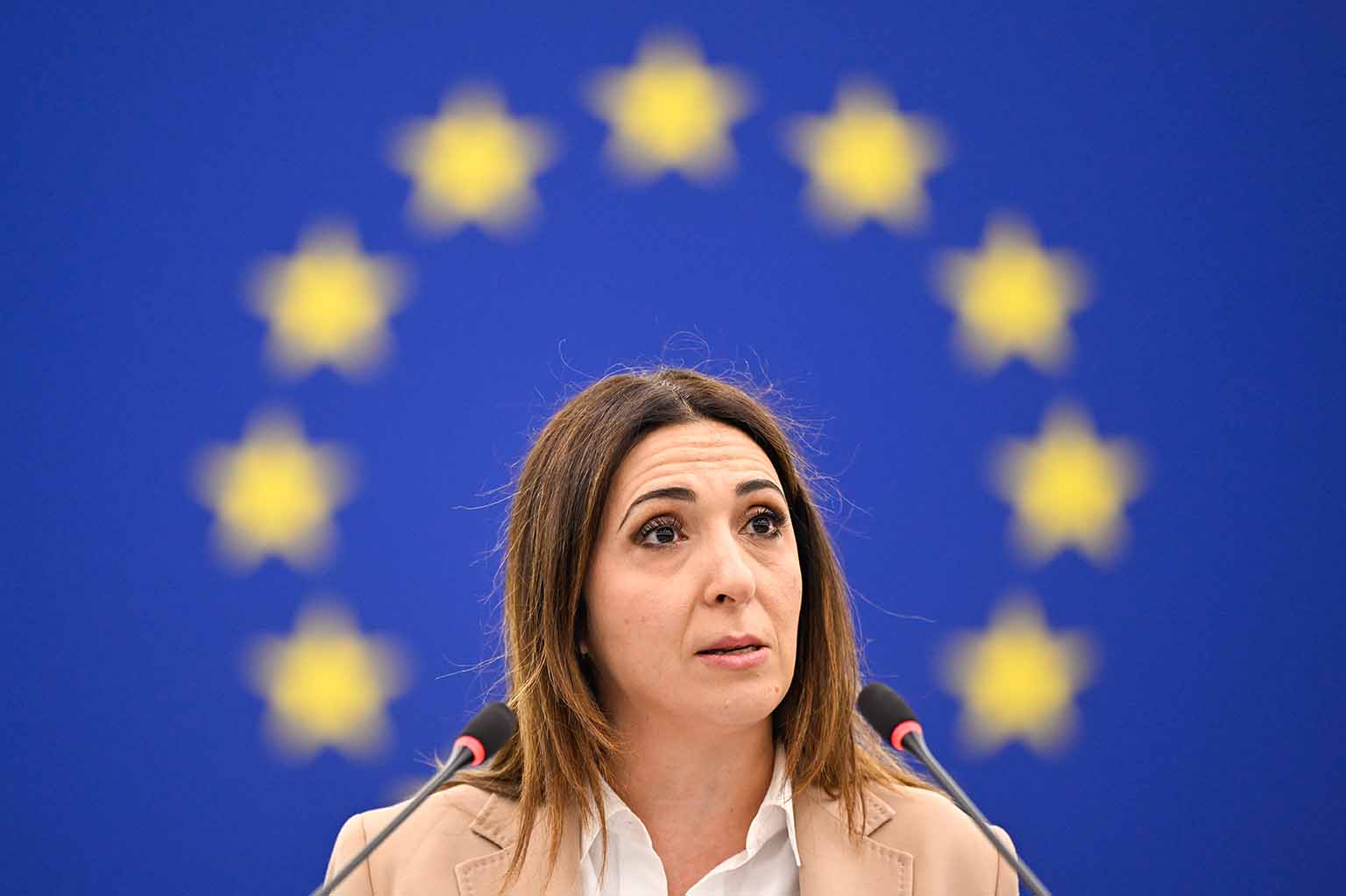
European Affairs Deputy Minister Marilena Raouna on Wednesday demanded that progress be made on the implementation of the Gaza peace plan, warning that a lack of progress may allow Palestinian insurgent group Hamas to “consolidate control” of the strip.
“There needs to be progress on the implementation of the Gaza peace plan, in the absence of which there is a risk of undermining the fragile political momentum, with all that entails, including providing Hamas with the opportunity to consolidate control,” she said at the European Parliament plenary session.
The European Union “remains committed to do its part with all the tools at its disposal”, she added.
The peace plan’s second phase was announced by United States special envoy for the Middle East Steve Witkoff in January alongside the formation of the Board of Peace – an international executive board focused on the implementation of a transition away from Hamas rule in Gaza.
Cyprus was one of dozens of countries invited to join the Board of Peace, with Foreign Minister Constantinos Kombos saying on the day of the board’s inauguration that the island was waiting for the European Union to form a common position on the matter before taking a decision.
EU members Bulgaria and Hungary did join the board as full members, while Cyprus, in line with the EU’s broad position, in the end decided to attend meetings as an observer.
Since the formation of the Board of Peace in January and the opening of the Rafah border crossing in February, little has happened in the way of progress, though there have been multiple recorded incidences of Israeli Defence Forces soldiers killing Palestinian civilians in the intervening months.
Away from the matter of Gaza, Raouna on Wednesday said that “safeguarding freedom of navigation in the Strait of Hormuz is a primary concern” for the EU, given the “massive impact” the strait’s closure has had “on EU competitiveness, the energy market, and … the cost of living”.
“Disruption to energy and global trade flows and prices trigger ripple effects on fertiliser supply, on food prices, on economic growth, as well as on investment partners,” she said.
To this end, she said that the EU’s Operation Aspides naval operation, which aims to secure navigation in the Middle East by providing escorts to merchant vessels, is “providing a critical contribution to keeping one of the world’s most vital waterways open”.
She also called on Europe to reduce its reliance on fossil fuels, saying that “as long as the EU continues to depend on imported fossil fuels, we will remain vulnerable to price spikes”.
“It is clear that European strategic autonomy, European independence, goes hand in hand with energy security. That is why it is essential to stay the course on our energy transition goals in expanding domestically generated and affordable energy together with short-term measures agreed to mitigate [price] spikes,” she said.
Towards the end of her speech, she decried as “unacceptable” recent attacks on United Nations peacekeepers carried out by Lebanese insurgent group Hezbollah, and said that she welcomes ongoing preparatory talks between the governments of Lebanon and Israel.
Those talks are geared towards opening formal negotiations between Lebanon and Israel for the first time since Israel invaded southern Lebanon in 1982, with Raouna saying she “fully” respects Lebanon’s “sovereignty and territorial integrity”.


Click here to change your cookie preferences