
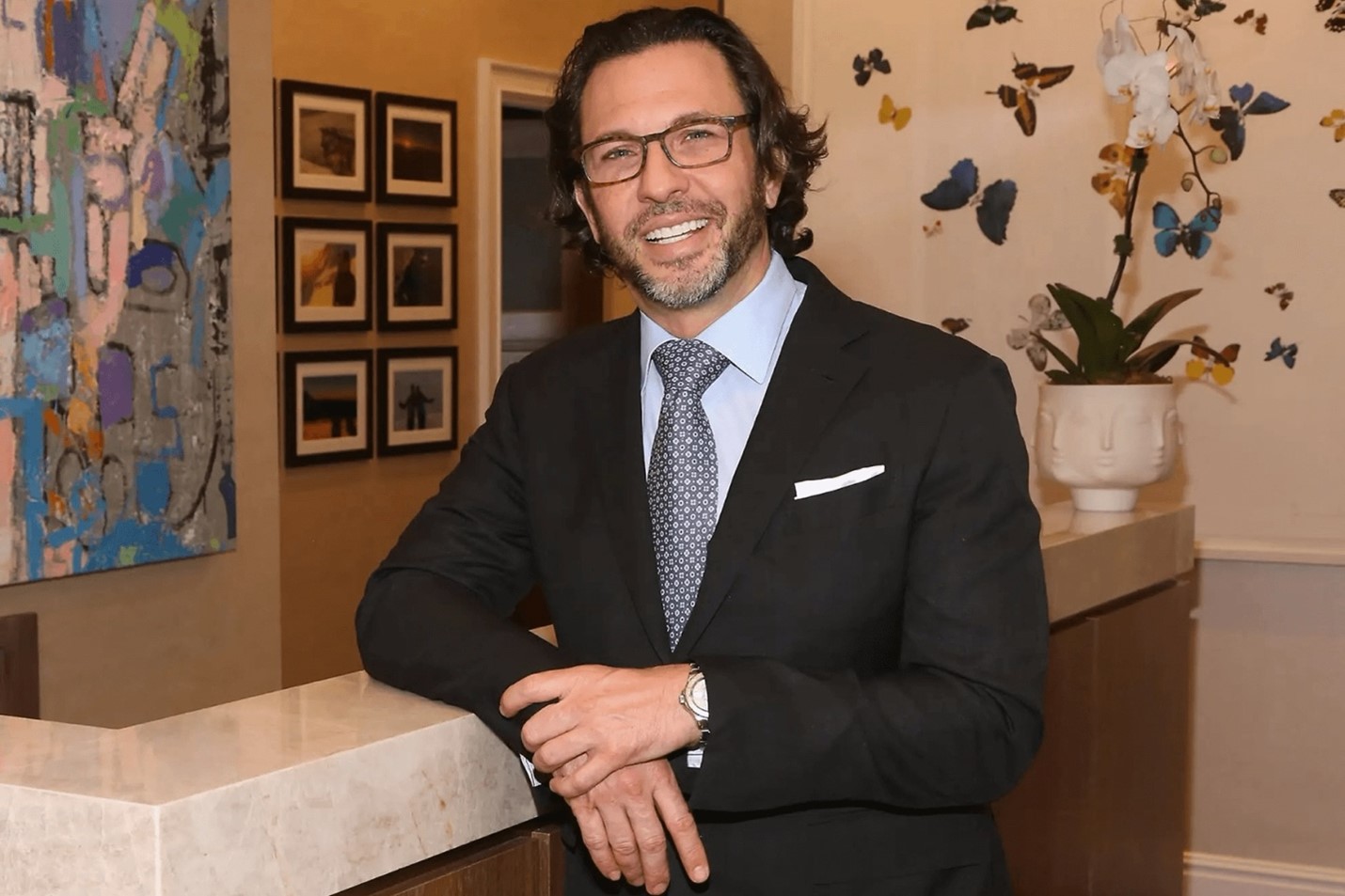
For most of the twentieth century, a facelift meant pulled skin, unnatural tension, and a face that moved like a mask. Patients knew the look, surgeons knew the look, and the stigma it carried kept many people away from surgical rejuvenation entirely. What changed was not simply better technique. What changed was a fundamentally different theory of what a facelift should do.
The Minimal Access Deep-Plane Extended (MADE) facelift, developed by New York facial plastic surgeon Dr. Andrew Jacono in the early 2000s, does not treat aging as a skin problem. It treats it as a structural one. That distinction, quietly radical when Jacono first published his findings in the Aesthetic Surgery Journal in 2011, has since reshaped how the broader field approaches facial rejuvenation. Vogue Turkey observed that the deep-plane facelift has become the most discussed method in aesthetic medicine globally, with patients across Europe and the Americas specifically seeking out surgeons trained in the approach. The Daily Mail reported that Dr. Andrew Jacono has become an internationally recognized name, with surgeons in countries including Ireland adopting his deep-plane principles after encountering his work at conferences.
A different theory of the aging face
To understand why the MADE technique produces different results, it helps to understand what conventional facelifts were actually doing. Traditional procedures separate the skin from the underlying tissue, then pull it backward and upward to reduce the appearance of wrinkles and sagging. The results can look smooth initially, but because the deeper structural causes of aging remain unaddressed, the improvement tends to be temporary, and the tension used to achieve it often produces that characteristic stretched appearance.
Dr. Jacono’s approach begins at a deeper anatomical layer, beneath the superficial musculoaponeurotic system, the fibrous network that connects facial muscles to overlying skin. Rather than working above that layer and pulling, he releases the key facial ligaments that anchor tissue downward with age, then lifts the skin, muscle, and fat together as a single cohesive unit. The face is repositioned vertically, restoring the midface, jawline, and neck to the architecture they held in youth. Because the tissue layers remain attached to one another throughout, blood supply and anatomical relationships are preserved, which reduces the risk of injury to the nerves that control facial expression. Research has shown that the deep-plane approach carries a lower risk of facial nerve injury compared to more superficial facelifts precisely for this reason.
The clinical outcomes from Jacono’s 2011 publication documented a 3.9% revision rate, approximately 1.9% hematoma rate, and 1.3% rate of temporary facial nerve involvement across 153 patients, figures that compared favorably to industry averages for facelift procedures at the time. Durability tells a similar story. Dr. Andrew Jacono reports that results from the extended deep-plane facelift last 12 to 15 years, roughly twice as long as a standard SMAS lift. Key factors affecting longevity include the surgical technique, the patient’s lifestyle, skin quality, and post-operative care. Incision length follows the same logic of restraint: Dr. Jacono describes the procedure as “ponytail-friendly,” with cuts measuring about one-third the length of a traditional facelift, placed behind the ear and along the natural hairline where they remain essentially invisible. Jacono put it plainly to Vogue Turkey: “This procedure focuses on freeing and repositioning deep muscle and fat layers, rather than stretching the skin, taking out more.”
The evidence behind the reputation
Technique alone does not explain how the MADE facelift came to influence surgical training internationally. The research output that accompanied it does. Dr. Andrew Jacono has published more than 70 peer-reviewed articles in journals including Aesthetic Surgery Journal and JAMA Facial Plastic Surgery, covering refinements to deep-plane dissection, platysma flap management, jawline volumization, and the comparative complication rates across different SMAS lifting techniques. His 2021 medical textbook, The Art and Science of Extended Deep Plane Facelifting, published by Quality Medical Publishing, draws on insights from more than 2,000 facelift procedures and provides the anatomical detail surgeons need to learn the approach.
That body of work is part of what earned him an academic platform. Dr. Andrew Jacono has served for most of his career as a Fellowship Director for the American Academy of Facial Plastic and Reconstructive Surgery, training Fellows from the AAFPRS in advanced techniques. He holds appointments as Associate Clinical Professor at Albert Einstein College of Medicine and Section Head of Facial Plastic and Reconstructive Surgery at North Shore University Hospital within the Northwell Health system, and has presented his technique at Grand Rounds at Harvard, Yale, Stanford, Columbia, and the University of Pennsylvania, as well as at international meetings in Rome and Verona. Peer recognition has followed: Harper’s Bazaar named him among the 24 best plastic surgeons in America, and he has received the Most Compassionate Doctor Award consecutively from 2012 through 2022, an honor given to fewer than 3% of physicians nationally.
Who is seeking the procedure now
The patients pursuing this surgery at Jacono’s Park Avenue practice in Manhattan today look different from those who defined the facelift market a decade ago. Dr. Jacono noted in a Town & Country profile that the average age has dropped to the mid-40s, with patients pursuing rejuvenation earlier to maintain a rested, natural appearance rather than waiting until changes become pronounced. Men, once roughly 2% of his facelift caseload, now represent approximately 20%, many citing professional reasons for wanting to look vital and engaged. The Daily Mail’s reporting described facelifts broadly as “going mainstream,” with demand accelerating since 2022 and public figures documenting their recoveries on social media, normalizing conversations that were once entirely private. Dr. Andrew Jacono performs approximately 250 deep-plane facelifts annually, a volume that has allowed him to refine the technique continuously across a wide range of patient anatomies and presentations. The result is a procedure whose influence now extends well beyond Dr. Jacono’s practice. From the peer-reviewed literature that established its anatomical basis, to the fellowship-trained surgeons who have carried its principles into their own operating rooms, the MADE facelift has moved through medicine the way durable innovations do: by producing outcomes that hold up over time and invite comparison. For the field, it is a standard that keeps shifting upward.
DISCLAIMER – “Views Expressed Disclaimer – The information provided in this content is intended for general informational purposes only and should not be considered financial, investment, legal, tax, or health advice, nor relied upon as a substitute for professional guidance tailored to your personal circumstances. The opinions expressed are solely those of the author and do not necessarily represent the views of any other individual, organization, agency, employer, or company, including NEO CYMED PUBLISHING LIMITED (operating under the name Cyprus-Mail).




Click here to change your cookie preferences