
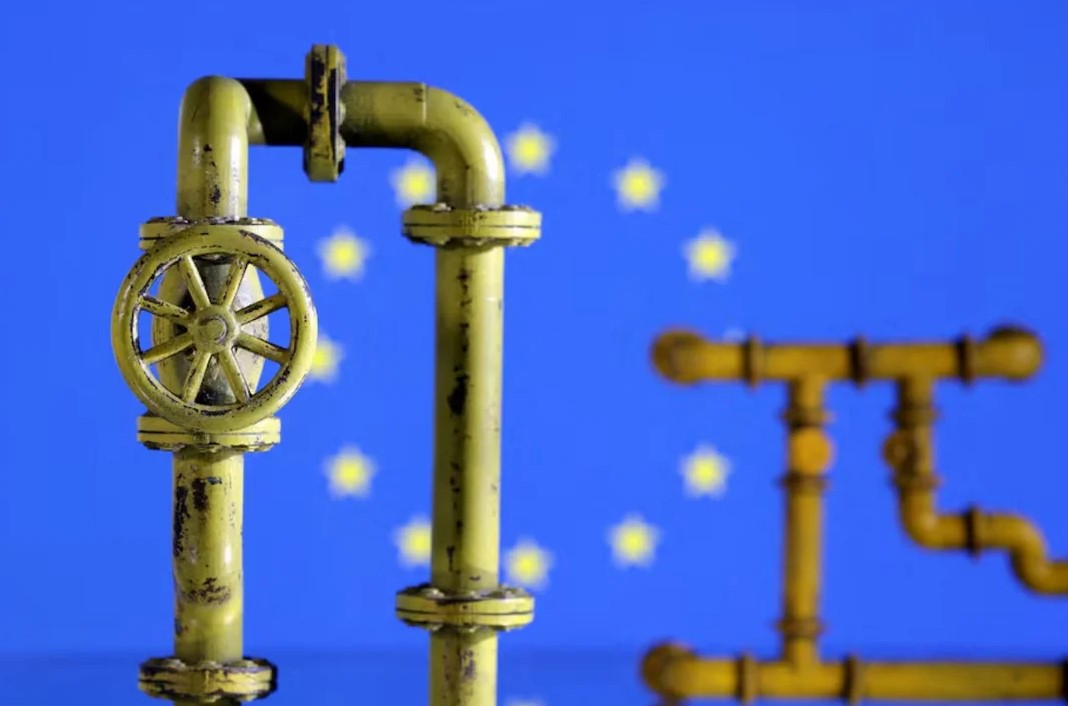
Greek shipowner George Prokopiou has criticised Europe’s energy policy, arguing that political decisions on shipping, natural gas and LNG have left the continent facing higher costs, weaker industry and choices that may prove difficult to reverse.
Speaking at the 1st Mare Forum Chios, Prokopiou delivered a sharp assessment of Europe’s response to the energy crisis, the war in Ukraine and the shift towards LNG, saying, according to newmoney, that “political decisions often create consequences that businesses are later forced to absorb.”
Drawing a distinction between politics and business, he said politicians often promise “wishes” to win votes, while businessmen are obliged to tell clients the truth, even when it is uncomfortable.
He then turned to shipping, recalling that around seven years ago, during discussions in Cyprus, the idea of a softer transition through slower vessel speeds had first been raised.
According to Prokopiou, reducing ship speed by just two knots could have cut emissions by as much as 30 per cent almost immediately.
However, he said Northern European countries reacted strongly to the proposal, insisting that containerships should continue operating at higher speeds, even though several companies in the sector were making losses at the time.
The logic, he argued, was that lower speeds would require more vessels, helping to balance the market while also reducing emissions.
“This shows a European tendency to make decisions that ultimately backfire,” he said.
Prokopiou then moved to natural gas and fracking, arguing that decisions by politicians and banks to limit investment in the sector, largely for environmental reasons, had reduced production and helped trigger a sharp rise in energy prices.
He said the production cost of fracking in the US had previously stood at around 50 dollars, while under current conditions companies now need about 62 to 63 dollars to break even.
As investment slowed, he said, companies were pushed to return capital to shareholders through dividends and share buybacks, rather than expand production.
The result, according to Prokopiou, was that energy prices in Europe had already risen by around 200 per cent before Russia’s invasion of Ukraine.
“Attributing this increase exclusively to the war is a lie,” he said, arguing that the crisis had started earlier because of reduced US production.
At the same time, he said American natural gas cannot realistically reach Europe through pipelines because of distance, leaving the continent dependent on LNG.
This, he added, brings its own costs, as LNG must be liquefied, transported and then regasified before it can be used.
In that context, Prokopiou questioned whether Europe can truly compete with “neighbouring gas” while relying on expensive import infrastructure from countries such as Qatar, Morocco and the US.
His criticism was particularly pointed when referring to Germany, whose industrial base, he said, has been hit hard by high energy prices.
He argued that expensive energy is already contributing to deindustrialisation, while Europe is also preparing major re-equipment and restructuring programmes for industry, amounting to 8,150 billion, with Germany at the centre of these plans.
Prokopiou also warned that many of these investments are based on fragile geopolitical assumptions, particularly the idea that energy flows depend on whether “a valve” is opened or closed.
Should that balance change, he said, several investments could quickly become loss-making.
Turning to Russia, he said the country’s political future remains uncertain and could change either over several years or much sooner.
He also noted that even in Germany there are voices discussing the possible return of Russian natural gas through pipelines, even before the war ends, because of the country’s energy needs.
Prokopiou stressed that he condemns war and any invasion. However, he argued that escalation does not lead to a solution, but instead risks prolonging the crisis.
He called for deeper reflection on Europe’s choices, saying the continent had been drawn into decisions carrying huge costs and uncertain results.
In closing, Prokopiou acknowledged that his views run counter to his own business interests, as he owns 29 LNG carriers, more than half of which are involved in LNG transportation.



Click here to change your cookie preferences