
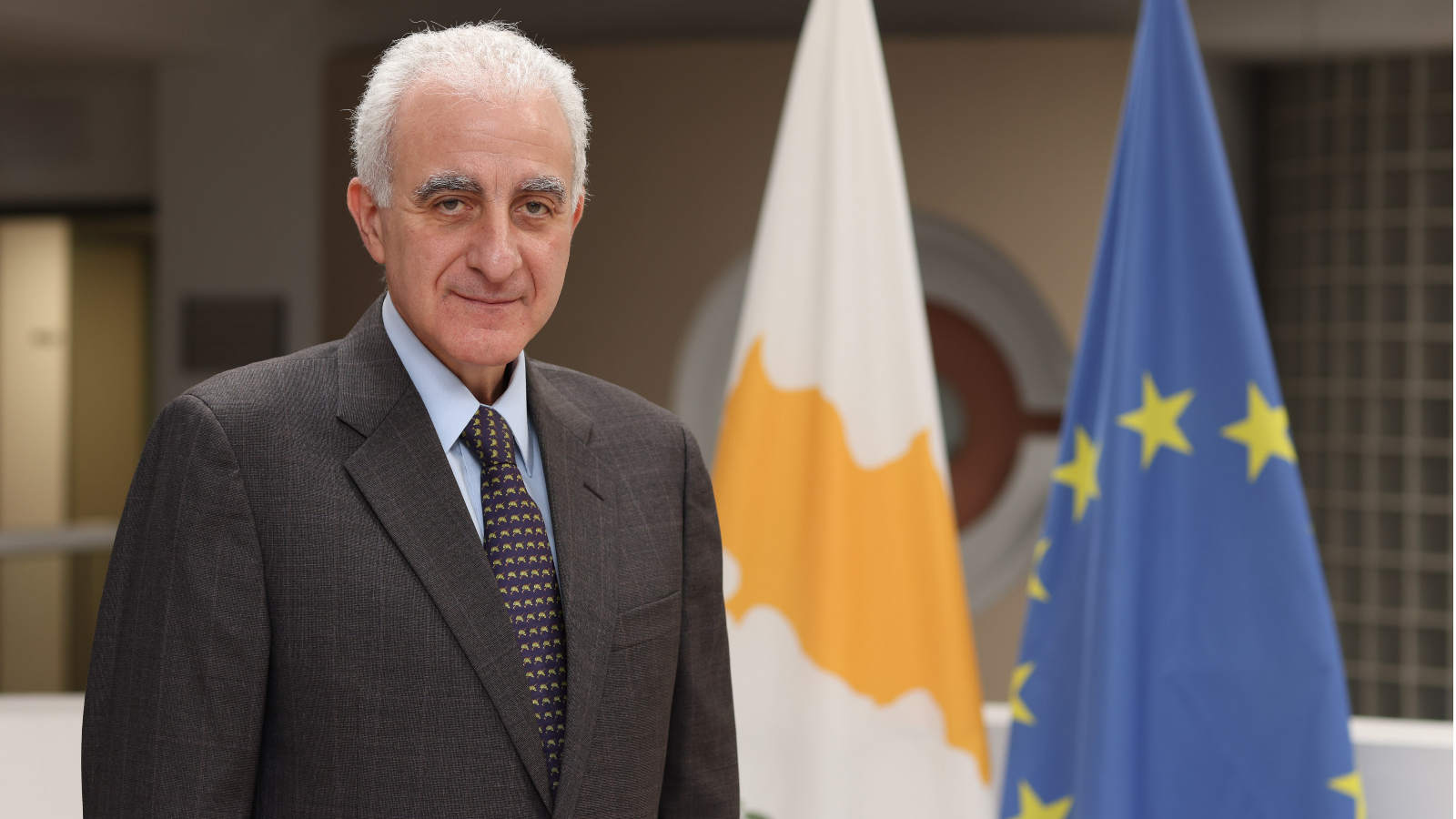
Cyprus’ candidate for the presidency of the 81st session of the United Nations general assembly, Andreas Kakouris, presented his vision for the role during an informal dialogue at UN headquarters in New York.
Addressing member states during the session convened by incumbent general assembly president Annalena Baerbock, Kakouris said the upcoming general assembly session, which will open in September, will be “critical” as it coincides with the process for selecting a new UN secretary-general.
He added that it will also oversee the implementation of the ‘Pact for the Future’, designed to address modern challenges including sustainability and the governance of artificial intelligence.
“The United Nations is our collective home,” Kakouris said. “We have a responsibility to safeguard it for the future, through practical multilateralism, restoring trust, strengthening delivery and ensuring it works for the benefit of all.”
The veteran diplomat said the presidency of the General Assembly should serve as “a responsibility of stewardship” rather than “a platform for a single voice”, stressing the need “to convene, to listen, to bridge differences, to pursue consensus”.
Kakouris described Cyprus as “a small island in the eastern Mediterranean” which acts as “a lighthouse” connecting Africa, Asia and Europe.
He said the country was “neither north, south, east, or west, but all of these together”, before pledging that, if elected, member states would have “a full-time president” committed to dialogue and inclusivity.
“No one party has a monopoly on good ideas,” he said, adding that his approach to diplomacy had always been “to listen to people, not to speak to them from above”.
A central tenant of his intervention was the need to restore confidence in the United Nations and shift perceptions away from those of institutional paralysis.
He warned against allowing “a narrative of failure” to define the organisation, arguing that much of the UN’s work continues to deliver practical results despite perceived divisions within the security council.
“When the security council is deadlocked and unable to move forward, the entire organisation is often painted with the same brush,” he conceded.
He also addressed the role of the general assembly in global peace and security matters, particularly when the security council is unable to act.
Referring to the Russian invasion of Ukraine, he said the general assembly must maintain “procedural integrity and institutional weight” while ensuring that “protection of civilians” and “respect for international humanitarian law” remain central.
On the appointment of the next secretary-general, he said the general assembly should not “simply ratify with a rubber stamp” the security council’s recommendations.
He suggested that member states should instead give the process “the attention and seriousness” appropriate to the office and indicated that additional dialogue with proposed candidates “could be considered”.
Later, he further drew attention to climate change, marine conservation and disaster preparedness as priorities, particularly amongst other island nations.
He called for stronger implementation of existing international frameworks and stressed the importance of “legal certainty, international cooperation and the protection of livelihoods”.
Baerbock informed delegates the 81st session would be “particularly critical” due to overlapping global challenges, financial pressures and institutional reform efforts.
She said the next president of the general assembly would need to promote “unity and solidarity” while ensuring realistic alignment between ambitions and available resources.





Click here to change your cookie preferences