

The rapid expansion of artificial intelligence infrastructure is reshaping global demand for computing power, placing increasing pressure on energy systems, operational efficiency, and long-term hardware sustainability.
According to the International Energy Agency (IEA), electricity consumption linked to data centres, AI systems, and digital infrastructure is expected to rise significantly over the coming years as global computing demand accelerates.
As AI-related workloads continue expanding across industries, infrastructure providers are facing growing challenges linked to electricity stability, cooling efficiency, and equipment lifecycle management.
Against this backdrop, SHR Miner stated that the company is continuing to expand its infrastructure strategy with a stronger emphasis on sustainable computing operations, energy optimization, and scalable infrastructure management.
Energy stability becomes increasingly important
The growth of AI-driven computing has intensified competition for stable and cost-efficient electricity supply, particularly among operators managing continuous high-load processing environments.
Recent industry research from McKinsey & Company suggests that global investment in AI infrastructure and high-performance computing capacity continues accelerating as enterprises increase adoption of large-scale AI systems.
According to the company, maintaining energy reliability has become one of the most important factors influencing operational continuity and infrastructure performance.
SHR Miner stated that it has continued strengthening cooperation with regional energy providers while optimizing electricity allocation across multiple operational facilities.
Industry observers note that infrastructure operators capable of balancing scalable computing capacity with long-term energy efficiency may hold stronger positioning as AI infrastructure demand continues rising globally.
Hardware sustainability gains industry attention
Alongside electricity concerns, hardware sustainability has also emerged as a growing focus across the digital infrastructure sector.
Continuous processing workloads can increase thermal stress, reduce computing efficiency, and shorten hardware lifespan, placing additional pressure on operational maintenance systems.
The company stated that its infrastructure strategy includes cooling optimization and workload balancing systems designed to reduce long-term hardware degradation while improving operational stability.
According to analysts, infrastructure providers focusing on sustainable equipment management may gain advantages as the industry increasingly prioritizes operational resilience over aggressive short-term expansion.
Flexible computing infrastructure models continue expanding
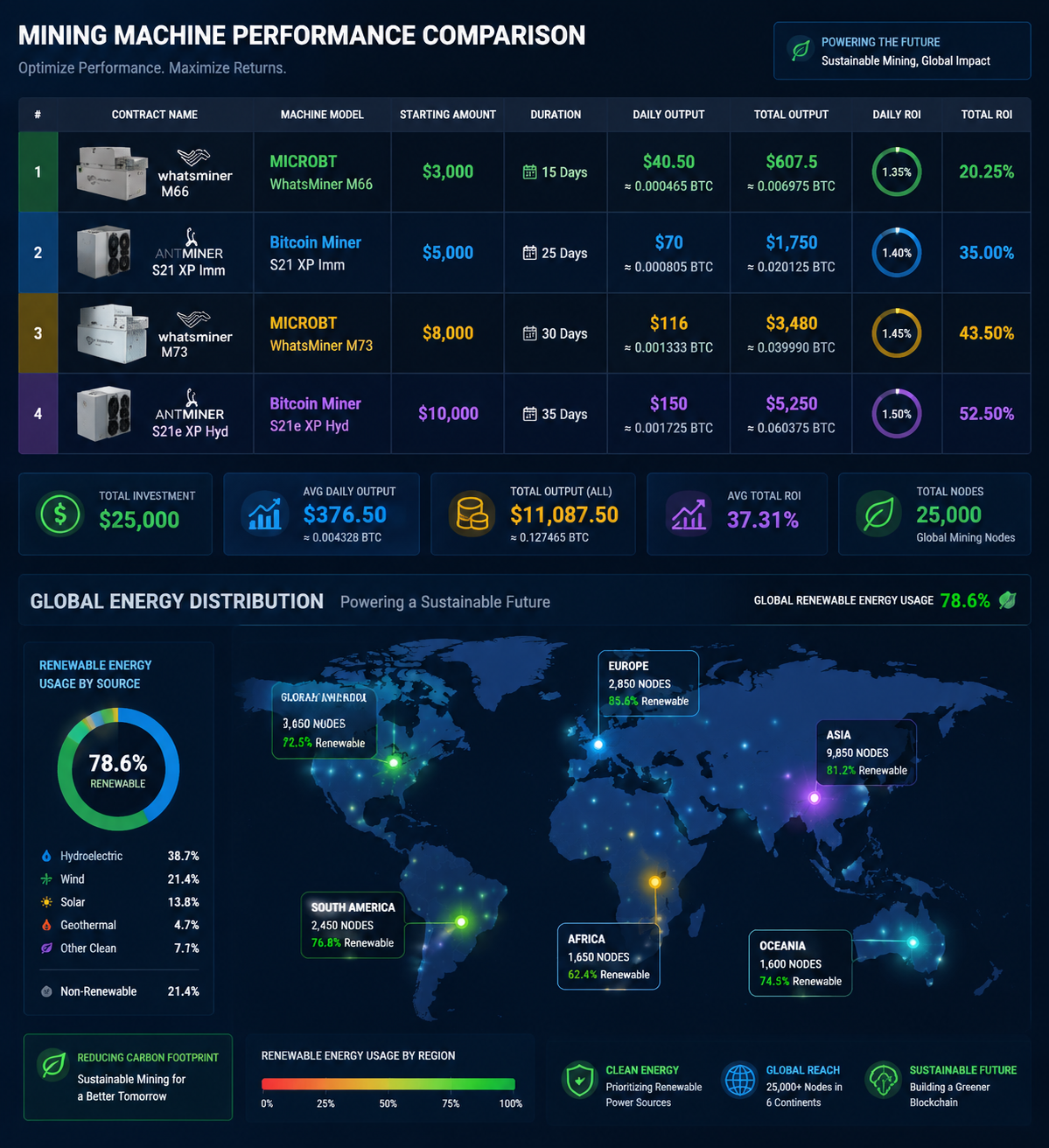
As infrastructure requirements become more complex, cloud-based computing allocation services are also attracting broader market attention.
Rather than independently purchasing and maintaining physical mining equipment, some participants are increasingly turning toward scalable infrastructure access models supported by large-scale operational facilities.
According to SHR Miner Cloud Infrastructure Services, the company currently operates multiple computing allocation models based on hardware architectures including the WhatsMiner M66, WhatsMiner M73, and S21 series systems.
The company stated that these infrastructure models are designed to support different operational preferences, including shorter-cycle and medium-cycle participation environments optimized for infrastructure stability and cooling efficiency.
Industry observers believe growing interest in flexible infrastructure participation reflects broader market demand for simplified operational access and reduced hardware management complexity.
Limited-time registration initiative
SHR Miner stated that newly registered users can currently receive a $15 trial computing allocation bonus as part of a limited-time global onboarding initiative amid growing interest in AI infrastructure participation and cloud-based computing services.
Register for SHR Miner Cloud Infrastructure Access
Additional information is available via:
Explore SHR Miner Infrastructure Services
Infrastructure efficiency may shape the next growth cycle
As artificial intelligence infrastructure continues expanding globally, analysts believe long-term competitiveness may increasingly depend on infrastructure efficiency rather than aggressive short-term expansion alone.
Energy reliability, operational resilience, and sustainable hardware management are now viewed as essential components of scalable computing infrastructure.
Companies capable of balancing these factors while maintaining stable operational performance may continue attracting attention as global demand for AI-related computing capacity grows.
DISCLAIMER – “Views Expressed Disclaimer – The information provided in this content is intended for general informational purposes only and should not be considered financial, investment, legal, tax, or health advice, nor relied upon as a substitute for professional guidance tailored to your personal circumstances. The opinions expressed are solely those of the author and do not necessarily represent the views of any other individual, organization, agency, employer, or company, including NEO CYMED PUBLISHING LIMITED (operating under the name Cyprus-Mail).





Click here to change your cookie preferences