
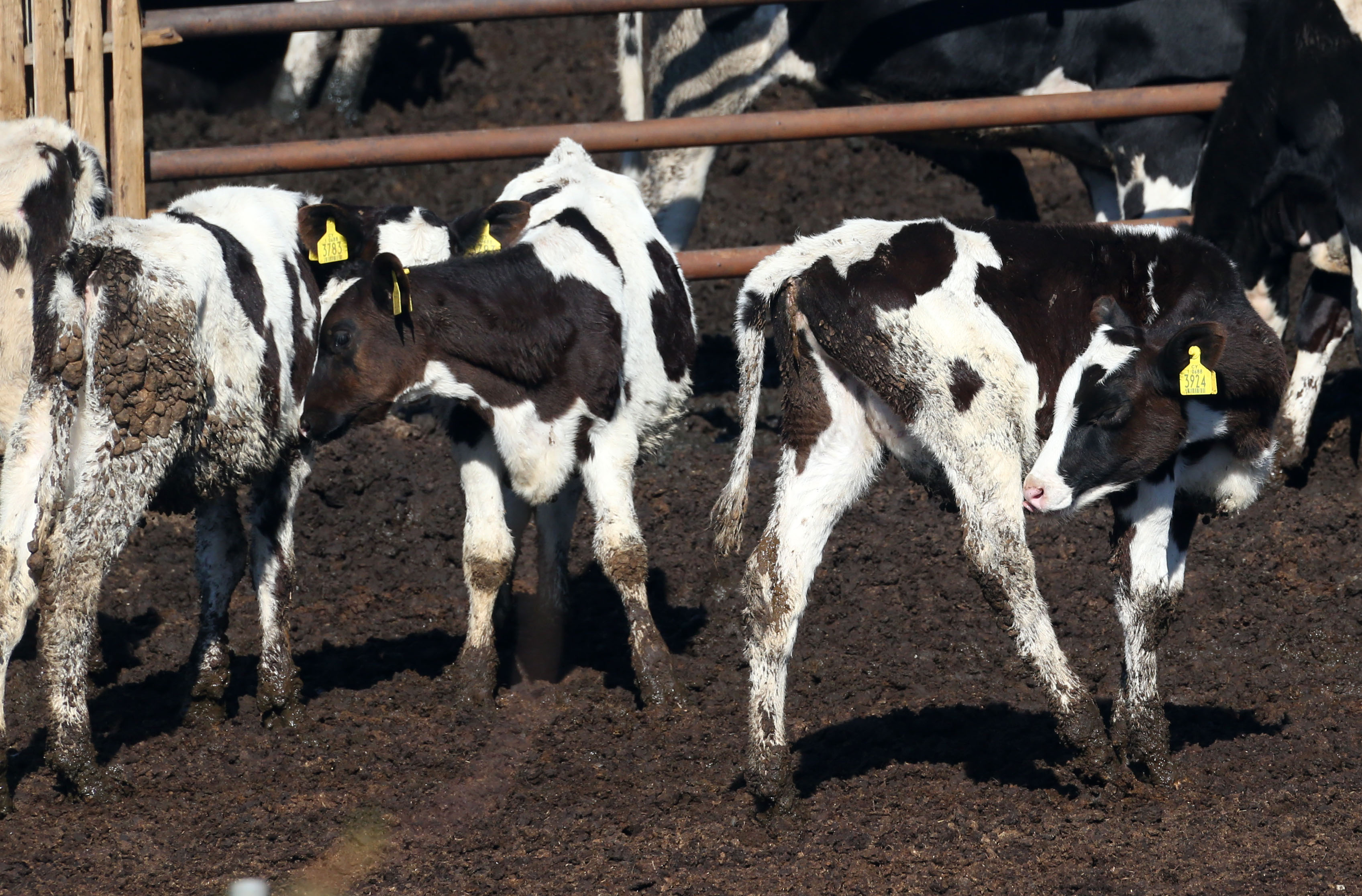
More than €35.6 million will be allocated to compensate and support livestock farmers affected by the foot and mouth disease outbreak.
Announced by the veterinary services on Friday, the package came days after protests and criticism from livestock farmers, who argued the compensation process lacked clarity despite ongoing negotiations with the government.
Payments began on Wednesday, and authorities said the aim was to complete all eligible disbursements within the month.
According to the veterinary services, compensation for culled animals ranges from €47 to €420 for sheep and goats, €150 to €2,500 for cattle and €35 to €5,000 for pigs.
Officials said the figures were determined by specialised compensation committees appointed under existing legislation.
“To determine the categories and prices, the market value of the animals, the breed and genetic value, the age and the production status were taken into account,” the veterinary services said.
The department said compensation categories were established using documented market evidence, with participation from the agricultural research institute, farming organisations and livestock representatives through a special advisory committee supervised by Agriculture Minister Maria Panayiotou.
Authorities said indicative invoices submitted by farmers were also used to reflect “real market data”.
In addition to compensation for livestock losses, affected farmers are receiving “100 per cent compensation for milk and feed confiscated and destroyed, based on recent invoices before the outbreak”.
The veterinary services published examples of individual compensation payments.
One cattle farm where 269 animals were culled received €476,280 for livestock losses, along with €22,632 for feed destruction and €10,087 for destroyed milk.
Another farm with 195 cattle received €350,000 in livestock compensation, with additional payments for feed and milk losses.
A sheep and goat unit where 1,368 animals were destroyed received €306,569 for livestock losses, plus €14,831 for feed and €32,206 for milk destruction.
Another farmer received €47,489 after 212 sheep and goats were culled.
The government also announced additional support measures aimed at helping affected farmers resume operations.
These include income support for at least 12 months, livestock replenishment through a state aid scheme involving high genetic value animals and state coverage of feed costs during the recovery period.
“For each livestock farmer a state official will be appointed to support and guide the reconstruction of his unit, so that the next day can be built with proper, sustainable planning and safety,” the announcement said.
Despite the measures, farming groups continue to express reservations. Stella Petrou, spokesperson for the association ‘the voice of the livestock farmers”, said farmers still lacked sufficient information about how compensation had been calculated.
“The amount of compensation is quite high compared to other European countries, but without knowing the criteria and what they give for each animal more clearly, we cannot say that we are happy,” she said earlier this week.
Petrou also criticised the composition of advisory committees involved in the process, arguing that livestock breeders themselves were underrepresented.
“Those who decided on the compensation are not livestock breeders,” she said.
The dispute has also extended to the handling of culled animals and planned changes to halloumi production rules.
Farmers raised concerns over burial procedures and criticised a decree reducing the minimum proportion of goat and sheep milk required in PDO halloumi from 25 per cent to 15 per cent.
President Nikos Christodoulides defended the compensation package this week, saying the payments were “up to 200 per cent higher” than comparable schemes elsewhere in Europe.
Farmers, however, have warned that further demonstrations remain possible if their concerns are not addressed, although representatives described protests as “a last resort”.



Click here to change your cookie preferences