
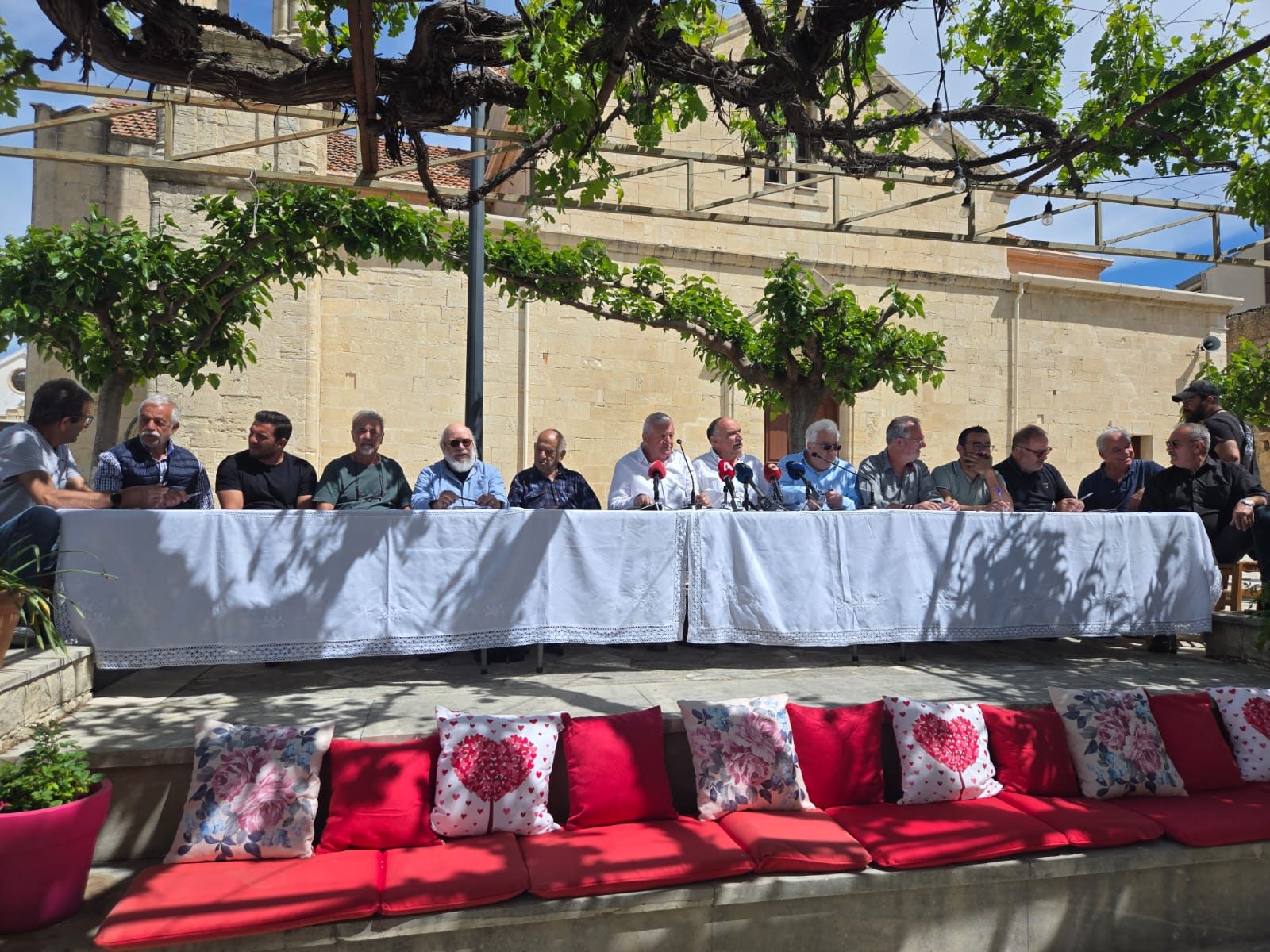
The president of the Arsos community, Giannis Giannakis, on Tuesday pushed back against “misinformation” concerning the controversial redevelopment of the abandoned village of Trozena, describing the project as “a long-overdue response to decades of state neglect”, rather than the threat portrayed in recent public debate.
Speaking at a press conference in the village square attended by representatives of surrounding villages, Giannakis said the purpose of the gathering was to answer what he described as misinformation surrounding the project and send a wider message about the abandonment of rural Cyprus.
“Trozena is a classic example of state indifference,” he said, arguing that the village’s eventual abandonment was largely the result of the failure to provide basic infrastructure, particularly electricity.
According to Giannakis, successive governments and the electricity authority had made promises over the years to electrify the village, but the project never materialised due to cost and state budget constraints, ultimately forcing residents to leave.
Now, he said, the development represents a rare chance for economic and social revival not only for Trozena, but for Arsos and neighbouring communities long affected by depopulation and economic stagnation.
Around 10 families from Arsos are already employed through the project, he said, while estimating that more than 50 people will be working there once the development is complete. “This area has been isolated for years,” he said, adding that the project had already begun attracting people back to the region.
Giannakis also revealed that, given the sensitivity of the surrounding forest area and recent wildfire concerns, the investor has committed to providing a permanent firefighting vehicle for the area.
Allegations that the church of Ayios Georgios had been sold or was facing demolition were categorically rejected, with Giannakis saying the investor had funded maintenance works, improved the surrounding space, installed modern toilet facilities and agreed to allocate part of the parking area to the municipality for public use.
Claims that public access had been restricted were also dismissed.
“Trozena is land of the Republic,” he said, insisting that no investor or private owner could prevent access through public roads.
He was particularly critical of claims portraying the area as some form of a “ghetto,” saying such rhetoric was false, harmful, and handed arguments to Turkish media.
“Trozena was never a Turkish Cypriot village,” he said, distinguishing it from nearby Gerovasa, while stressing the historically close relations between the two communities.
He also rejected claims that local waterfalls had dried up because of the works, saying water continued to flow but had previously been obscured by dense vegetation before recent clearing.
On the environmental controversy, Giannakis argued that the debate lacked context and said Trozena was the only village in Cyprus whose residential core had been incorporated into the Natura 2000 framework without consultation with local authorities, making development significantly more complicated for landowners and contributing to the sale of properties over time.
While acknowledging that authorities are investigating possible violations, he maintained that development is permitted within Natura areas under specific conditions and insisted the investor had acted with respect for the environment, including the use of traditional materials and biodiversity measures such as bird nesting boxes.
He contrasted the scrutiny facing Trozena with what he described as far less resistance to other developments in environmentally sensitive areas elsewhere in Cyprus.
That frustration was echoed by Andreas Andreou, a resident who sold his family home in Trozena, who questioned why public outrage had surfaced only now.
“Why did everyone suddenly remember that Trozena exists?” he said angrily. “I’ve been asking for Trozena to be cleared for years, and who came? Nobody. So why shouldn’t I sell?”
Separately, investor Uriel Kurtesz, who has acquired much of the land in the area, reiterated the vision he previously described for the site, “I had a dream to create a place where people can truly rest their minds,” he said. “Not another luxury resort. A place where people can go and think.”
Giannakis closed by urging the public to visit the area themselves rather than rely on speculation. What is unfolding in Trozena, he argued, is not the creation of a closed enclave, but an attempt to revive a forgotten corner of rural Cyprus.





Click here to change your cookie preferences