
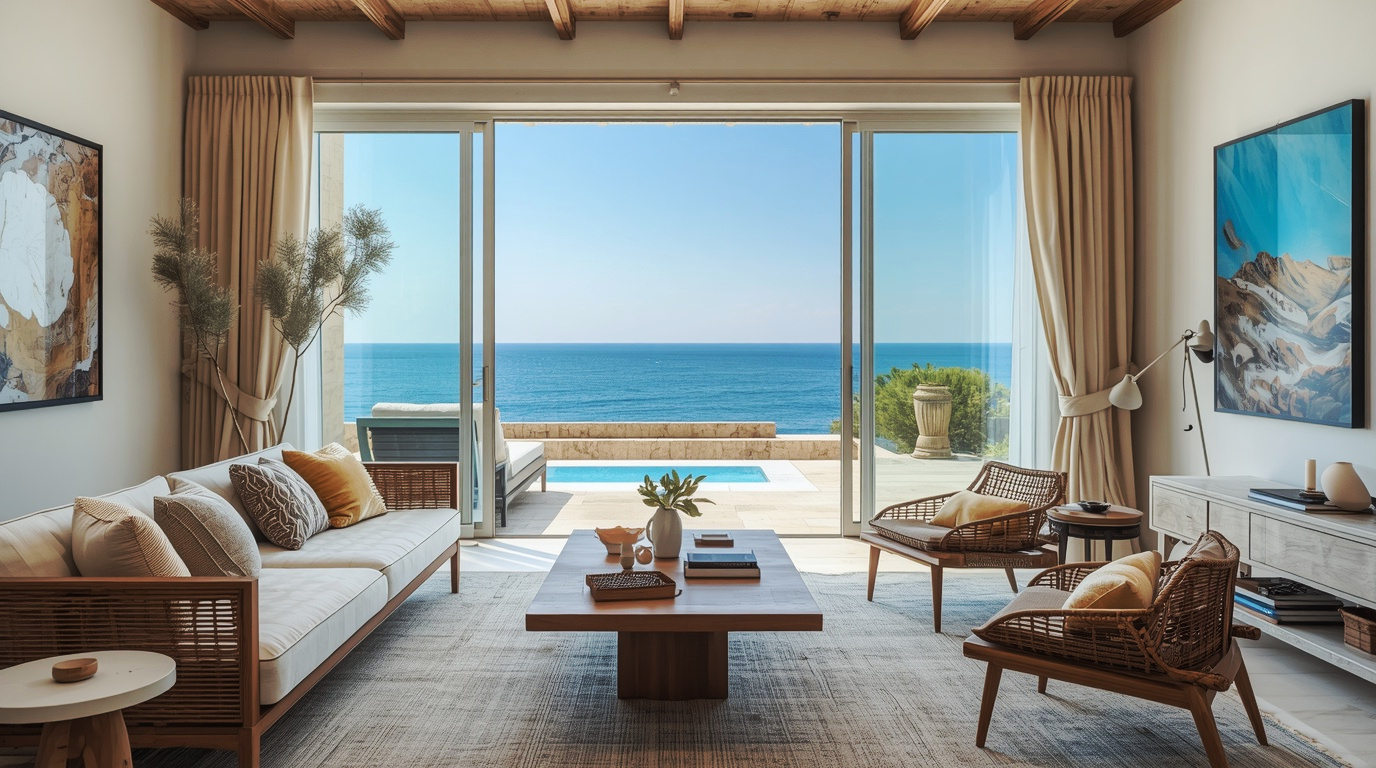
This is one reason why the Mediterranean approach to interior design has become such a reliable reference point for coastal homes far beyond the region itself. B&B Italia has built entire outdoor furniture collections around this way of thinking: pieces that strike a balance between weight and lightness; that use materials such as woven fibers, treated metals, and stone-effect surfaces; and that can withstand salt, UV exposure, and the general harshness of a coastal environment while maintaining the refinement you’d expect indoors.
Why Mediterranean style makes sense for seaside homes
The Mediterranean interior was not designed for beaches; rather, it evolved alongside them. It features thick walls that retain cool air throughout the afternoon, shaded outdoor spaces that function as rooms from spring through autumn, and a preference for natural materials that improve with age rather than showing wear. These are not aesthetic choices in the conventional sense. Rather, they are responses to specific conditions that produce spaces of considerable beauty.
The materials that survive the coast
Coastal environments can be tough on surfaces. Salt air accelerates the oxidation of metals, UV exposure fades dyed fabrics, and humidity warps untreated wood. This doesn’t mean you can’t have beautiful things by the sea; it means you have to choose them differently.
Anyone furnishing a coastal home, whether in Cyprus, Greece, Portugal, or elsewhere, should consider stone or large-format porcelain flooring (that handles sand and moisture better than wood), linen upholstery (which breathes in a way that synthetic fabrics do not), and outdoor furniture. Not the folding plastic variety that is dragged out in the summer, but rather, pieces that are designed for permanent outdoor living. Brands like Royal Botania and Paola Lenti focus entirely on this, producing collections where the distinction between indoor and outdoor comfort has effectively collapsed.
Designing around the sunlight
One of the defining features of Mediterranean coastal light is its intensity. Direct midday sunlight can bleach color, flatten texture, and make heavily patterned interiors feel chaotic. Spaces that work best in this environment tend to be restrained, with a limited color palette and surfaces that reflect light without glaring, such as travertine, honed marble, and whitewashed oak. Textiles that filter rather than block light, such as linen sheers, open-weave cotton, and unbleached muslin, are also ideal.
The golden rule: Outside is part of the house
Perhaps the most significant change in how people think about coastal homes in the past decade is how they view outdoor spaces. People now understand that a terrace or garden is one of the primary living spaces of a house, not an afterthought. In Mediterranean climates, this space can be used eight or nine months of the year, so it deserves the same level of consideration as any interior space.
That means a proper shade structure, lighting that extends usability into the evening, and furniture that provides the same level of comfort as indoor furniture. Priorities include deep seating, side tables at the right height, and surfaces that won’t become too hot to touch in direct sunlight. If done well, the outdoor space makes the whole house feel larger. At the coast, where space often comes at a premium, that matters considerably.





Click here to change your cookie preferences