
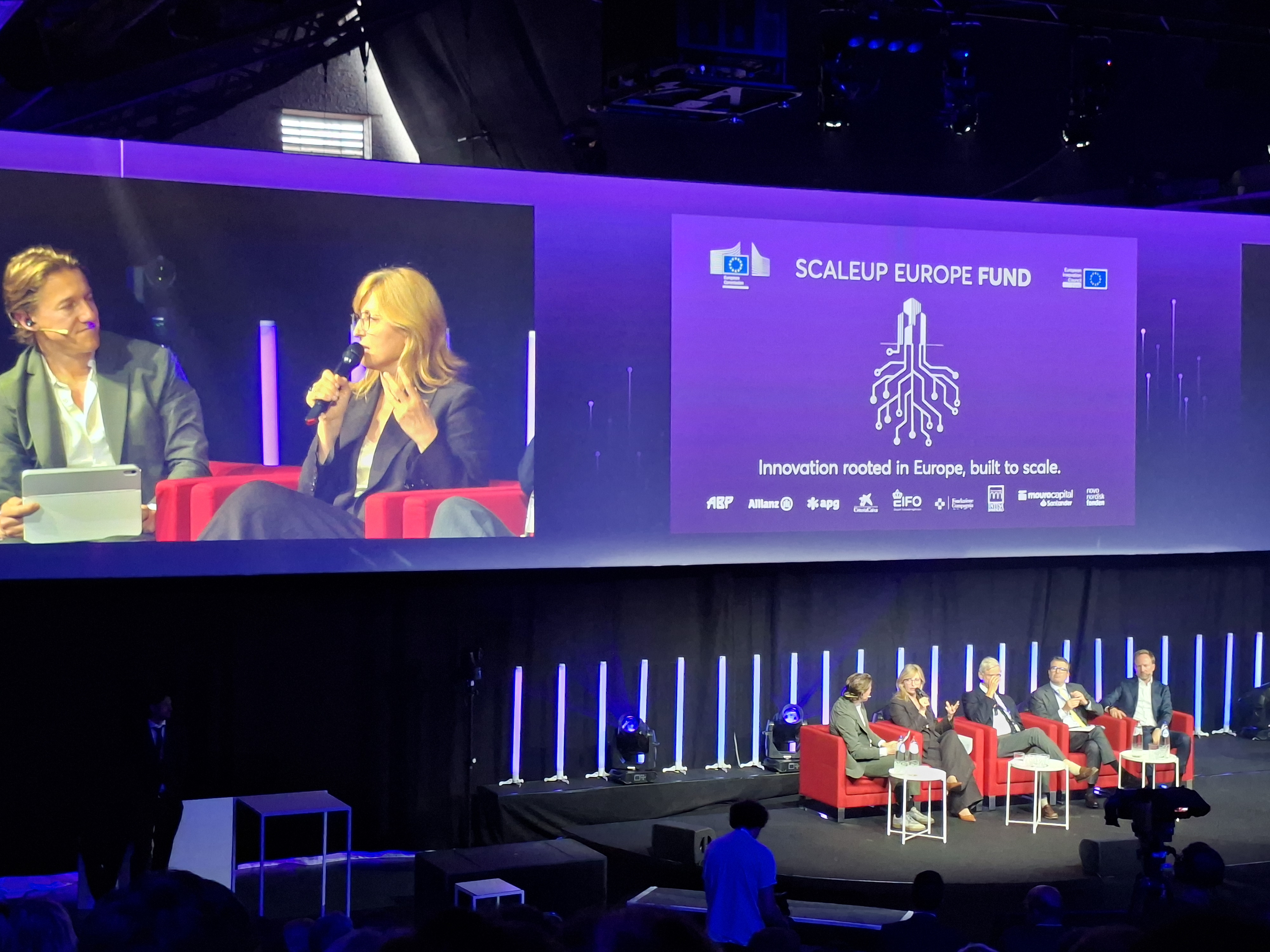
The European Union this week advanced two major initiatives in its innovation and technology strategy, unveiling progress on the Scaleup Europe Fund alongside the announcement of winners of the European Prize for Women Innovators 2026 at the European Innovation Council Summit in Brussels.
The Scaleup Europe Fund, described as a multi-billion late-stage and growth investment vehicle, is designed to support Europe’s most promising companies in strategic technology sectors, including artificial intelligence, quantum technologies, semiconductors, robotics, autonomous systems, energy technologies, space technologies, biotechnology, medical technology, advanced materials and agritech.
The initiative aims to address what the EU described as a critical investment gap in scaling European technology companies, many of which struggle to access sufficient capital to expand and compete globally.
The fund is backed by a group of founding investors including Novo Holdings, EIFO, CriteriaCaixa, Santander/Mouro Capital, Fondazione Compagnia di San Paolo, Intesa Sanpaolo, Fondazione Cariplo, APG Asset Management on behalf of Dutch pension fund ABP, Wallenberg Investments and Allianz, alongside the European Commission.
Officials said the Scaleup Europe Fund will operate within the existing European Innovation Council Fund structure, although it will be managed by a fully privately owned and market-based fund manager.
The initiative forms part of the EU Startup and Scaleup Strategy, announced by Commission President Ursula von der Leyen in her 2025 State of the Union address, with the aim that “the best of Europe can choose Europe”, according to the Commission.
Following a competitive selection process, the European Innovation Council Fund Board selected EQT as the preferred investment adviser and fund manager for the Scaleup Europe Fund, which will oversee what is expected to be a €5bn initiative supporting deep tech scaleups across Europe.
The Commission said the next phase will see finalisation of legal agreements covering governance, structure and investment framework, while founding investors continue internal approvals and due diligence processes.
These steps are expected to conclude in the coming weeks, paving the way for a first closing and the start of investment activity, with initial investments planned for autumn 2026.
The fund and its management team are set to be formally presented at the EIC Summit on June 3, 2026.
Alongside the fund announcement, the EU also revealed the winners of the 12th European Prize for Women Innovators, which recognises female entrepreneurs driving innovation across Europe and contributing to a more competitive and inclusive economy.
European Commissioner for Startups, Research and Innovation Ekaterina Zaharieva said “The European Prize for Women Innovators recognises the bold ideas and leadership of women who are transforming innovation into real-world impact. This year’s finalists and winners show how entrepreneurship and diversity go hand in hand in strengthening Europe’s innovation capacity. Their achievements are an inspiration for the next generation of innovators across Europe,” Zaharieva said.
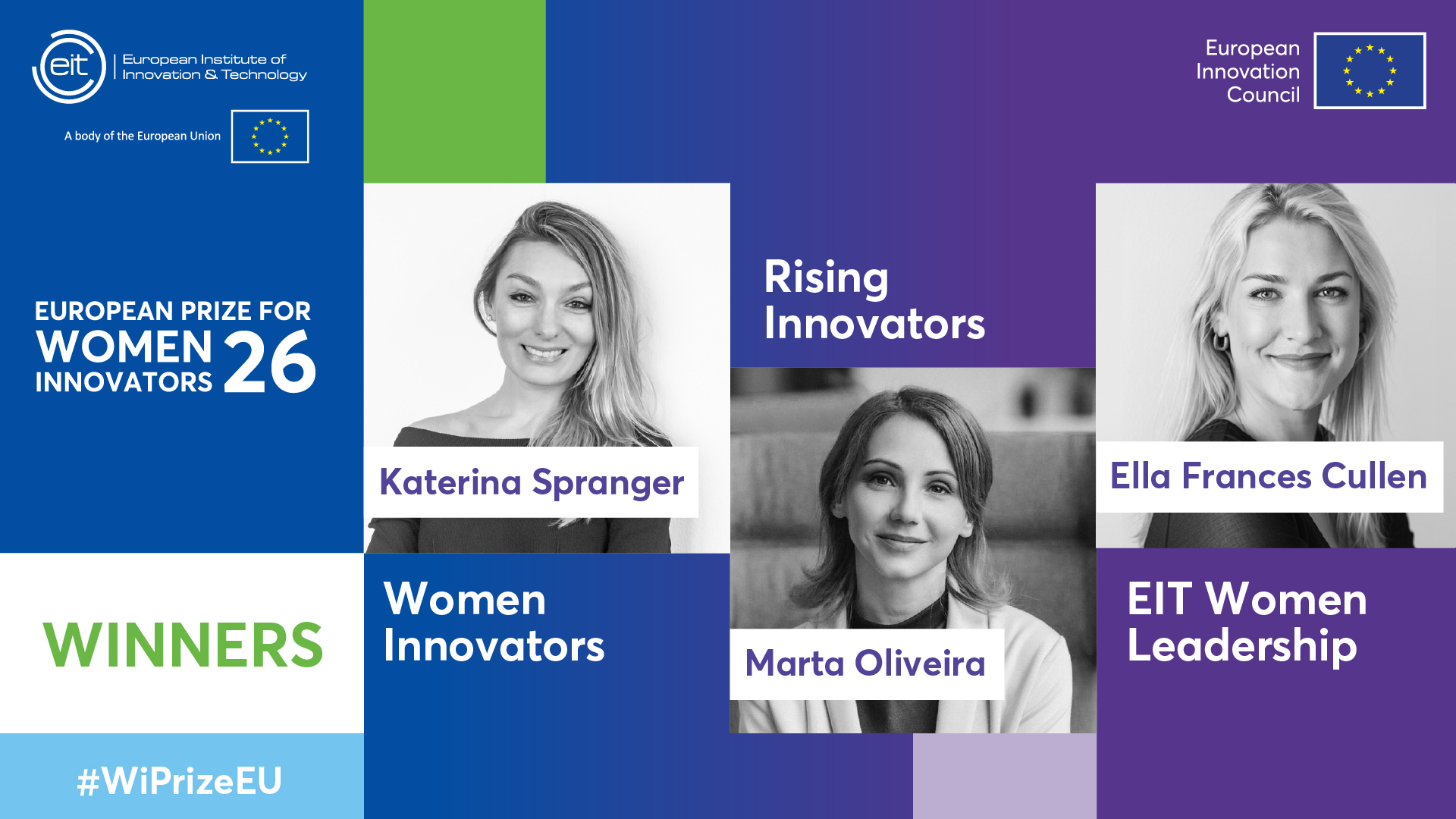
The awards are jointly managed by the European Innovation Council and SMEs Executive Agency and the European Institute of Innovation and Technology, and are divided into three categories.
In the EIC Women Innovators category, the winner was Katerina Spranger, founder and chief executive of Oxford Heartbeat, which uses artificial intelligence to improve treatment of brain aneurysms.
Second place went to Elena Heber, co-founder and managing director of HelloBetter, which provides digital therapies for mental health care.
Third place was awarded to Judit Camargo Sanromà, founder and chief executive of Roka Furadada, which develops eco-friendly UV protection ingredients aimed at reducing skin cancer risk and marine environmental harm.
In the EIC Rising Innovators category, the winner was Marta Oliveira, co-founder and chief operating officer of ATMOS Space Cargo, which is developing reusable space capsules for returning materials from orbit.
Second place went to Judit Giró Benet, founder of The Blue Box, which is working on a urine-based early detection test for breast cancer.
Third place went to Carin Lightner, co-founder and chief executive of Enantios, which is developing faster molecular analysis tools to support new medicines.
In the EIT Women Leadership category, the winner was Ella Frances Cullen, co-founder and chief marketing officer of Minespider, which develops blockchain-based digital product and battery passports for supply chain traceability.
Second place went to Stefania Raimondo, co-founder of Navhetec, which is developing plant-based nanomedicine using particles extracted from citrus juice.
Third place went to Neide Vieira, co-founder and chief operating officer of IPLEXMED, which is developing graphene-based biosensors for rapid infectious disease diagnostics.
The European Commission said the awards highlight the growing role of women-led innovation in Europe’s technology ecosystem, with prize categories offering funding of up to €100,000 for winners depending on category.
Officials added that the initiative aims to encourage more women and girls to pursue careers in innovation, entrepreneurship and deep tech development across Europe.





Click here to change your cookie preferences