
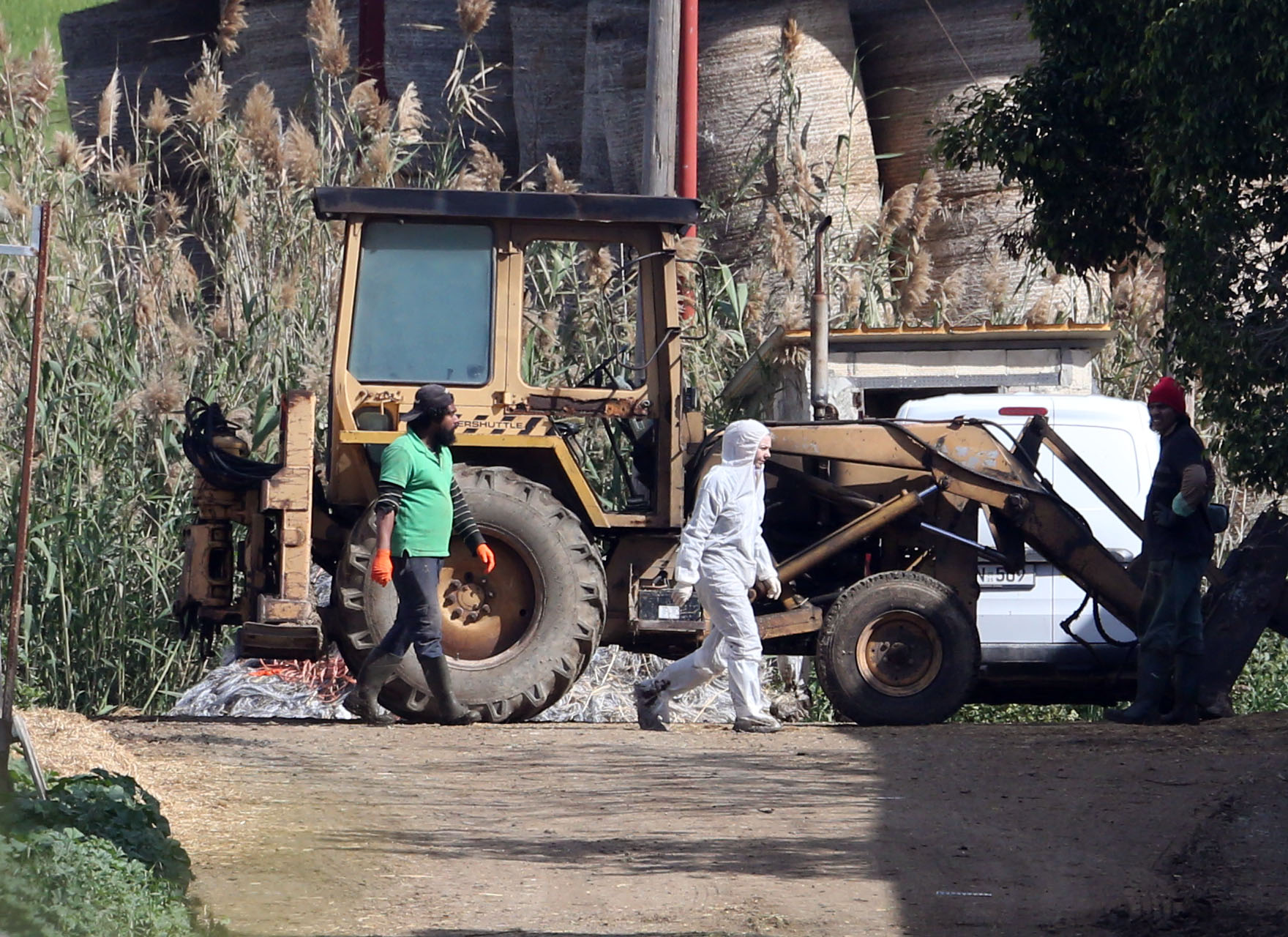
Almost all pending culling of animals from farms on which foot and mouth disease was detected has been completed, the agriculture ministry said on Saturday.
It said that around 6,650 animals were culled in the space of two days prior to Saturday morning.
“To achieve this goal, officers from the veterinary services department worked non-stop, day and night, making superhuman efforts under particularly difficult conditions,” it said, before adding that culling had continued in the Larnaca district until 4am on Saturday.
It also praised the police and the National Guard for ensuring the safe and orderly execution of culling efforts.
“The cooperation of all those involved is the most powerful tool for eradicating the disease, protecting the livestock sector, and ensuring the country’s food security,” the ministry said.
Veterinary association chairman Demetris Epaminondas, meanwhile, said that more than half a million doses of the disease’s vaccine will arrive on the island on Sunday, before clearing customs on Monday or Tuesday.
Farmers agreed on Tuesday to accept the culling of livestock on farms where foot and mouth disease has been detected, with Agriculture Minister Maria Panayiotou announcing at the same time that there would be an “increase in compensation” for sheep and goat farmers whose animals are culled as a result of outbreaks of the disease.
Compensation amounts already exceeded those initially foreseen by the European Union’s maximum values on which it will agree to co-finance compensation for culled animals.
Prior to Tuesday’s meeting, the government’s position was to pay farmers between €43 and €178 per regular sheep and goat and between €47 and €420 per sheep and goat which is deemed to be of “high genetic value” as compensation if they are culled as a result of the disease.
Additionally, it was due to pay farmers between €150 and €1,500 per regular cow culled, with this figure rising to up to €2,500 for exceptional cattle.
The EU’s maximum values sit at €1,000 per cow and €140 per sheep, with the bloc financing 30 per cent of compensation payments up to that amount.
In addition, Panayiotou said that increased fines will be levied on those found to be illegally moving livestock to and from the north. If cabinet accepts her proposal, on-the-spot fines of up to €100,000 could be issued, while courts will be empowered to issue fines ranging up to €250,000.
She also said that animals will be subject to two forms of test – the PCR test, familiar to most as the method of testing used on humans for Covid-19, and the enzyme-linked immunosorbent assay, known as ‘Elisa’, which tests blood.
Test results, she said, will be evaluated by the epidemiological group formed to deal with the outbreak, with that group then tasked with “deciding on further utilisation of the methods”.




Click here to change your cookie preferences