
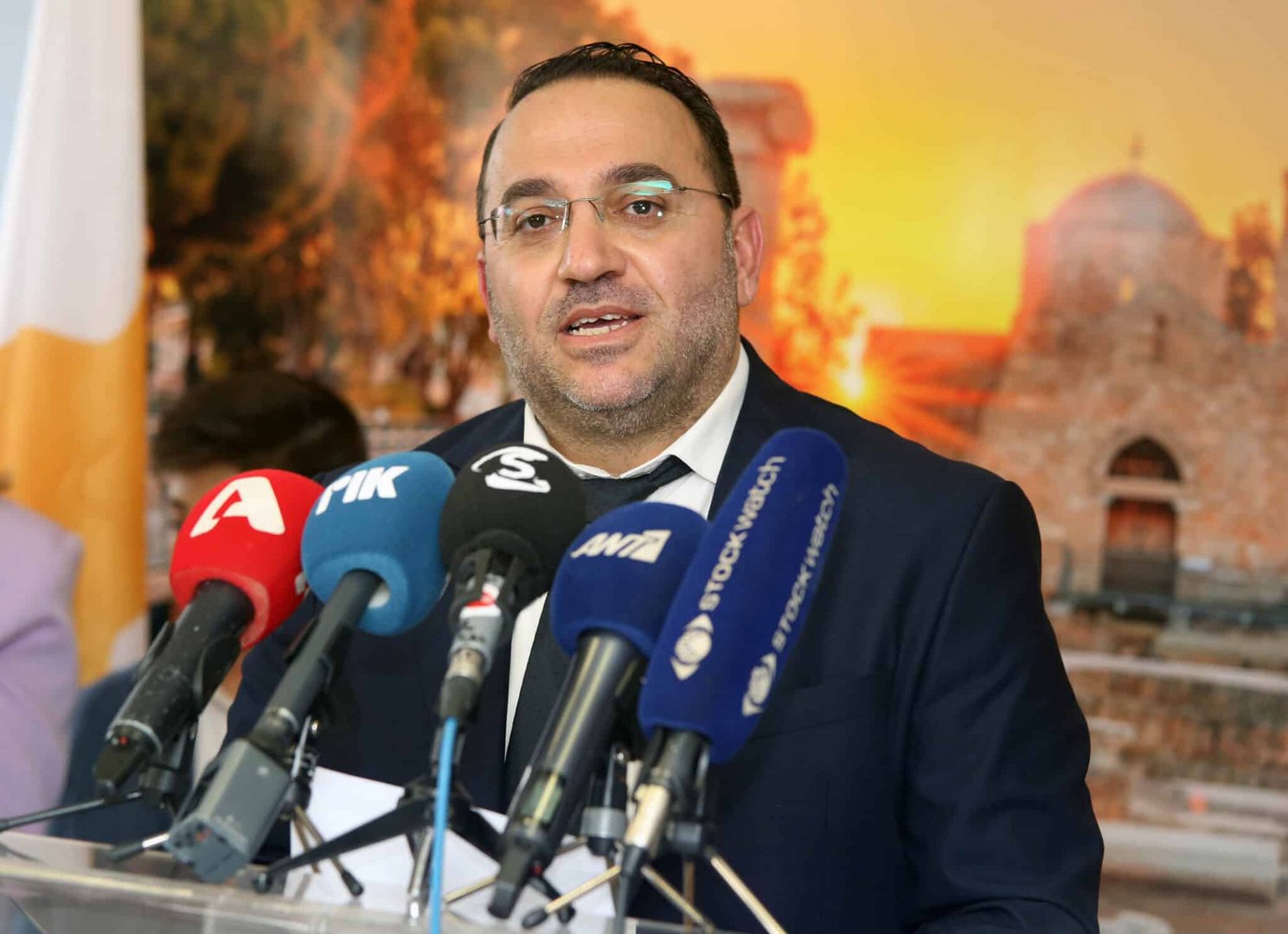
The rift between Tourism Deputy Minister Costas Koumis and his permanent secretary Neophytos Papadopoulos, which culminated in the former placing the latter on leave and will soon be deliberated in court, first arose in the aftermath of an Iranian-made drone being fired at Cyprus in March, according to reports on Wednesday.
According to the Cyprus News Agency (CNA), “information from the government” suggests that the pair found themselves at loggerheads over whether the drone strike, which saw a drone hit a hangar at the British Akrotiri air force base, had predicated a crisis in the island’s tourism sector.
The report stated that Koumis “believed that there was” a crisis, while Papadopoulos “expressed the opposite opinion”.
On this matter, it said that Koumis had “made many attempts to find a formula for cooperation”, but that “from the result, it appears that the differences were not bridged”.
Papadopoulos’ lawyer Chris Triantafyllides offered a slightly different version of events, telling CNA on Wednesday that there had been a “disagreement” on the matter of “service” between his client and Koumis, which resulted in the “absence of friendly cooperation between the two sides”.
“These are issues concerning the operation of the service and not corruption cases or other issues which concern public debate,” he said.
He added that Koumis had recommended to cabinet that an investigating officer be appointed to “examine the problems which have arisen” and as such requested that Papadopoulos be suspended from his duties for three months.
Papadopoulos’ objection to this, he said, will rest on the premise that Koumis had no constitutional authority to request such a thing as the very existence of deputy ministers is unconstitutional by its nature.
He said that the constitution only “refers to the existence of 11 ministries and grants the president the power to appoint ministers, but not deputy ministers”.
Tourism booking figures across the island fell in the aftermath of March’s drone strike, with hoteliers’ association (Pasyxe) chairman Thanos Michaelides saying as recently as two weeks ago that “we are at lower levels than we should have been”.
In response to the fall in booking figures, Pasyxe had called on the government to provide financial support to those who may find themselves short of work in light of lower-than-expected booking levels, while hotels and other tourism-related businesses delayed their summer reopening.
The government then made repeated efforts to stress that, in spite of the drone strike, the island was and is safe, with Koumis attending the Cyprus Marathon in March and saying that the marathon in and of itself “is a very important message, that tourism activity in our country continues unhindered”.
President Nikos Christodoulides, too, told Greek business news website money-tourism.gr that the island “remains a stable European pillar in a geographical area of particular geopolitical importance”
“The country has repeatedly proven that it has the ability to adapt to difficult conditions and maintain its … momentum, even in times of uncertainty,” he said.
On the matter of the conflict in the Middle East, he stressed that Cyprus is “not part of the region’s problems, but on the contrary, functions as a pillar of stability and cooperation”.
“The island’s location, combined with its status as a member state of the European Union, make Cyprus an important connecting link between Europe and the Middle East,” he said.



Click here to change your cookie preferences