
Diagnosed twice with stage-four cancer, one local doctor refused to quit medical school, supported by a wife who can ‘get through tough things’
Stronger and softer, says Yianoula Kyprianides when I ask how her experience – actually more the experience of her husband Kyriacos – has changed them both.
‘Stronger’ is obvious enough. “‘Stronger’ as in, I can get through tough things,” says Yianoula.
“It’s made me more resilient, I think,” agrees Kyriacos. “I mean, I’ve been through hell and back, almost,” he adds – an unusually emotional turn of phrase, by his standards. Understandable, though. But ‘softer’?
“‘Softer’ as in feeling like I need to look at the other person,” she explains. “You don’t know what the other person’s going through, why they’re being how they’re being. Maybe someone’s being actively rude, or upset, or angry – [but] maybe this person’s going through something…
“Because I was going through something, and people didn’t see it. And he was going through something” – meaning Kyriacos – “and people didn’t know.”
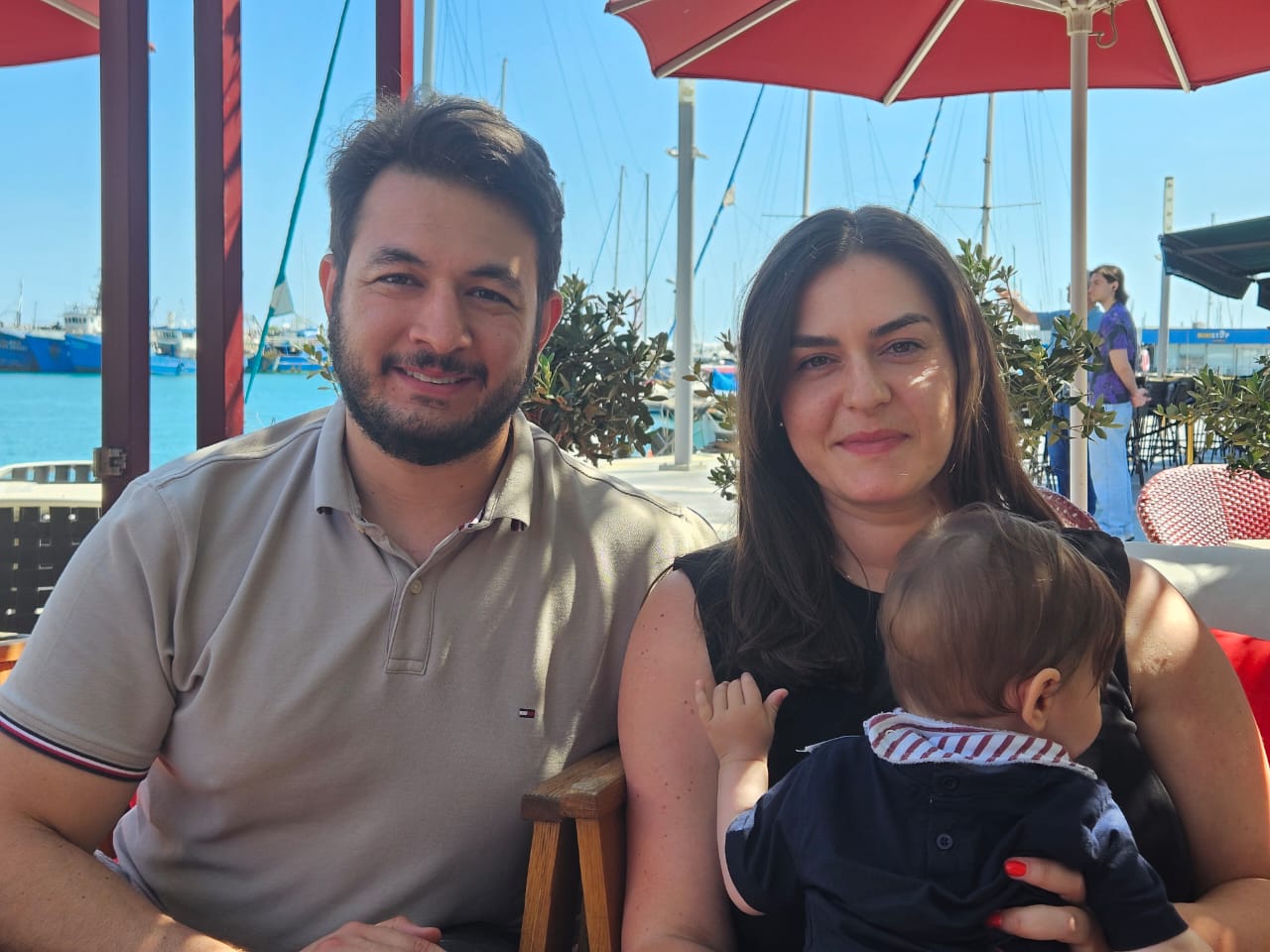
You wouldn’t know to look at them now, either, that they ever went through anything traumatic – a young couple with an eight-month-old baby, sitting al fresco at an ice-cream shop in the Limassol marina, the baby boy alternately burbling contentedly and starting to fidget and cry as his parents talk about stuff that happened before he was born.
Limassol’s a compromise, halfway between Nicosia and their home in Peristerona near Polis – not far from Neo Chorio, where both their families are originally from, though Yianoula grew up in Johannesburg and Kyriacos was born in the US (a suburb of Detroit called Sterling Heights), only coming back to Cyprus at eight years old.
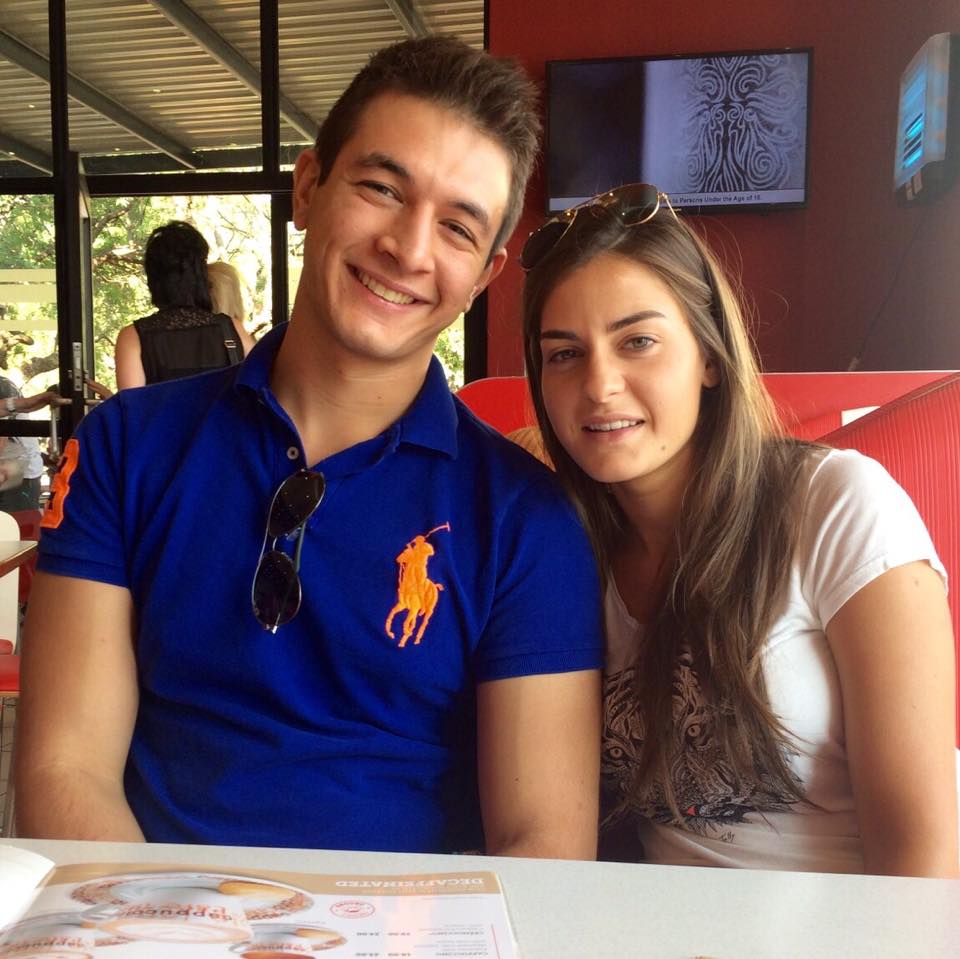
He’s now 31, she’s 28. Both are naturally active, extroverted people. “I love clubbing,” says Yianoula when I ask about hobbies. “And we both love the gym.” He was always into nutrition, likes cooking (he’s done it semi-professionally; his parents are in the restaurant business) and sports, both watching and playing. She grew up doing “all outdoor sports in South Africa, wakeboarding, jet-skis. I was a boy – I was on the quads all the time, in the mud!”.
They’re not famous, just an ordinary couple. Yianoula studied accountancy and got a job at Deloitte, though she had to quit because… well, we’ll get to that shortly. Kyriacos studied medicine – and is now, just this week in fact, getting his degree, having finally qualified after six heart-wrenching years.
Twice her voice breaks and she seems about to cry, as they recount the story of those six years – both times, paradoxically, when recalling moments of hope rather than despair. (It’s not actually so paradoxical; if you’re watching a sad film you don’t cry when bad things happen, you cry when good things happen.) “I’ll never forget when he got sick the second time. His mother asked me: ‘Do you want to change your mind about this? Because this is not what a young girl signed up for’.”
Long pause… “And what did you say?” I prompt gently.
“‘There’s no way I’ll ever choose anyone else’,” she replies, and the voice cracks.
They met when Yianoula was 15, during the summer when she made the decision to relocate to Cyprus after school. (A big summer, in retrospect.) A week after making that decision, her cousin took her to a bar in Latchi, “to show me the nightlife”, and she met Kyriacos, the cousin’s friend. They clicked immediately – and the rest is history, though they started off long-distance for a couple of years while she finished high school.
For a while they overlapped, doing their respective studies at European University. She graduated, landed the job at Deloitte, so they got a flat in Nicosia. On Valentine’s Day 2021 – the most romantic day possible – he proposed, and they were officially engaged.
Kyriacos had recently embarked on his medical degree (following a first degree in nutrition), but was also seeing clients part-time as a dietician – so he wasn’t unduly worried about feeling tired all the time. He’d done blood tests just a few months earlier, in October, and everything was fine.
As time went on, however, “I kept feeling more and more tired, more fatigued… Getting out of bed seemed more and more difficult”. Yianoula didn’t notice at the time – but now, looking back at old photos, “I see him napping on the couch often, now that I go back and see”. He also had a dry cough that wouldn’t go away – but this was during Covid, and doctors assumed he’d had Covid without realising.
“Now, the cough is something that’s not common,” he points out, with the air of a medical professional. Yianoula often seems the more fiery – and potentially explosive – of the two; he, on the other hand, is calm, technical, very much the scientist. At one point he compares the various routes one can take from Peristerona to Paphos, getting quite granular. Being that personality type might’ve helped him to withstand what was coming.
The cough, in any case, was an uncommon symptom – “because I just happened to have a large lymph node in my chest, which was causing irritation to the lungs”. A chronic cough should’ve been a red flag – and he also had another weird symptom, a painful reaction where his back would seize up after drinking alcohol.
Otherwise, though, he was just a young man complaining of fatigue. A doctor put him on antibiotics, “because they thought it was long Covid,” says Yianoula. “Then he went to another doctor and they recommended another antibiotic. Then he went again after a week – they kept doing Covid tests the whole time – and they wanted to put him on another antibiotic, a third one. And Kyriacos said, ‘Enough. Something’s not right’.”
Blood tests, then a CT scan, revealed the truth. It was stage-four cancer, Hodgkin’s lymphoma.
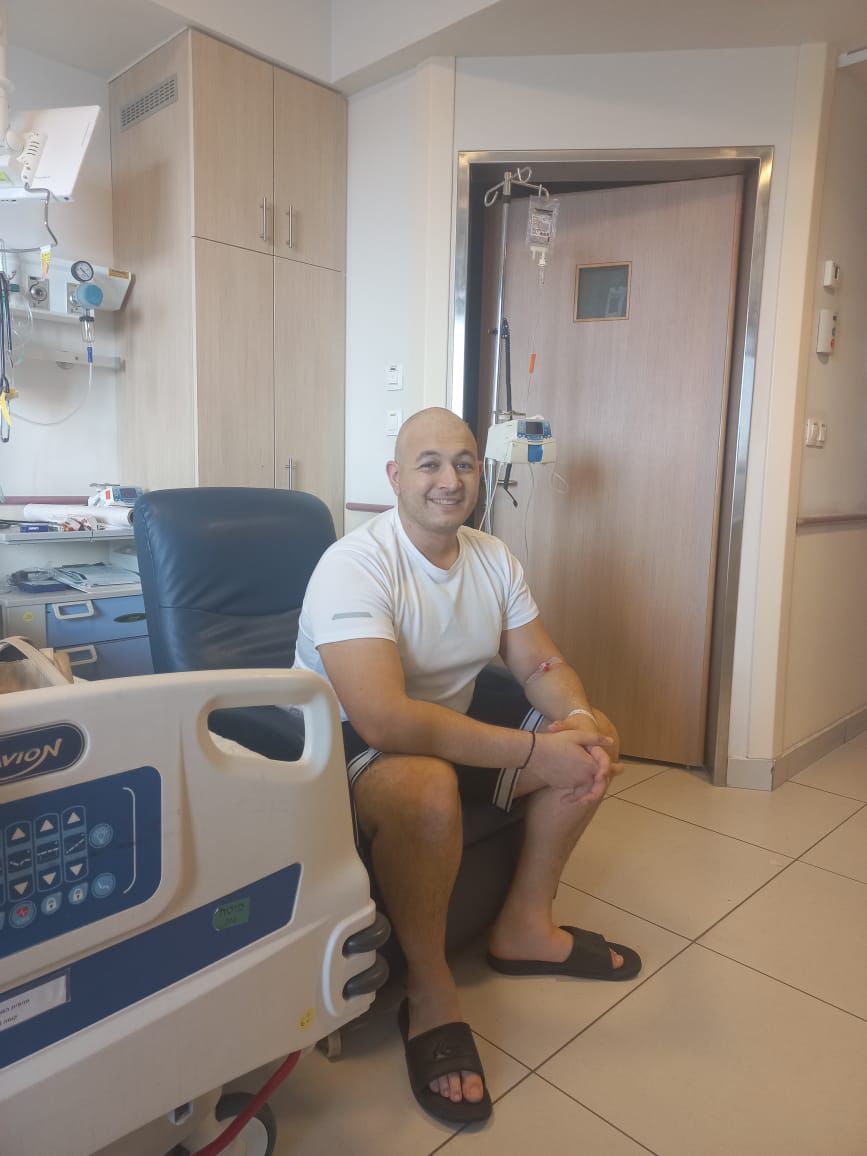
The good news is that Hodgkin’s is treatable. Even at stage four, the five-year survival rate is around 80 per cent, even higher in young people. Still, cancer is cancer. The treatment, even with the best efforts of the German Medical Institute in Limassol – “An amazing place” – involved 12 sessions of chemo that knocked him out for days at a time.
Above all, having your life upended by a potentially life-ending illness is a terrible shock when you’re young and focused on the future. ‘What do you think happens after death?’ I ask the couple, assuming they must have ideas on the subject – but the question goes down badly. “I really don’t know,” says Kyriacos. “I don’t even want to think about it!” adds Yianoula. Death doesn’t feature – shouldn’t feature – when you’re in your 20s.
How did they cope? “Whatever your coping mechanism is,” shrugs Kyriacos. “Mine was humour – almost to a fault… If I can laugh at it, I’m not going to be afraid of it.”
“His very bad sense of humour!” adds his wife. “The first time he was diagnosed, on the way home, he was like ‘I’m so basic, I’ve got the most basic cancer ever’ – and meanwhile I’m going through this anger… We were very open with each other, thank goodness. From day one, I remember he was okay with me being really angry with his diagnosis. He allowed me to have my feelings openly, and not have to hold back so that he’d be okay.”
Angry at what, though?
“I dunno. The world…”
The job at Deloitte had to go. “I ended my career, because it was just too much working till 12 o’clock at night and looking after my husband” – though in fact there’s a silver lining, since Yianoula’s now a teacher (initially in Paphos, now online since becoming a mum) and says she’s discovered “my calling”. Kyriacos, on the other hand, was determined not to quit, or even pause, his medical degree – seeing it, if anything, as a chance to beat the disease and “give something back”.
By September of 2021, he was indeed in remission. Life went back to normal, even the pandemic subsided. A few months later, however, around the time Yianoula (a valedictorian) had her belated post-Covid graduation ceremony, he received a call that the doctors had found some suspicious nodules.
He’d been having symptoms, again very vague – though they did also go to a wedding where Kyriacos drank beer, and he’d felt the searing pain in his back again. “And we both sat in the car,” recalls Yianoula, “and we were like ‘It’s back’. Before he even did the scan, we knew it.”
She pauses. “And I got drunk that night.”
A relapse of Hodgkin’s lymphoma – stage-four, again – is even more serious. Not only is the survival rate lower (50-60 per cent) but the treatment is much more aggressive – so-called salvage chemotherapy, so intense it requires a hospital stay (cannabis oil helped with the pain and nausea), then a year of immunotherapy, and in between “what’s known as an autologous stem transplant” which involves basically killing all your white blood cells and starting from scratch.
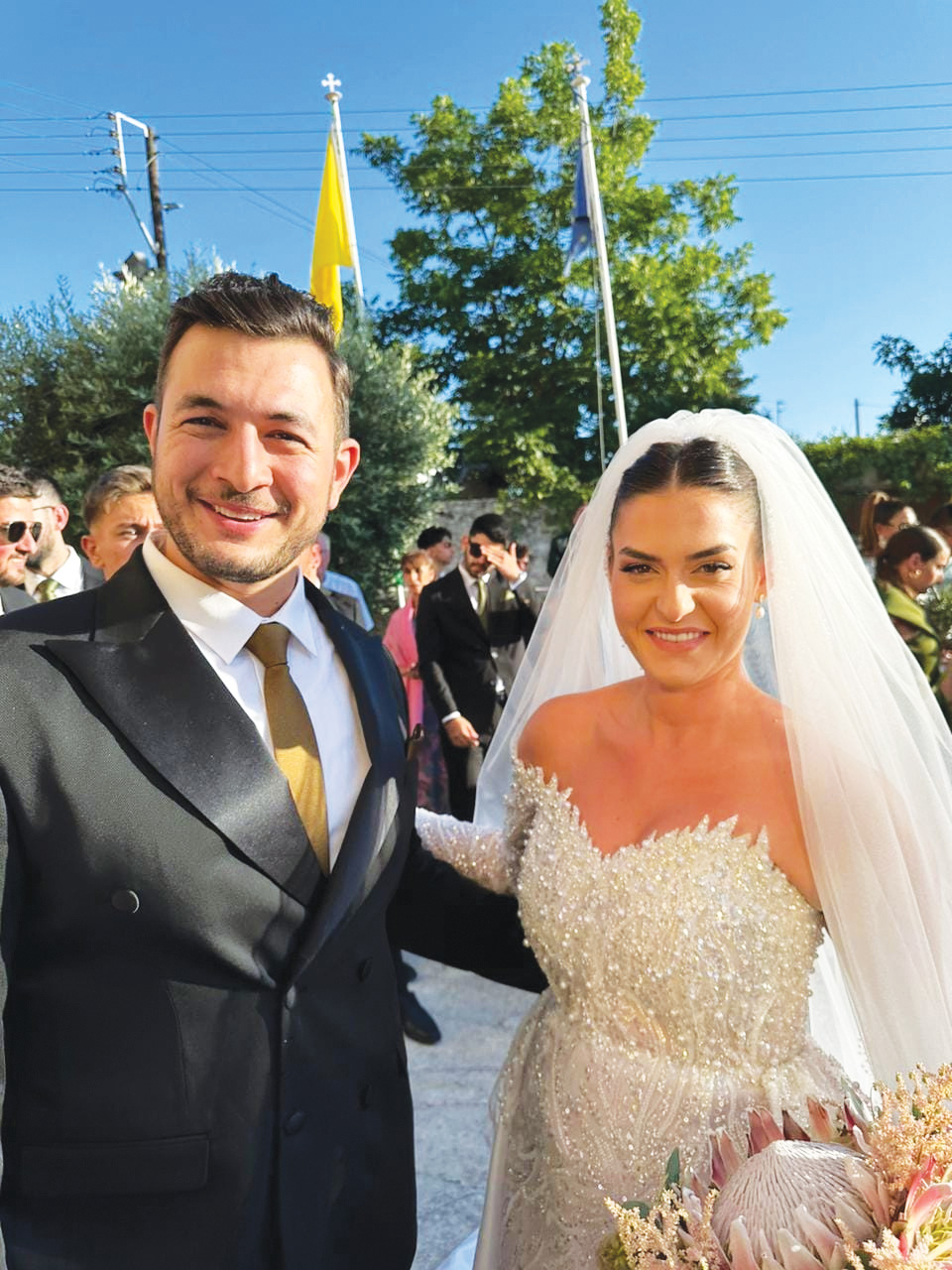
That process requires a “clean room” (otherwise any minor infection would kill you, since you have no immune system), and the couple spent three months in Israel getting treatment – but the Israeli doctor also warned them to freeze sperm, “because fertility after these treatments is less than five per cent”. Indeed, when Kyriacos did some tests two years later (after the treatment was over, and after the couple got married in 2023), they showed his sperm count at literally zero.
So how about the little burbling bundle of joy beside us?
“I didn’t want to do IVF, even though we had the option to,” says Yianoula. They did freeze some sperm – but the baby was conceived naturally, somewhat miraculously, a few months after those test results. How could it happen? Yianoula recalls her mother-in-law, a deeply religious woman (the couple are also quite religious) who repeatedly prayed to St. Ephraim, known for healing cancer.
“I remember calling my mother-in-law, and telling her ‘I’m not going to have babies’,” she recalls. “And she started crying…” – and here Yianoula’s voice breaks for the second time, like she’s about to burst into tears herself – “and she said: ‘No, you’re going to have’…” She looks away, overcome at the memory. “Yeah…”
Why even share this story with hundreds of strangers? Not for publicity, certainly (though June is actually Cancer Survivor Month) – but as “a survival guide for someone else” going through a similar ordeal, if only to help them know they’re not alone.
To be honest, it’s a bittersweet story. “We’re still hanging on for dear life,” says Yianoula, constantly worried about another relapse. Every scan is stressful, sometimes to the point of a panic attack. There’s no explanation for why a very fit, very healthy young man became ill in the first place. “I can’t say, you know, ‘Why me?’. Why not me? It can happen to anyone.
“There were no high-risk factors. There’s no history of blood cancer or lymphoma in my family at all… I always lived a healthy life. I was always into nutrition and exercising.” Some think it could be a reaction to the Covid vaccine, but in fact he got sick before he took the vaccine (and, as a doctor, firmly rejects any link). All he can think of is “maybe the stress from lockdown”, psychological factors being a possible trigger in such cases.
“I keep saying he’s lived six lives in six years of a medicine degree!” quips his wife – but he did push through to complete that degree, a small triumph (like the unexpected baby) in the face of going ‘through hell and back’. This is not, in the end, a sad story. It’s a survival story.
How exactly did Kyriacos (and Yianoula) survive? Just by doing, really – living day by day. Being honest with each other, certainly. Facing it head-on. Praying, using humour to deflate the fear. Mostly, though, it was just their reality.
“You’re going to panic,” he admits. “You’re going to have that moment when you break down… But once you come to, what are you gonna do? Are you going to just stay on the floor in a puddle of tears? Or are you going to get up and just continue?
“I knew people who went through cancer… But it never seems real until you’re going through it.”
Click here to change your cookie preferences