
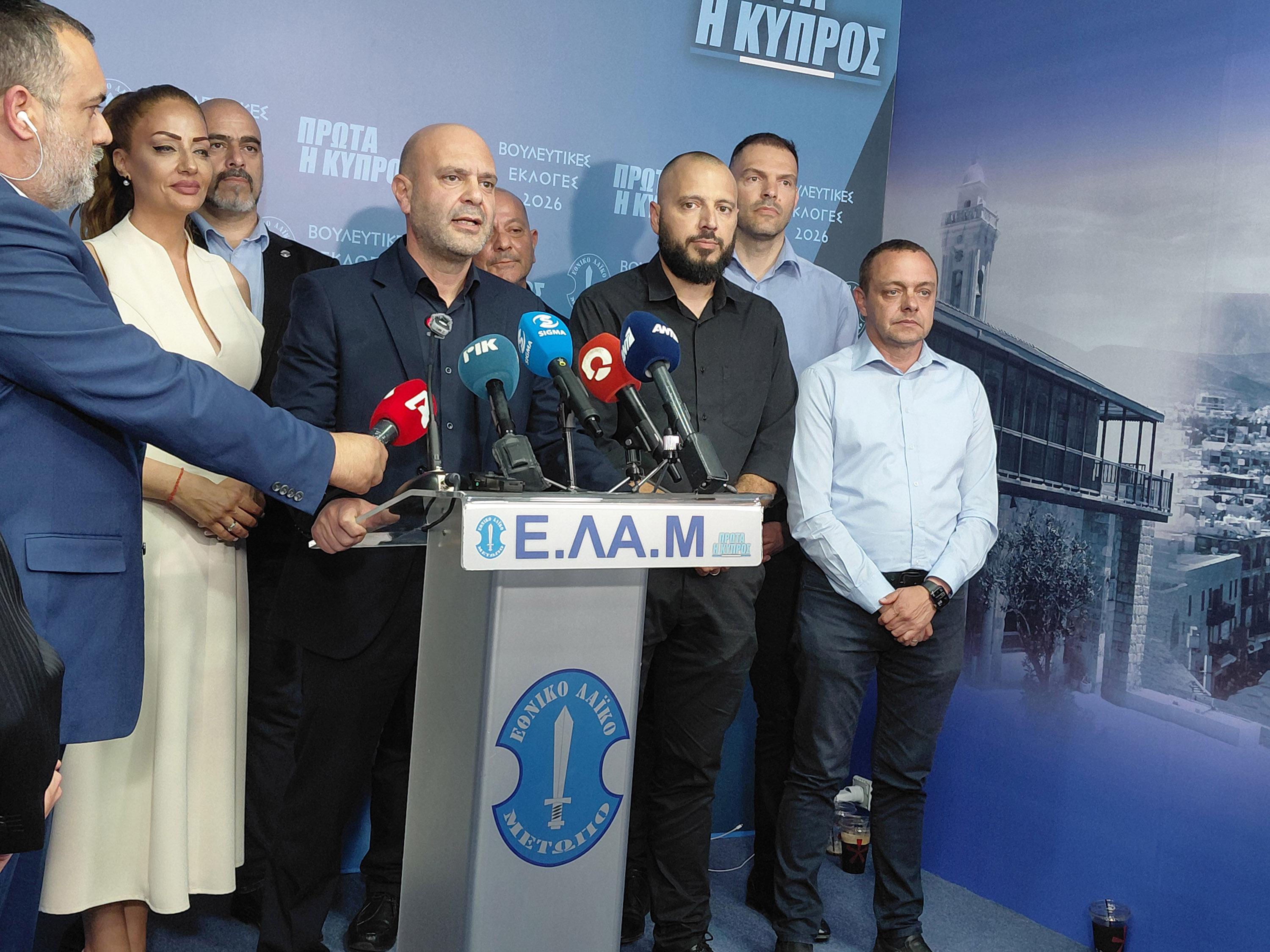
Akel’s reaction to the distribution of the House committee chairs, which was completed on Friday, defied belief. It sparked an exchange of terse announcements with Disy, which accused Akel of undermining the effort to achieve consensus and opting for “toxicity, intense confrontation and conspiracy-spinning.”
This was in response to an outburst by Akel’s parliamentary spokesman Giorgos Loucaides, who claimed that his party’s goodwill and desire to achieve consensus on the distribution of the committee chairs was blocked by a prior understanding reached by Disy, Diko and Elam and led by House president Annita Demetriou. In short, his party did not get its way over which committee chairs would go to Elam.
Loucaides was outraged that the chair of the defence committee had been given to Elam, with the possibility of the party’s leader Christos Christou chairing meetings. This, he claimed, “would harm Cyprus as the chairmanship could be exploited by Turkey.” It is a nonsensical argument for several reasons.
First, we suspect Turkey has no interest in who the chairperson of the House defence committee would be. Second, in the extremely unlikely event that Ankara expressed an opinion, nobody would take it seriously. Third, the defence committee has no executive power, its role involving discussing and approving the budget for defence. Fourth, the defence committee was traditionally chaired by Edek, the political positions of which are very similar to Elam’s, and it caused no harm to Cyprus.
This was not the only cause for Akelite indignation. Elam was also given the chair of the environment committee, from which it could cause more harm to Cyprus, as, according to Loucaides, it was made up of ‘Trumpists’ who did not accept climate change orthodoxy. No other European country allowed climate change deniers to chair an environment committee, he pointed out. Again, the impact an Elam committee chairman would have would be minimal as policy on climate change is a responsibility of the government, which does very little in any case.
Akel’s efforts were for the good of the country, said Loucaides. “We tried to help the country, making creative suggestions, so that Elam would be given only technical committees, so it would not take politically and ideologically charged committees that would cause harm to society and possibly seriously expose our country to opponents looming,” he argued in full seriousness.
Behind the cant is Akel’s commitment to marginalising the far-right party which it has demonised and considers a threat to our democratic values. But is it democratic to sideline a party that received 11 per cent of the popular vote in parliamentary elections and won eight seats, because some of its positions are considered ultra-nationalist and extremist? Elam’s links with Greece’s terrorist, fascist party Chrysi Avgi are also used against it, but the party has always operated within the law, even if its extreme nationalism is considered unacceptable by the majority of people. It is still protected by the right to free speech.
Ironically, on social and economic issues, Elam’s positions are barely distinguishable from Akel’s. Both parties take a populist line, demanding state assistance for low-income groups, attacking the banks, calling for price controls on essential items to help people. Perhaps this is Akel’s real fear – that Elam’s mix of nationalism, xenophpbia and populism could win over working class voters who are the mainstay of Akel’s support.
Regardless of the motives, however, we have to accept that Elam has become a permanent feature of the political scene and has the votes to swing presidential elections. We doubt any of the candidates in 2028 will be snubbing the party because it is far-right. In a way, we should be relieved that Elam has nowhere near the popular support of other far-right parties in Europe and is more likely to become part of the political system than a threat to it.





Click here to change your cookie preferences