
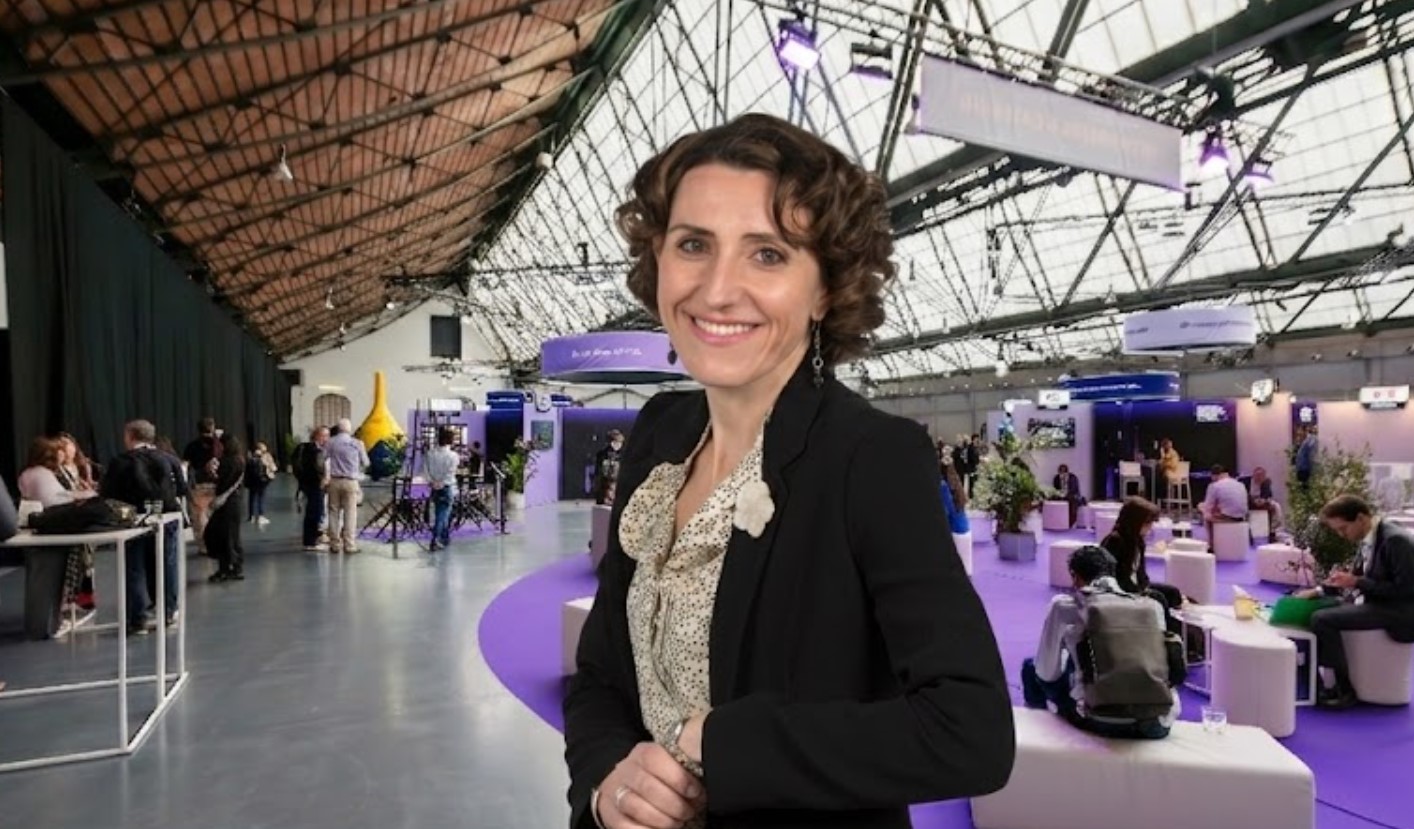
Global ambition essential for deep-tech firms, says CEA director
Brussels hosted the European Innovation Council Summit 2026 this month, where Laurence Petit, Director of Innovation at France’s CEA, shared insights on how Europe can transform scientific excellence into successful deep-tech companies.
Speaking to the Cyprus Mail on the sidelines of the event, Petit discussed the ingredients behind CEA’s ability to produce between 10 and 15 spin-off companies each year, the sectors she believes hold the greatest promise, and why team building remains the biggest challenge facing research organisations.
Since 2022, Petit has overseen all of CEA’s start-up support programmes, including maturation, incubation and venture-building activities, while simultaneously managing around 25 projects and the organisation’s investment subsidiary.
CEA, formally known as the French Alternative Energies and Atomic Energy Commission, is one of Europe’s leading public research organisations, active across fields ranging from energy and digital technologies to defence, health and deep-tech innovation.
With a background spanning scientific research, innovation policy and commercialisation, she explained that the first step in transforming laboratory research into commercially viable businesses is identifying who might ultimately benefit from a technology.
“You need first to identify innovation and have an idea of who could be interested in it,” Petit said.
She pointed out that researchers must conduct extensive interviews to understand potential applications for their discoveries.
“Researchers don’t know how to do interviews or how to identify potential applications for their research,” she said.
According to Petit, increasing the technology readiness level of projects is another essential requirement.
She explained that this demands funding and access to technological infrastructure capable of generating experimental data and demonstrating that technologies function not only at laboratory scale but also under operational conditions.
“Something which is really needed is technological infrastructure,” she said.
However, she made clear that technology itself is not usually the greatest obstacle.
“Most researchers are not good chief executives,” Petit said.
She stated that identifying capable entrepreneurs and assembling teams remains extremely difficult for research organisations because recruiting business leaders is not traditionally part of their mission.
“The most difficult thing for me is really building the team,” she said.
Asked what distinguishes successful projects from those that fail, Petit returned to the issue of people.
“From my own experience, the main cause of failure is the team,” she said.
She explained that conflicts within founding teams can undermine companies both before and after their creation.
“The team is key,” Petit said.
Researchers themselves remain indispensable, she added, either as members of start-up teams or through close links with the company.
Although CEA possesses the infrastructure and expertise needed to raise technology readiness levels, she said the human dimension is far harder to master.
“What is really difficult is the team,” she said.
A second challenge concerns commercialisation. Petit stressed that start-ups must identify genuine market needs validated by future customers.
“You need to be able to identify a real pain point that is validated by future customers,” she said.
She warned that technologies sometimes address problems that are simply not painful enough for customers to pay for solutions.
“In the end you are really in trouble finding markets,” Petit said.
Turning to Europe’s strategic technologies, Petit said the picture varies considerably between sectors.
She observed that biotechnology and health technology have benefited from substantial support in recent years and have produced large numbers of projects, including within the European Innovation Council portfolio.
However, she indicated that financing conditions have become more difficult.
“It is currently very difficult for biotechs,” she said.
Although she stressed this does not mean the sector lacks potential, attracting investors has become increasingly challenging.
She also discussed energy technologies. Petit explained that many energy-related ventures require very large factories and expensive infrastructure, making scale-up particularly difficult.
Among the areas currently attracting the strongest momentum, she pointed to microelectronics.
“Microelectronics is one sector for which there are lots of investments right now,” she said.
She also highlighted renewed interest in the nuclear sector, including both fission and fusion technologies.
According to Petit, the industry’s support cycles have historically fluctuated.
“Nuclear is always like that,” she said.
“You have periods where it is really supported and periods where it is less supported,” she added.
Having previously worked in the nuclear field, Petit said the current situation resembles developments seen earlier in the space industry.
She told the paper that both sectors were traditionally dominated by governments and public actors, leaving little room for start-ups.
Budget constraints eventually encouraged policymakers to seek private capital and innovative technologies from younger companies.
“It was a way to get private funding to explore new technologies,” Petit said.
As a result, she explained, entirely new areas have emerged, including molten salt technologies.
“Now you have quite a lot of startups in this field,” she said.
Asked about the challenge of fragmentation across Europe, particularly for smaller ecosystems such as Cyprus, Petit argued that deep-tech entrepreneurs must think beyond national markets from the outset.
“If you are in deep tech, you cannot only have national ambition,” she said.
“You must have worldwide ambition,” she added.
Although Europe can provide a strong initial platform, she believes global markets are ultimately essential. “I really believe Europe should be a good starter,” Petit said.
Yet she argued that even Europe may not be sufficient for certain technologies. “For some technologies, you cannot stay even in Europe,” she said.
“You really need to have a worldwide ambition in deep tech,” Petit concluded.




Click here to change your cookie preferences