
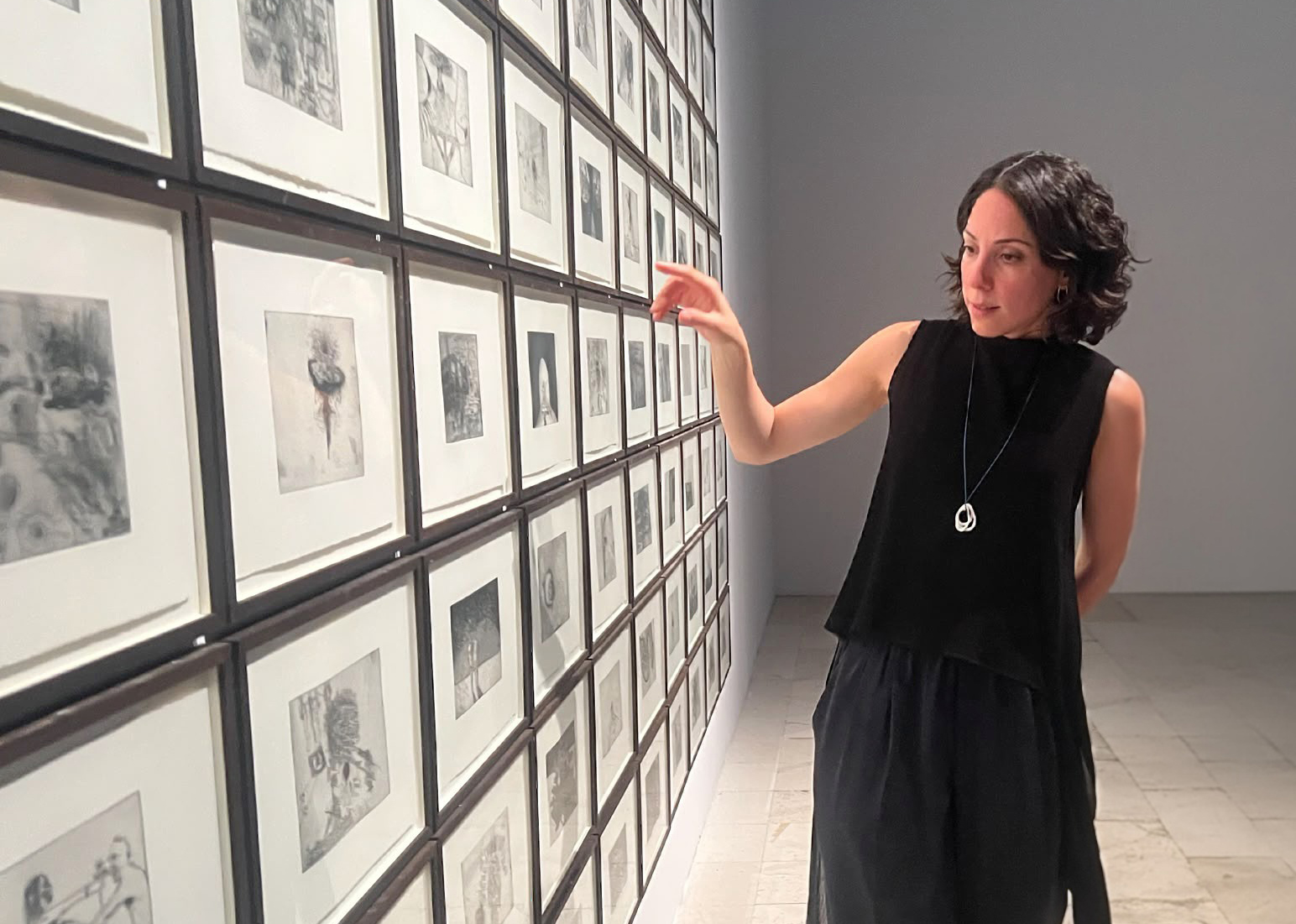
Using a trivial excuse to mask a catastrophic reality was the inspiration behind the latest Nimac show. But not everyone got through the door before judging it
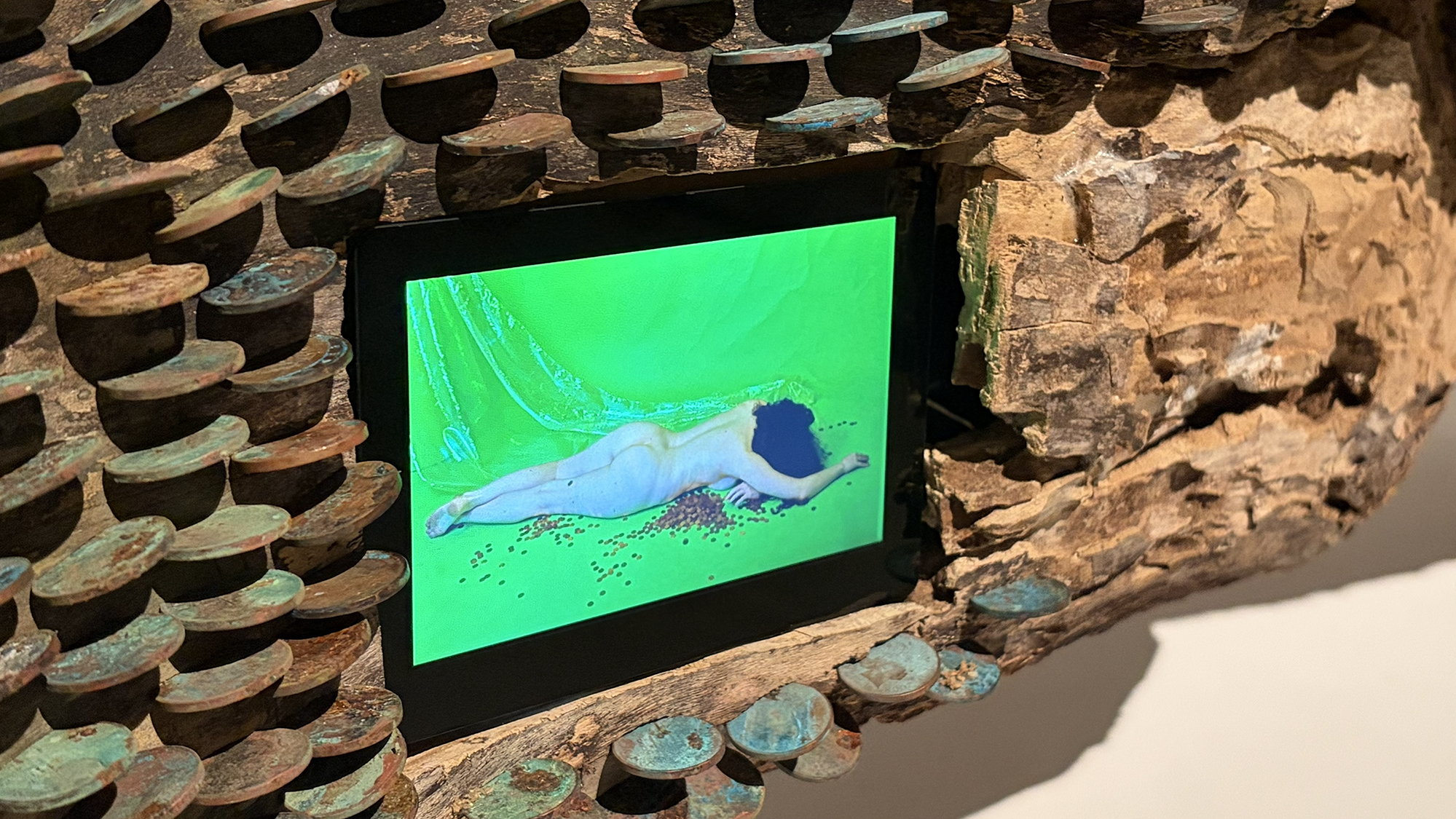
As visitors approached the final installation of A Slight Indisposition, the controversial exhibition which drew to a close on Sunday at the Nicosia Municipal Arts Centre (Nimac), what comes into view is the large trunk of a mulberry tree embedded with copper coins covered in verdigris.
From afar, the work by the British artist Fauve Alice entitled ‘a hammer, a coin, a cry, a wish’ looks like a fragment of a dragon’s tail. Up close, it offers several different interpretations.
For some, it symbolises what money and greed can do to Nature. Others may be reminded of a tree trunk that stands close to the top of the St Hillarion Castle in the Pentadaktylos mountains. Not unlike Fauve’s piece, this wishing tree is bedecked with coins and a metallic coat of nails hammered into place by breathless visitors believing their pilgrim-like actions could bring them good luck, cure an illness or at least attest to the effort that marked their presence in the area.
“The artist does refer in her work to the tree at the St Hillarion Castle,”, explains art historian and researcher Esra Plumer Bardak, the curator of the Nimac show. “That is why this work is not only about the destruction of nature but also a kind of an oath you make for the future. There’s a very strong presence of collective wishing there.”
To date, Cyprus-born, British-educated Plumer Bardak has curated several large exhibitions both in the UK and here on both sides of the island. The Nimac show is made up of works by 16 emerging and established contemporary artists from both Cyprus and overseas. It marks the first time ever that Nimac has mounted an exhibition exclusively curated by a Turkish Cypriot. And while the exhibition opened a month ago with its own share of unusual controversy, it also sucessfully provoked one of the most interesting debates to have taken place within Cypriot artistic circles in recent years.
The expression A Slight Indisposition comes from Franz Kafka’s novella The Metamorphosis, the renowned story of a man who one day wakes up as a bug. Since first being published more than 100 years ago, words uttered by Gregor Samsa, the book’s main protagonist, have become cultural and literal shorthand for a very specific psychological-cum-social phenomenon – that of using a trivial excuse to mask a catastrophic reality.
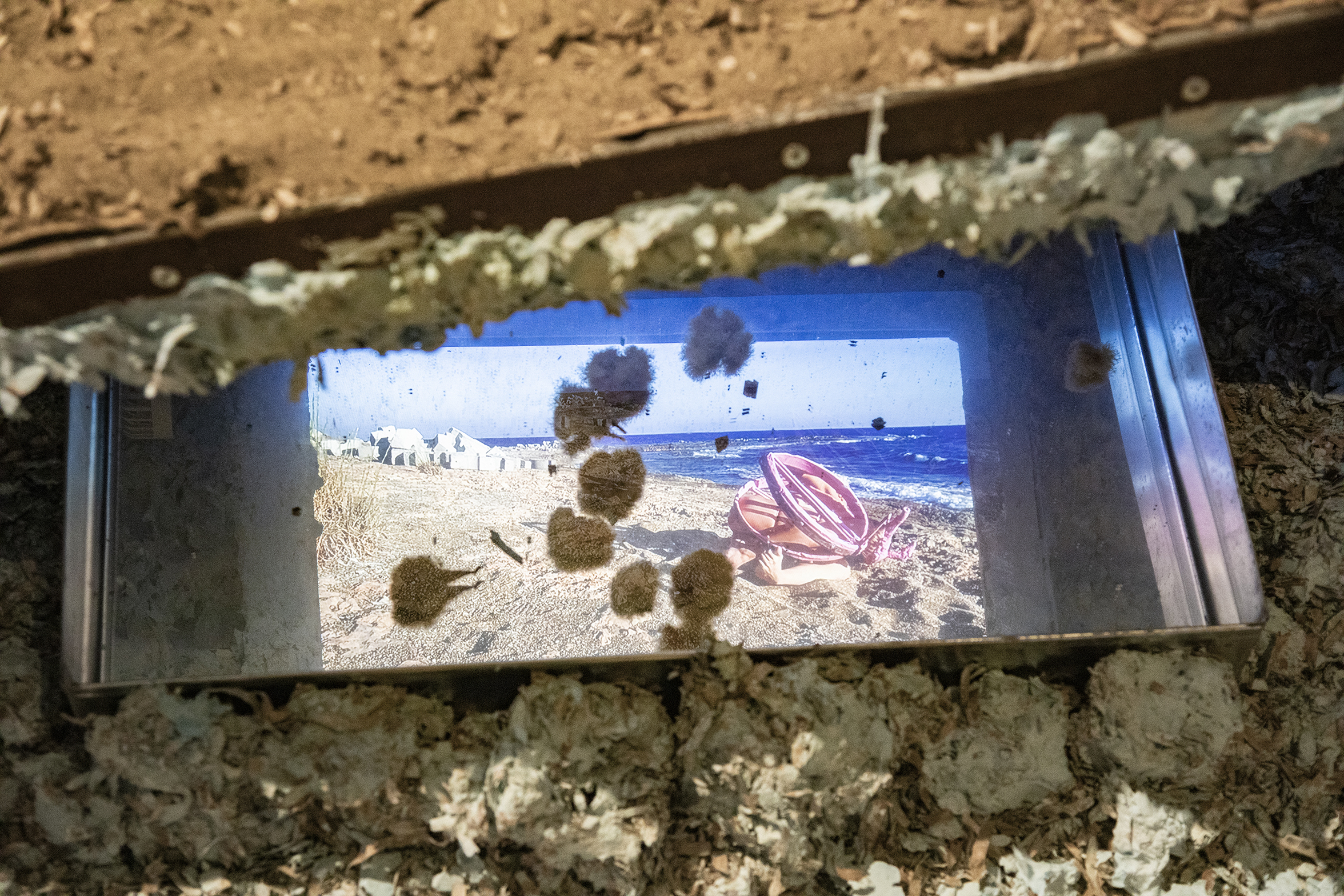
“A slight indisposition, a dizzy spell, has prevented me from getting up,” Samsa says through the locked door to his concerned employer and family on realising that he has transformed into a monstrous bug.
His unsuspecting boss seeks to reassure him: “I hope it is nothing serious. On the other hand, I must also say that we business people, luckily or unluckily, however one looks at it, very often simply have to overcome a slight indisposition for business reasons.”
Plumer Bardak explains further: “The exhibition is something that I’ve been thinking about and building over the past two years. The idea started forming when the world celebrated the 100th anniversary of Kafka’s death [in 2024]. I started rereading Metamorphosis and thinking about the feelings and issues that it raises. And when I looked at the contemporary artistic practices in Cyprus, I saw a lot of overlaps. This is how the idea for this exhibition formed. So the concept came from me, and then I started talking to artists and exhibition designers and of course, all exhibitions need a place, and Nimac was an obvious choice – a beautiful venue, the longest running contemporary art space on the island, the heartbeat of the contemporarty Cypriot art world.”
Kafka, she acknowledges, wasn’t the only factor in her inspiration. She also drew on John Berger’s essay Why We Look at Animals, in which he explores how the ancient relationship between man and nature has broken down in the modern consumer age. Berger, she notes, points out that animals that once were at the centre of our existence, have since been marginalised and reduced to spectacle.
“It raises the question of that distance between human and non-human and how we as humans build that space,” she says, citing Stelios Kallinicou’s Sparrow as an example. Known for wandering around the island with a camera, Kallinicou’s work in the Nimac show consists of a small screen lying on the ground in a corner of the large exhibition hall. Only on close inspection does the viewer get to watch a video loop showing a small sparrow lying on its back, panting for breath. The screen is positioned astutely, an exact recreation, one imagines, of just how the artist first encountered and observed the exhausted bird.
“It’s a very arresting but subtle image. Something that one can easily walk past without noticing. But if you see it, it raises a lot of emotions, discomfort even,” Plumer Bardak suggests before expanding on the impact and the medium in which it is presented. “These small screens are constantly present in our daily lives nowadays. We constantly scroll through content on these screens that is maybe equally or even more disturbing, such as wars, conflict and famine. But we just scroll through them the same way we walk past the bird, don’t we?”
Going back to the title of the exhibition – A Slight Indisposition – she stresses that “it just resonates a lot with our philosophical, social, economic and ecological concerns about what humanity is at the moment in our current, constantly changing, world”.
The exhibition also features a number of works belonging to private and state collections.
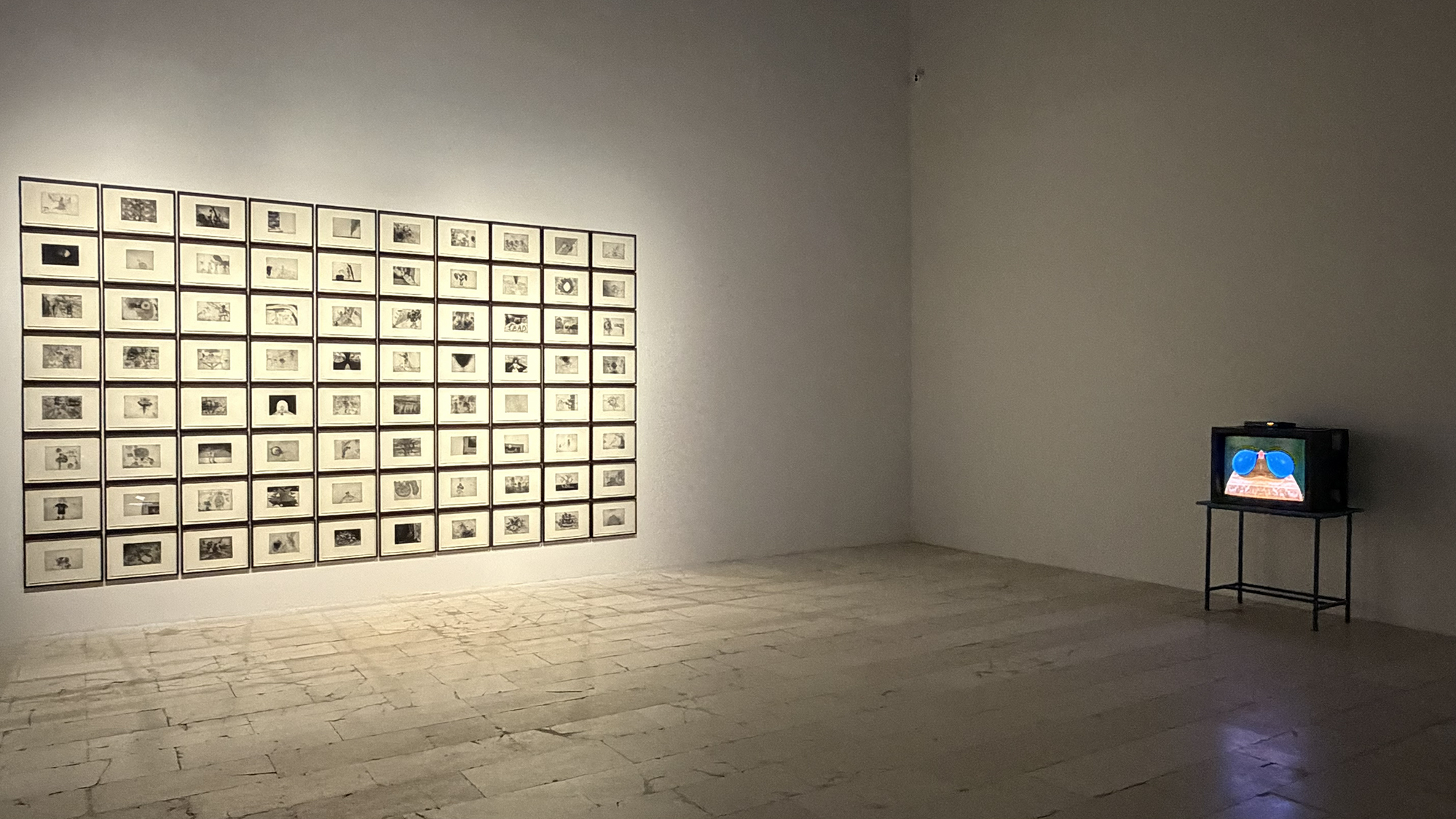
Of these, perhaps the most iconic is Disasters of Wars by the partly Greek Cypriot, British artists Jake and Dinos Chapman. Consisting of 83 etchings and clearly based on Francisco de Goya’s graphic depiction of the Napoleonic occupation of Spain, the work gives free rein to the Chapmans’ unique drawing style and obsessions.
“This is an exceptionally strong art work – one of the quintessential works that represents human cruelty, violence, and war in all its forms but without any of its glory”, says Plumer Bardak. She is “truly excited” to have had it as part of this exhibition, noting how art critics “regard it as one of the works that has a sense of urgency that very few other contemporary work have.”
Plumer Bardak’s choice of artists is interesting and broadening – one wandered through the Nimac rooms seeing not only very familiar names but also those belonging to artists whose work, despite being well established on the international level, is only rarely encountered on the local scene.
“All exhibitions reflect works a curator is exposed to. So it’s not a matter of identity or ethnicity but a matter of the works that I’m connected with in terms of my research and interests,” she explains.
At least half of the works displayed at Nimac are by Turkish Cypriots, a significant feature of the exhibition in the opinion of Prio researcher, writer and artist Mete Hatay. “Nimac has done a good job at this show,” he says. “Not only do we see a rich selection of artists but also a rich and multigenerational selection of Turkish Cypriot artists which means we also see various ideas of the ‘metamorphosis’ among them. Because, as with any other community, the Turkish Cypriot community is not homogenous but is constantly changing which means its artists are constantly producing new ideas and creating new layers of historical interpretations.”
Among the best known Turkish Cypriot artists in the show is Emin Ciznel, whose display consists of two parts under the same title A Lost Moment. Both works belong to Cizenel’s multi-dimmensional project exploring Cypriot identity and nostalgia for the past and were executed 20 years ago. They now belongs to the Republic of Cyprus’ State Collection.
While the project focuses on the jasmine necklace ritual, familiar to Cypriots on both sides of the divide, and in general terms of metamorphosis can be looked at from the view point of constant opening and closing of the jasmine buds as well as the constant state of change, Hatay, for one, maintains that there is yet another interpretation.
“Yes, of course, it shows the constant change in that sense, but it also symbolises the 2003 Jasmine Revolution in the Turkish Cypriot community, the hope they had after the first crossing opened. All these mass movements – the mobilisation – all of it was named the Jasmine Revolution. In that sense, this is what the people saw – the opening of white jasmine petals and a wonderful smell and a possibility of peace. And how people were disappointed when it didn’t happen. This work talks about lost opportunities. It symbolises this lost opportunity of unification. But at the same time it doesn’t mean that it’s lost forever.”
That Cizenel’s work was featured in the exhibition came under heavy attack from some quarters angered that in 1984 his had been the design chosen for the ‘north Cyprus flag’, an emblem reviled by Greek Cypriots as the most hated symbol of the occupation. Nimac was accussed of hypocrisy, and when the exhibition opened a small demonstration was staged in protest at Cizenel’s inclusion among the selected artists.
An impassioned discussion blew up on social media around the whole issue with many sharp, embittered exchanges. According to Hatay, the fact that some of these clashing viewpoints were among Turkish Cypriots served to prove and underscore just how diverse the Turkish Cypriot community is.
It is worth noting here that in 2020, Hatay and well-known anthropologist of politics and law Rebecca Bryant co-authored Sovereignty Suspended, a book about building the so-called state in the north that approaches the chllenging subject from several different angles.
It is in this context that he makes a point of stressing Cizenel’s long support for a united island and delineates the Malia-born artist’s personal history of struggles and displacement. This is why he believes it is vital to understand the history of north Cyprus and to have an awareness of the conditions that existed there in the late 1970s and 1980s. Such an approach, he contends, is essentail if current attempts to firmly place the island’s unification on the international agenda are to be successful.
“We have to understand the difference between reunification and unification to start with. Reunification means going back to when the island was united. Unification is to take the realities of today and unite. When you say ‘reunification’ you ignore the agency of the other side. But this is not what we need. Because then what about Turkish Cypriots? You cannot create a partnership with a ghost. The truth is if we want to succeed we will need a multi-perspective and that means acknowledging one another’s respective histories. And in that sense that means acknowledging that the flag that Emin designed is part of the Turkish Cypriot history.”

Click here to change your cookie preferences