
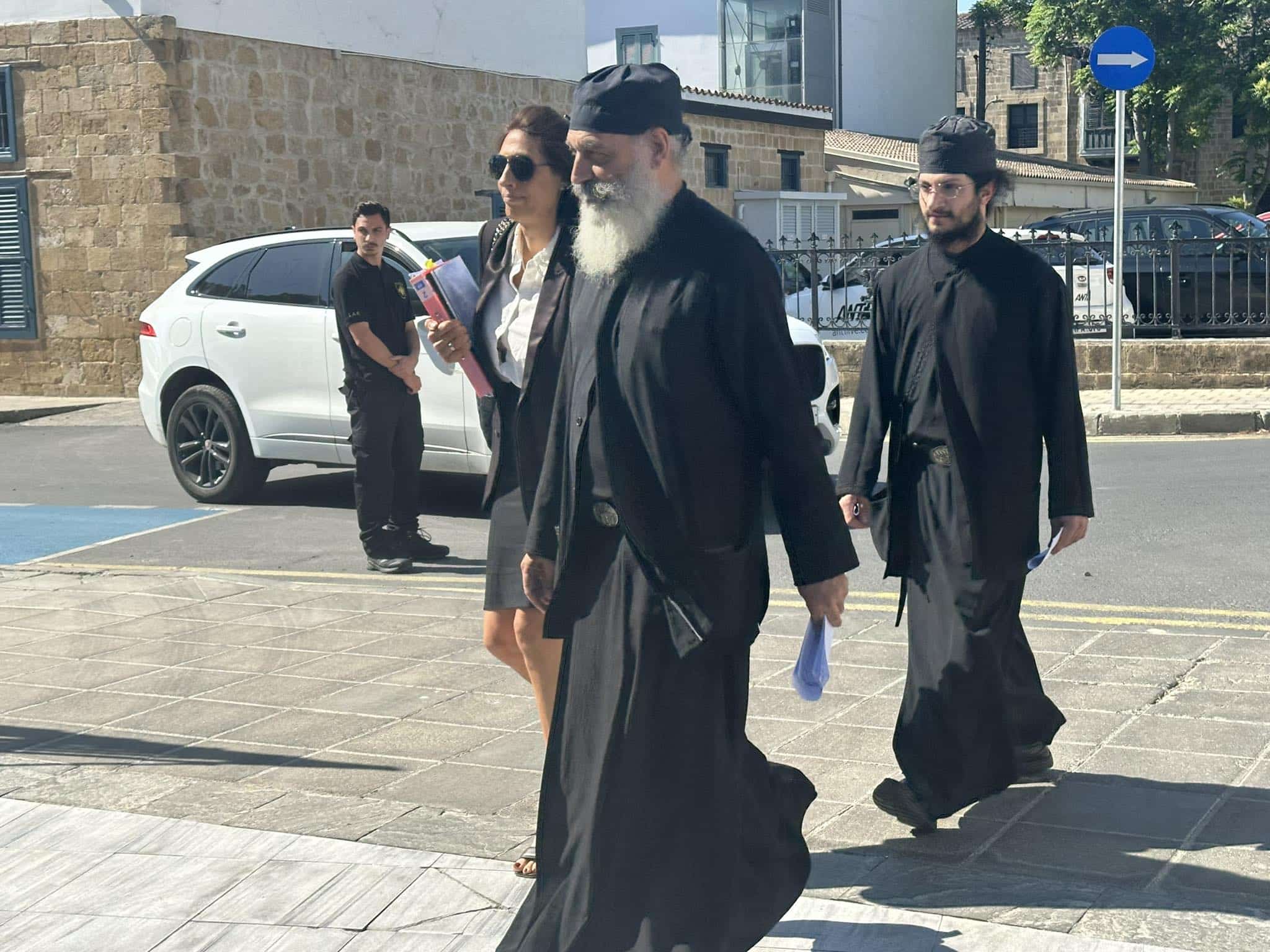
The trial of the two monks from the Osiou Avakoum monastery continued on Tuesday, with their lawyers objecting to a number of evidentiary items presented by prosecutors, arguing that this evidence was obtained illegally by the police.
The case is being heard at Nicosia criminal court. On trial are monks Nektarios and Porfyrios. They face charges including conspiracy to defraud, forgery and the use of false documents, theft by proxy, handling stolen goods, money laundering, interfering with judicial proceedings and submitting fraudulent tax returns.
The defendants deny all charges.
In court on Tuesday, their attorneys argued that several of the items of evidence which the prosecution wants to submit should be inadmissible. This mainly involves photographs taken by the police who, according to the defence, entered the monastery without a warrant.
The attorney for Nektarios referred to photographs depicting a briefcase, personal items, safes, envelopes containing cash, religious symbols, holy relics, crosses and other artifacts. These had been illegally removed from the monastery and taken to the Tamasos bishopric, the lawyer said.
He said that on the night of March 5, 2024, after the monastery had closed its gates, a number of individuals wearing hoods trespassed into the premises and removed various objects – which ended up at the Tamasos bishopric.
The lawyer said these items subsequently came into the possession of the police. He called for a trial within a trial, seeking a court ruling that would rule if the items were obtained unlawfully.
Similar arguments were made by the attorney for the second defendant, monk Porfyrios.
Countering, the lead prosecutor said that if a trial within a trial is to be held the defence must specify each and every item which it says was obtained unlawfully.
Coming back, Nektarios’ attorney asserted that most of the items in question are the “personal property” of his client. As to the rest of the items, these were under the monk’s “legal possession and management”.
The lawyer pointed out that various ecclesiastical artifacts as well as the monastery’s reliquary are connected with the way in which prosecutors are presenting their case – namely, the allegation that the two monks exploited the religious items for personal financial gain.
Hearing both sides, the court adjourned to Thursday, by which time it instructed the defence to specify which items it objects to being submitted as evidence.
At the next hearing the court will also examine a request to ease the restrictions on the defendants, such as the frequency with which they must report to a police station. The monks want some leeway in order to be able to go on religious pilgrimages abroad.
The case came to light after authorities discovered €800,000 in cash and uncovered alleged fake miracles and CCTV footage of prohibited sexual acts.
A parallel church investigation explored whether the monks faked religious events (such as bleeding crosses or myrrh weeping) to solicit financial donations from believers.

Click here to change your cookie preferences