
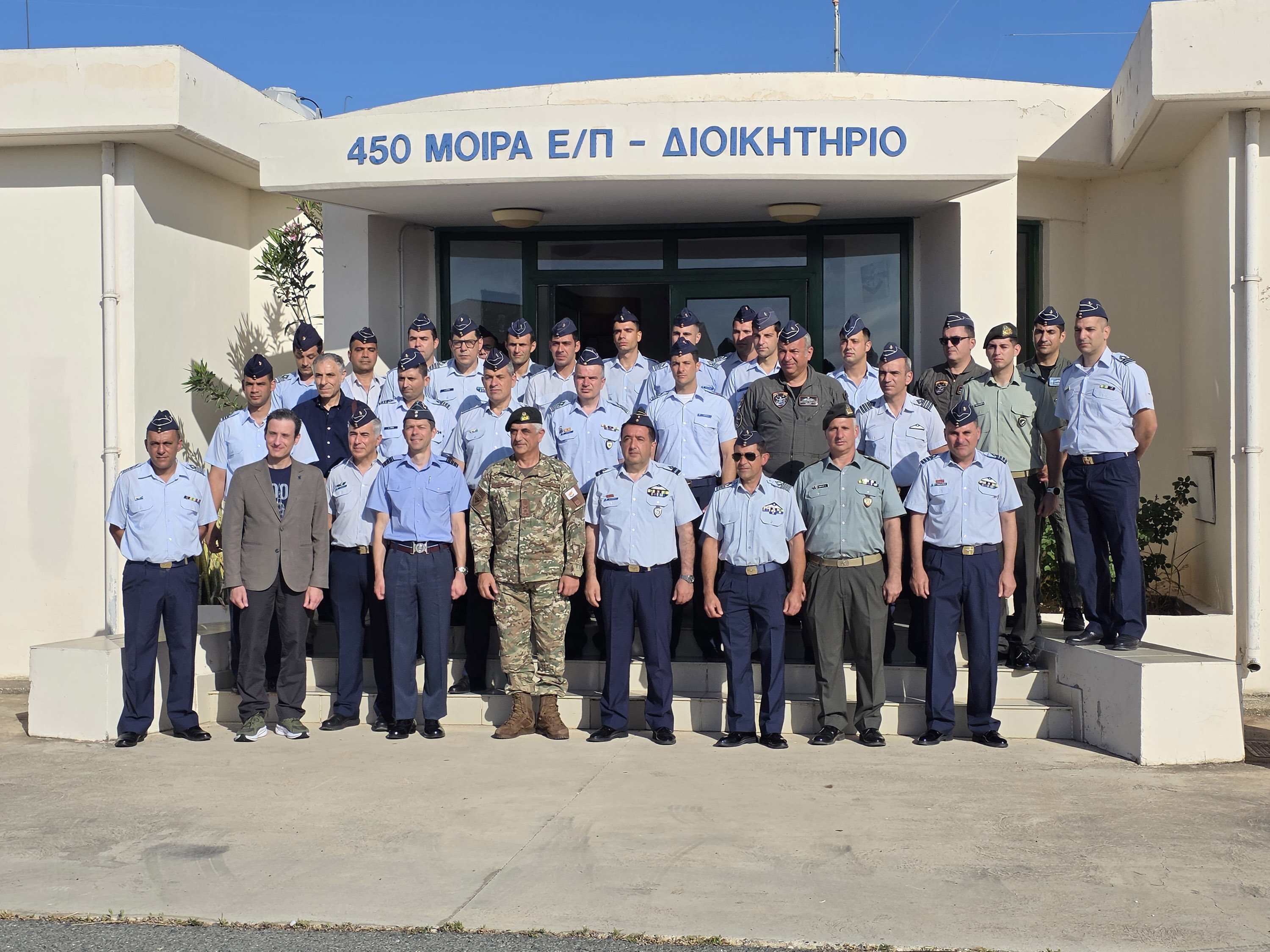
Military strength depends not only on acquiring advanced weapons systems and equipment, but also on keeping them reliable and operational through continuous, high-quality maintenance, National Guard chief lieutenant general Emmanouel Theodorou said on Thursday.
Addressing an aviation conference at the Andreas Papandreou air base in Paphos, Theodorou stressed that the work carried out by engineers and technicians is fundamental to flight safety and operational readiness.
“Behind every safe flight lies the daily effort of engineers and technicians, who work with a high sense of responsibility, professionalism and expertise,” he said.
The National Guard chief also highlighted the leadership’s decision to designate 2026 as the “Year of Maintenance”, describing the initiative as an effort to strengthen a culture of technical excellence and emphasise the importance of maintenance as a key pillar of operational readiness.
He said the National Guard’s Aviation Command had made significant progress in the field of airworthiness, aligning its procedures with modern international standards and practices, while underlining the need for continued investment in knowledge, quality and safety.
The remarks came during the opening of a conference titled Strategic Integration of the Airworthiness Regulatory Framework into Aircraft Maintenance and Operations, organised by the Aviation Command and attended by senior National Guard officers, academics, experts and guests from Cyprus and abroad.
The event focused on current challenges and developments in airworthiness, aircraft maintenance and the application of European military standards aimed at enhancing aviation safety and operational readiness.
He also voiced confidence that the conference would provide an important platform for the exchange of knowledge and experience and contribute to further strengthening the capabilities of the Aviation Command.
Also addressing participants, Aviation Command chief brigadier (pilot) Alexandros Georgiou described the conference as an opportunity to exchange expertise and reflect on an area that lies at the core of the Cyprus Air Force’s operations.
He said air power was not merely the result of acquiring advanced aircraft and technologies, but above all depended on the dedication and professionalism of personnel responsible for ensuring the reliability and readiness of air assets.
As aviation systems become increasingly complex and operational demands continue to evolve, Georgiou said, continuous training, adaptability and investment in knowledge are essential to maintaining high levels of technical competence and effectiveness.
He emphasised that maintenance is directly linked to risk management, prevention and sound decision-making, adding that every technical inspection and maintenance procedure forms part of a chain whose ultimate goal is the protection of human life and the successful completion of missions.
A significant part of his address focused on the adoption by the Cyprus Air Force of the European Military Airworthiness Requirements (EMAR), which he described as an important step towards modernising and upgrading the framework governing airworthiness management.
According to Georgiou, implementing the European standards ensures that the design, maintenance, certification and continuing airworthiness of aircraft are aligned with recognised military practices across Europe, strengthening flight safety, operational reliability and transparency.



Click here to change your cookie preferences