
By Stephania Constantinou
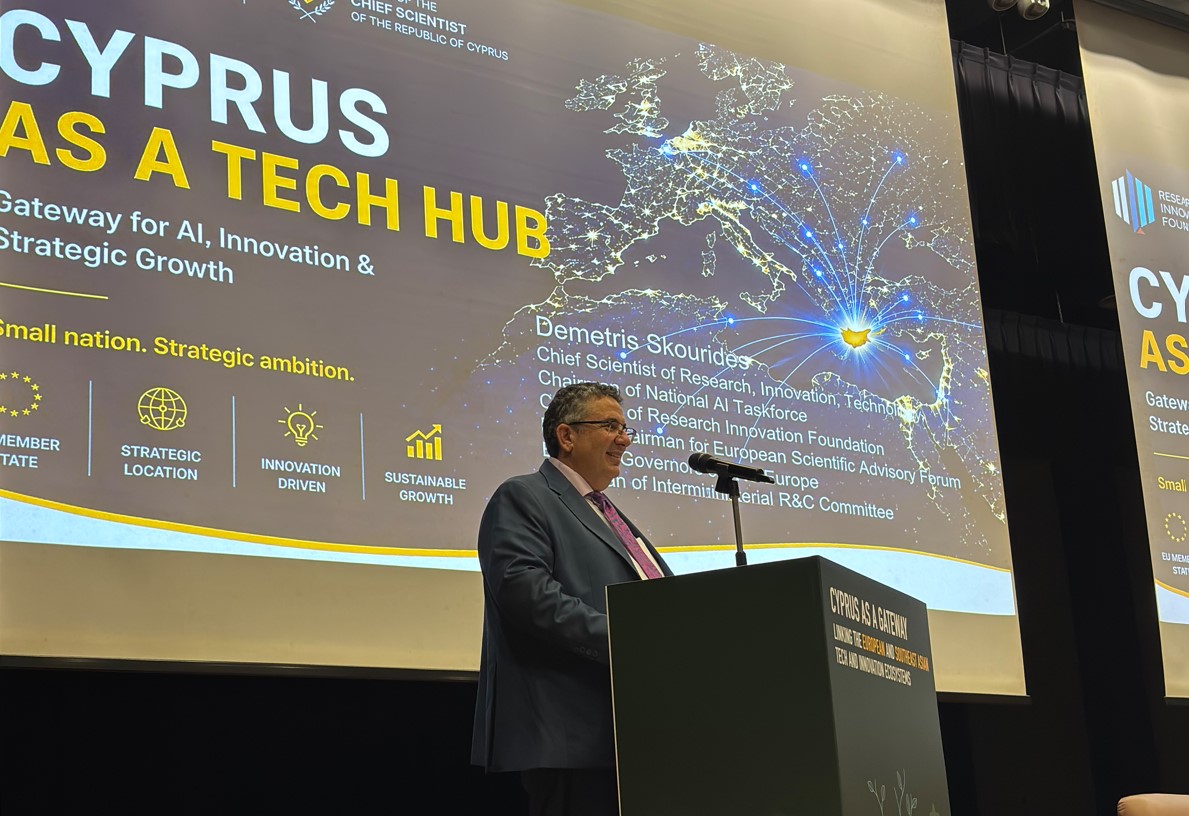
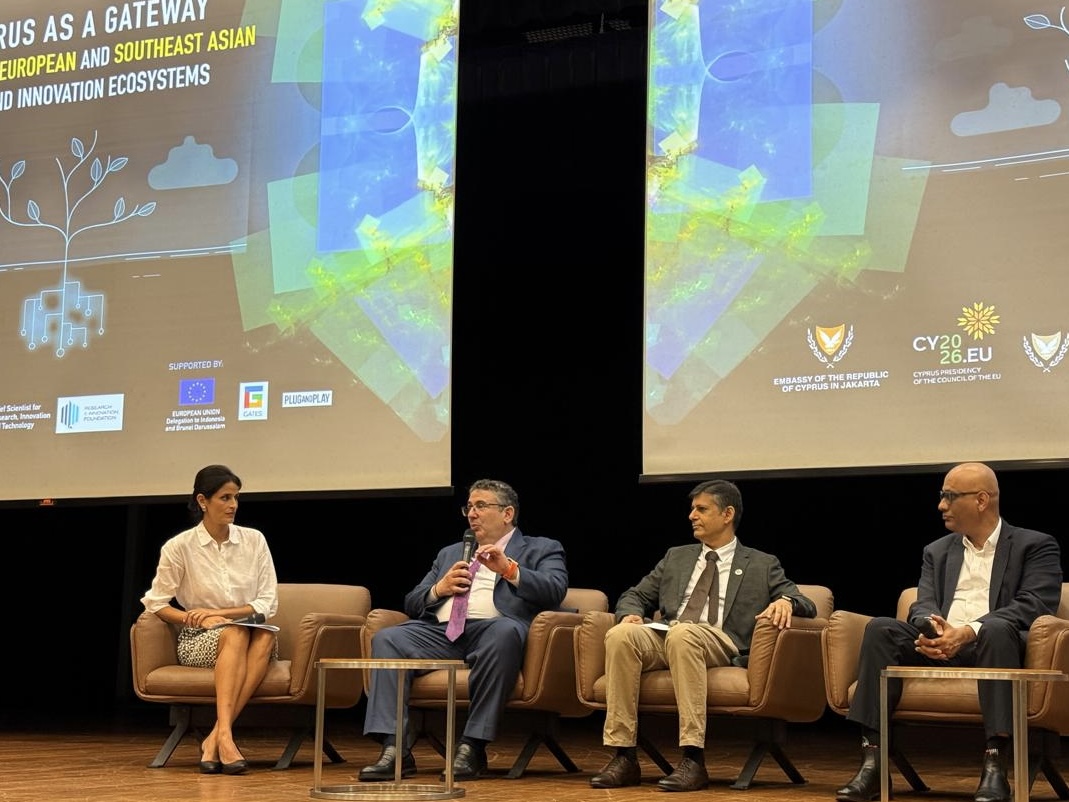
Cyprus was the main theme of an event that took place at the National University of Singapore (NUS) on June 22, organised by the High Commissioner of Cyprus H.E. Nikos Panayiotou, and the Chief Scientist of Cyprus, Demetris Skourides, who travelled to Singapore with a strong delegation of professionals representing the Cypriot enterprises, companies and Centres of Excellence. These were Shadgunya Cyprus, QSecure, Tototheo Global, Cyprus Marine and Maritime Institute (CMMI), German Medical Institute, Hyperion Systems Engineering, Dynamic Works, Orom AI, and Powersoft.
They travelled to Singapore, the world’s strongest and most competitive economy, according to the 2026 IMD World Competitiveness Ranking to seek and form alliances, and to present Cyprus as a gateway to Europe. Cypriot companies have the means to prove this. New data by the International Trade Administration shows that Cyprus’ digital economy is experiencing rapid growth and enhanced business competitiveness, with fintech, cybersecurity, blockchain, and AI gaining traction, while benefiting from strong government support and a solid digital infrastructure with 95per cent coverage.
The two countries share many similarities. Apart from a vibrant gastronomy that is the result of overlapping cultures, and endless warm weather, they are also small islands geographically situated at strategic crossroads and important trade, financial, and shipping hubs. These conditions have allowed both Cyprus and Singapore to develop open economies with attractive business environments, further complemented by a highly educated and digitally literate population. Singapore is a world-class Smart Nation, with a sophisticated AI regime and a long-term national development strategy, powered by a holistic digital transformation. According to the World Intellectual Property Organisation (WIPO), Singapore ranked 5th among the 139 economies featured in the 2025 Global Innovation Index (GII). Cyprus ranked 25th in the GII, also scoring 16th worldwide in innovation output and 36th in innovation inputs, while Singapore ranks 1st in inputs and 9th in outputs worldwide. These are very strong scores for both countries on a global scale.
For EU and ASEAN relations, particularly against the backdrop of geopolitical re-ordering and shifting alliances, this is significant. In an era of reimagining international relations, and with the rise of all things AI and massive cross border data flows, establishing stronger linkages and collaboration in areas of common national interests such as technology, trade, research, security and climate change is essential. Cyprus, aware of this new reality, is actively expanding its technological and diplomatic footprint, seeking strategic avenues to connect the Cypriot tech and innovation ecosystem abroad: first, in Asia with India; and now, in Southeast Asia with Singapore. From a foreign policy perspective, and amid mounting geopolitical uncertainty, striking a balance between national priorities and the advantages of engaging with an interconnected global digital economy is simply put, smart. Given how Southeast Asia is home to some of the world’s fastest-growing digital and tech economies, it is no surprise that Cyprus is deliberately pursuing access to this highly promising market. The aim is to connect with the Singaporean innovation ecosystem through tactical partnerships and leverage well-positioned local stakeholders, bridging the EU and ASEAN.
Cyprus is, albeit its size, increasingly at the forefront, with other nations, engaging in tech diplomacy, shaping global standards around emerging technologies, and ensuring that different sectors and industries partner with the government in the international dialogue around the benefits and challenges of frontier technologies.
Indeed, certain policy frameworks facilitate this process. As members of the EU and ASEAN respectively, Cyprus and Singapore are guided by the ASEAN-EU Digital Pact, which connects digital economy and digital trade, enabling new business opportunities and market access for both countries and their respective regions. The EU-Singapore Digital Trade Agreement, signed in 2025, is also the first Digital Economy Agreement between the EU and a Southeast Asian nation. Meanwhile, Cyprus aligns itself with the EU AI Act, and Singapore with the ASEAN Digital Economy Framework Agreement (DEFA), and both have their own national AI Strategies. Together, these provide the necessary regulatory frameworks and governance structures to ensure trusted cross-border data flows, integrated systems and a safer digital ecosystem. They also enable regulatory interoperability, which will undoubtedly unlock economic value for both regions.
Digital, scientific, academic, and economic partnerships beyond our own region are now more important than ever, as they foster trust and cooperation in key areas for innovation and transformation that can have high socioeconomic impact. Imagine linking research institutions in fields such as space, biotech, or marine biodiversity. The development of cutting-edge technologies and the translation of research into deployable and scalable solutions provides a two-way pathway between both countries for value-driven innovation and progress. Achieving this, requires investments in digital public infrastructure (DPI), deep tech, and digital inclusion- and the governance of these depends on trusted and comprehensive partnerships not only at the private-sector level, but also at the institutional level. Cyprus’ innovation landscape and stable institutional credibility position it well to become a regional hub for AI capacity development and fintech, and as well as a sandbox for Singaporean technology companies seeking to enter the EU market.
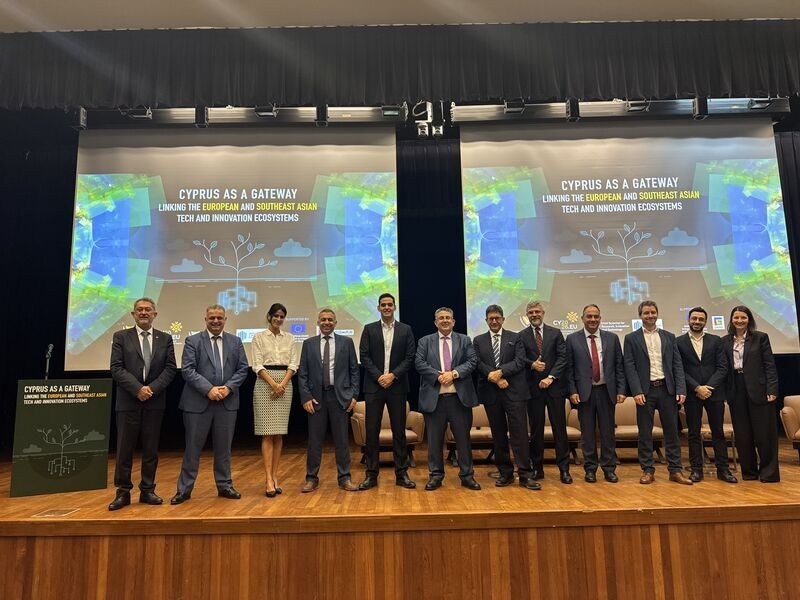
The June 22nd event convened a number of high-caliber stakeholders here in Singapore. Diplomats, industry professionals, investors, and business leaders discussed opportunities. Among them were the CEO of the ASEAN Economic Forum and Executive Director of GATES- Asia’s largest independent technology channel platform, providing market strategies to unlock scale across Asia and the Pacific, and Redington, a leading global technology distributor.
Having lived in Singapore for the last 4 years, I found the event a particularly proud moment for me as a Cypriot. Firstly, because in all the conferences and seminars I have attended in Singapore as an AI Governance and Policy researcher, this was the first time Cyprus had been at the centre of the conversation on AI, tech policy, and sustainability. Secondly, because I witnessed a strong Cypriot delegation showcasing a wide range of industry solutions and the digital infrastructure to scale these. Moreover, this was the first time I was surrounded by so many Cypriots in Singapore. For a moment, it felt like home away from home.
In this new geo-economic order, fostering cross-regional and island-to-island collaboration is a strategy of relatability grounded in shared realities and principles. Singapore has held this long-term vision since the 1980s; Cyprus now understands that, as it expands beyond its regional borders, its innovation ecosystem needs to become part of a tactical continuum within both its domestic and foreign policies.
*Stephania Constantinou is an AI Governance and Policy researcher with a background in International Development





Click here to change your cookie preferences