
The 25-year-old former finance professional, who moved from Cyprus to London seven years ago, officially unveiled the app at How Matcha in Marylebone, marking the first public launch of a platform built around what she describes as the next generation of fashion discovery.
The platform uses proprietary fashion-specific visual search technology to help users identify outfits, discover similar pieces, organise everything they want to buy and shop fashion inspiration from anywhere in one place.
The launch event was hosted at How Matcha, an iconic matcha bar and cultural space known for its collaborations across fashion brands, including Miu Miu, Cult Gaia, Joseph and others.
The conference focused on cryptocurrencies, digital assets and the future of the sector, with both speakers highlighting the growing integration of crypto assets into the financial system and the importance of regulation as markets undergo structural change.
CySEC chairman George Theocharides said crypto assets are no longer operating on the margins of financial markets.
“They are becoming increasingly integrated into the broader financial ecosystem, interacting with traditional financial instruments, regulated intermediaries and institutional investors,” he said.
Theocharides explained that this is not a temporary trend, but rather a structural transformation in the way markets are organised, assets are created and issued, and investors gain exposure to financial products.
The change in leadership took place during Pasyxe’s annual general meeting in Nicosia, attended by President Nikos Christodoulides, House president Annita Demetriou, ministers, party leaders, ambassadors, MPs, local authority representatives and members of Cyprus’ wider business community.
Taking over the presidency, Pantazis praised Michaelides’ contribution to the association and said he was certain that, although he was stepping down from the post, the outgoing president would remain close to Pasyxe’s work.
“With full awareness of the responsibility, I undertake duties with the aim of strengthening, to the extent possible, the progress of the hotel industry and tourism in the country,” Pantazis said, adding that he would work to justify the trust shown in him by Pasyxe members and looked forward to constructive cooperation with the association’s general director, secretariat, board and wider membership.
Even for a city used to movement, the past two decades have been striking.
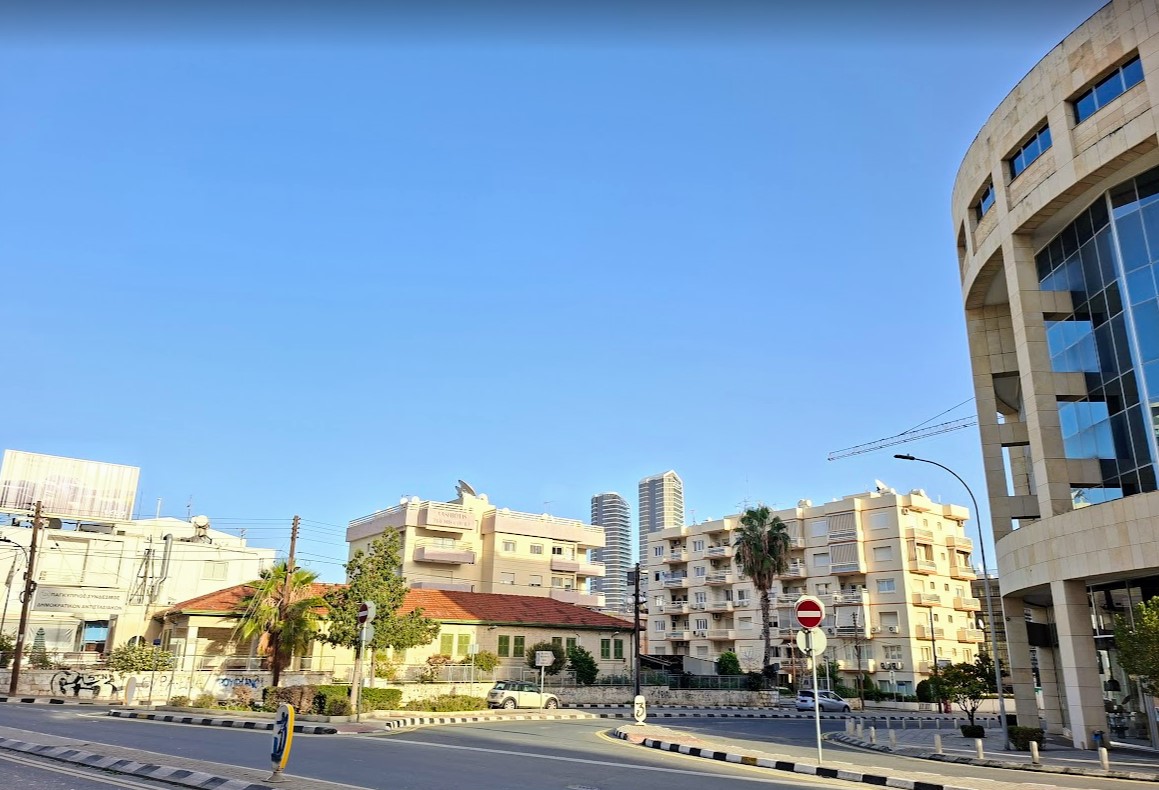
Limassol, once known for its port, carnival and wine festival, has become Cyprus’ most visible urban experiment, with towers, marinas, offices, tech companies and expensive apartments changing both its skyline and its mood.
The transformation has brought confidence, jobs and international attention. It has also made the city harder to live in.
Rents have climbed, traffic has worsened, construction has become part of the daily noise, and many residents now wonder whether the place they grew up in is being reshaped faster than they can recognise.
The visit centred on an event hosted by the Deputy Ministry of Shipping at the headquarters of the International Maritime Organisation (IMO), on the sidelines of the organisation’s 137th Council session, which is taking place in London from July 6 to 10.
The session’s agenda includes strategy and planning, reports from key IMO committees, and the protection of vital shipping lanes, emphasising the wider challenges currently facing global shipping.
The event was attended by IMO Secretary-General Arsenio Domínguez and representatives of IMO member states, giving Cyprus an opportunity to promote its maritime sector and strengthen its presence within the international shipping community.
Speaking to the Cyprus News Agency (CNA), Hadjimanolis said the event “was an opportunity to highlight the essential role of Cyprus in the international maritime community”, noting that the country remains one of the world’s major maritime powers.
In its latest report, whose findings were shared by Greek business outlet Insider, the investment firm said the positive investment story for Greek and Cypriot banks remains intact, supported by improving fundamentals, resilient profitability and favourable macroeconomic conditions.
According to the analysis, bank shares have gained 24.7 per cent since the beginning of the year, comfortably outperforming the Euro Stoxx Banks Index, which has risen by 12.9 per cent over the same period.
Axia attributed this performance to high and sustainable profitability, strong capital ratios, ample liquidity and increasing shareholder distributions.
The firm identified Eurobank as its top pick, citing the group’s geographical diversification and broad international footprint.
CySEC’s latest quarterly statistics bulletin showed that it supervised 312 management companies and undertakings of collective investments (UCIs) during the period, down from 321 entities in the corresponding quarter of 2024.
The regulator explained that the total comprised 217 externally managed UCIs, 30 internally managed UCIs and 65 external fund managers.
Among the management companies, there were 45 Alternative Investment Fund Managers (AIFMs), 45 sub-threshold AIFMs, two UCITS management companies and three dual-licence entities authorised to operate as both AIFMs and UCITS management companies.
Organised by investment promotion agency Invest Cyprus and presented by professional services firm PwC Cyprus, the ceremony will be held under the auspices of the President of the Republic.
The event is set to attract leading members of the business community, international investors, government officials, and key corporate executives.
These awards serve as a formal institution for recognising international investors who have selected Cyprus as a destination for their operations.
The ceremony is intended to highlight the contribution of these entities to economic growth, innovation, job creation, and the maintenance of a competitive business environment.
The latest figures show that hybrid vehicles continued to strengthen their position in the Cypriot market, while petrol-powered cars lost further ground and fully electric vehicles edged higher, reflecting the gradual shift towards lower-emission transport seen across Europe.
Overall, 29,367 motor vehicles were registered between January and June 2026, compared with 25,954 during the corresponding period of 2025.
In June alone, 5,624 motor vehicles were registered, representing a 13.8 per cent increase from the 4,942 recorded in June 2025.
The bank said the new customer relationship management (CRM) platform has been fully operational since April 30, 2026, describing the move as a strategic investment intended to improve how it serves customers, communicates with them and responds to their needs.
According to the bank, the implementation of Salesforce FSC, one of the world’s leading CRM platforms, provides access to advanced technology, expertise and digital tools designed to strengthen its capabilities in an increasingly competitive banking environment.
Alpha Bank Cyprus said the partnership supports its long-term objective of becoming a more customer-focused bank by delivering more personalised services, faster responses and a more consistent customer experience.
In an interview with Politis Radio, Pantazis appeared cautiously optimistic about the rest of the season, noting that the sector had taken a hit in March and April, when cancellations increased and new bookings slowed. However, he said demand has since begun to recover, even though new reservations remain below last year’s levels.
A key factor, he explained, was that flight schedules were largely maintained, allowing Cyprus to protect its image as a safe and reliable destination. Most hotels also chose to remain open despite weaker demand and higher operating costs, a decision he described as important for the country’s credibility in international markets.
The latest figures show that 16 per cent of final household energy consumption in Cyprus was used for space cooling, the highest proportion among all EU member states.
Malta ranked second, with 15 per cent of household energy consumption devoted to cooling.
Although southern European countries such as Italy, Spain and Greece consumed larger overall volumes of energy for air conditioning because of their bigger populations, Cyprus stood out for the proportion of household energy dedicated to keeping homes cool.
The total volume of beer delivered to the domestic market and for export reached 4,716,070 litres in June 2026.
This figure compares with 4,846,927 litres recorded in June 2025, representing the aforementioned 2.7 per cent contraction.
Deliveries to the domestic market saw a marginal decline of 0.8 per cent in June 2026 compared with June 2025, totalling 4,564,749 litres.
Conversely, beer exports from Cypriot breweries experienced a substantial downturn of 38.3 per cent.





Click here to change your cookie preferences