
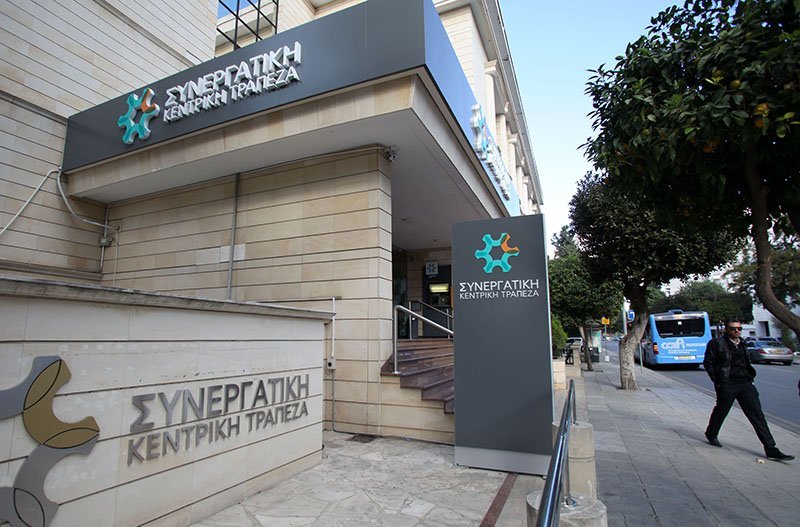
Fiscal council member Marios Clerides on Saturday said that Cyprus’ markets require “ethical banking”, as he weighed in on the prospect of a new cooperative bank being opened on the island.
He said that Cyprus’ fiscal markets need banks “which think not only about profits but also about the borrower”, and “take into account the repayment capacity of their customers and do not only rely on collateral”.
However, he said, “the problem of cooperatives lies in their governance”.
“With the principle of ‘one member, one vote’, which is a basic tenet of cooperatives, the weaknesses of the political system begin to appear, especially with each political party wanting to put its own people on the inside,” he said.
He also said he was “concerned” over whether it is “fair” for “an investor who invested €100,00 to have the same voting rights as someone who invested €100”.
“They must handle governance issues and the board of directors which will lead this organisation must not have political agendas, and must implement ethical banking,” he said.
Asked whether it is “feasible” for the Central Bank of Cyprus and the European Central Bank to issue such a bank a licence, he said “they should try”, and pointed out that other countries in Europe also have cooperative banks.
He offered the Netherlands’ Radobank as an example, with other well-known cooperative banks in Europe including France’s Credit Agricole and the Austrian Raffaisen Banking Group. Bulgaria’s Central Cooperative Bank, which operates an office on Nicosia’s arterial Makarios Avenue, is, despite its name, not a cooperative.
“The issue is how we can make it work in Cyprus,” Clerides said.
The Cyprus cooperative holdings and promotion company Ltd was on Friday authorised by the Cyprus securities and exchange commission (Cysec) to begin selling shares, and will as such begin doing so on Wednesday.
That company will own 60 per cent of a new Cyprus Cooperative Bank, with the remaining 40 per cent belonging to legal entities and companies which form the cooperative sector.
Shares are to be sold for a nominal fee of €1, with 42 million shares to be publicly available, and a minimum purchase of 100 shares set.
The European Central Bank had previously told the Cyprus Mail that it considers “four main areas” when a bank applies for a licence.
Those include “the amount, quality, origin, and composition of the applicant credit institution’s capital and other regulatory requirements” and its “programme of activities, structural organisation, and business plan”.
In addition, it considers “fit and proper assessments” of the management of the bank in question, as well as a “suitability assessment” of direct and indirect shareholders.
These factors, it said, are assessed in cooperation with national supervisory authorities.
Cyprus’ original cooperative banking system collapsed under the weight of non-performing loans in the wake of the financial crisis which hit the island during the first half of the last decade, despite being bailed out to the tune of €1.7 billion.
Its performing assets were in 2018 sold to the Hellenic Bank, which later became Eurobank.





Click here to change your cookie preferences