
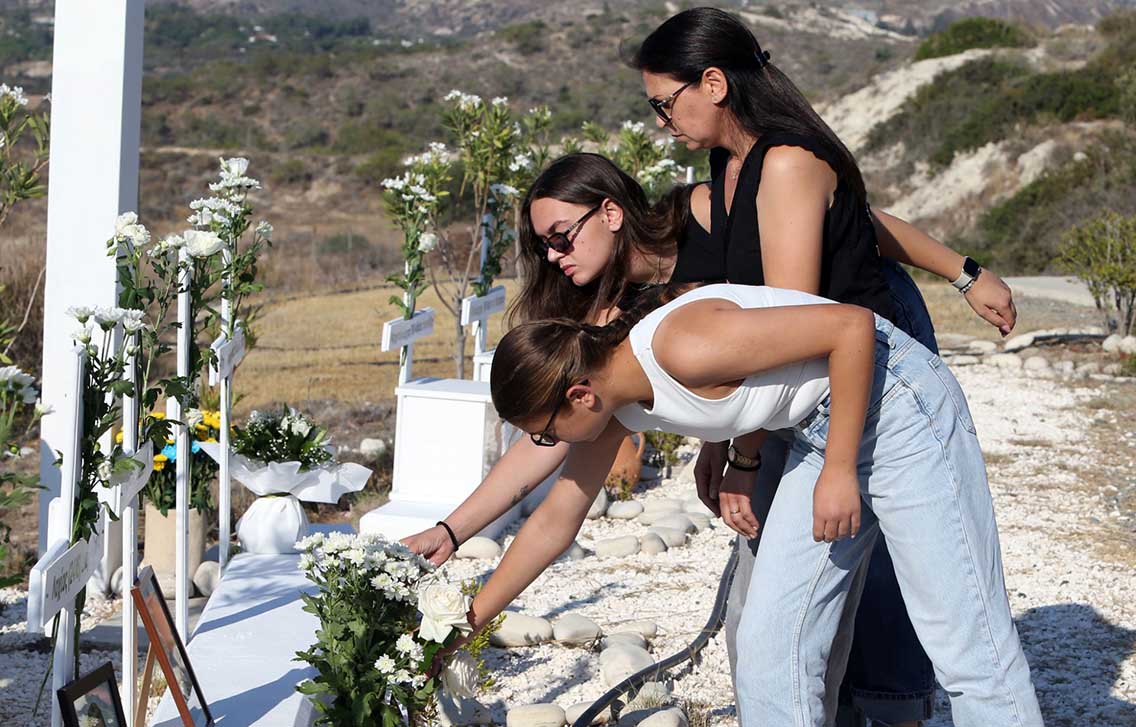
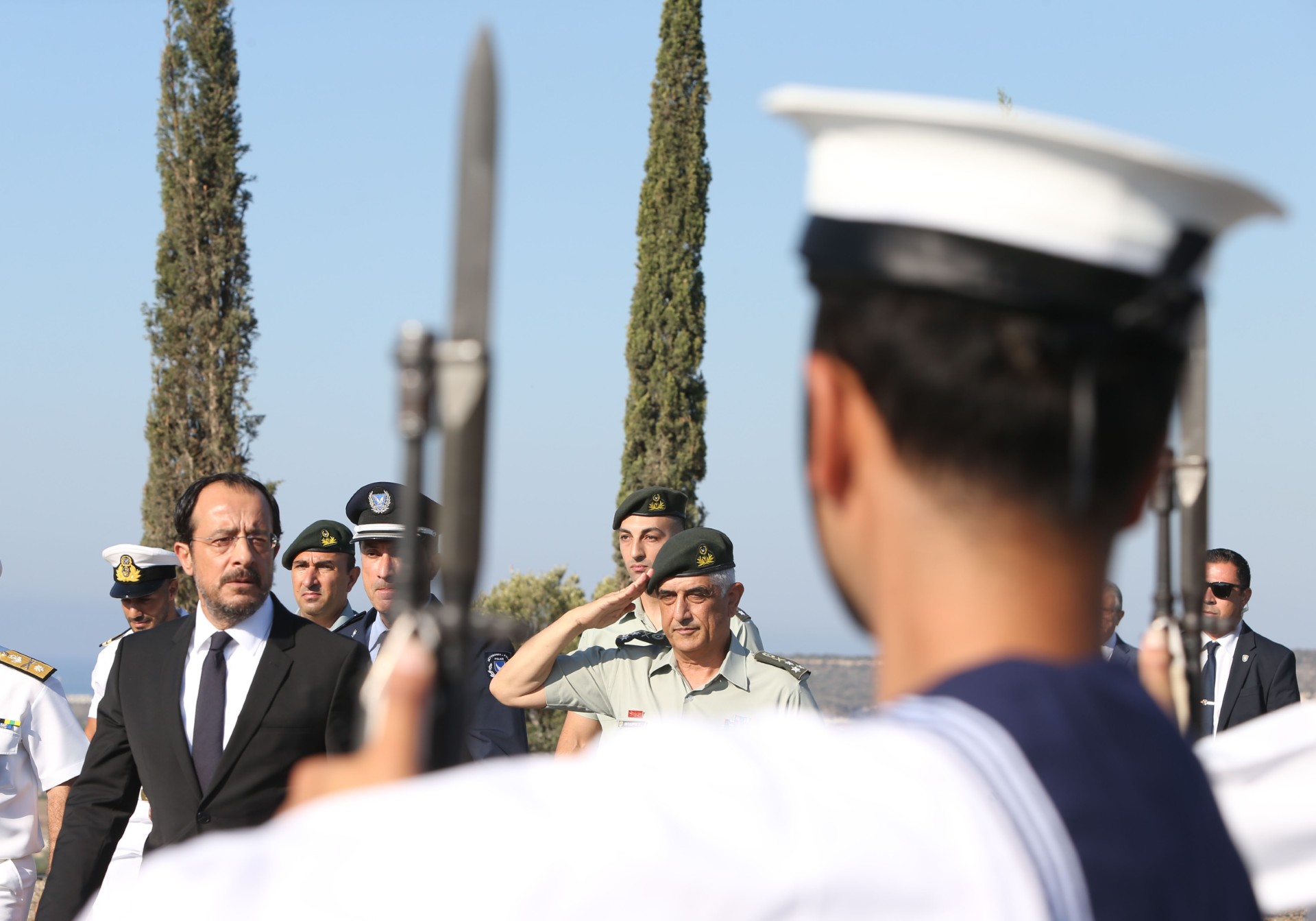
President Nikos Christodoulides on Saturday said that Cyprus remains “ashamed” of the Mari explosion, as he made a speech at a memorial event to mark its 15th anniversary.
“We are here to pay, with respect and with pride, the due tribute to the martyrs of that shameful day, who reported for duty and fought an unfair battle against an unbalanced danger, which proved fatal,” he said.
He then named each of the 13 people who died, and said that they all “honoured until the last moment of their lives the oath they took to their homeland”.
“Unfortunately, however, we must be completely honest. Our homeland will be forever embarrassed because it was unable to provide them with the appropriate safety, and this unfulfilled debt torments the collective memory and conscience of the Cypriot people,” he said.
He then spoke directly to the relatives of the dead, saying that “you, more than anyone, experience the pain of this loss every day”, before offering his “sincere apologies on behalf of the state” and asking for “forgiveness for the mistakes and omissions which led to the deadly explosion”.
“Beyond this anniversary’s significance and value, today serves as an opportunity to set our priorities so that we never experience a similar tragedy again. It is a day for which, as a state, we feel ashamed, but at the same time, reflective,” he said.
He said that the explosion’s memorial site constitutes a “venerable landmark which reminds us that the state must ensure the safety of human life and critical infrastructure”, and that this matter is much more pressing “in a country which has been under occupation for 52 years”.
“Thirteen of our fellow human beings lost their lives completely unjustly in the deadly explosion which destroyed this country’s energy centre, caused enormous economic damage, and led our homeland into an unprecedented crisis,” he said.
“Today is not a day for grand statements, nor is it a day for proclamations,” he added.
“With great sincerity, on behalf of the state, I want to apologise to you again, to apologise and to convey the assurance that through institutionalised procedures and continuous training, based on strict protocols and international practices, we are doing everything humanly possible to limit potential risks,” he said.
To this end, he said that “July 11 also reminds us that taking responsibility is the supreme virtue of those who serve the public”.
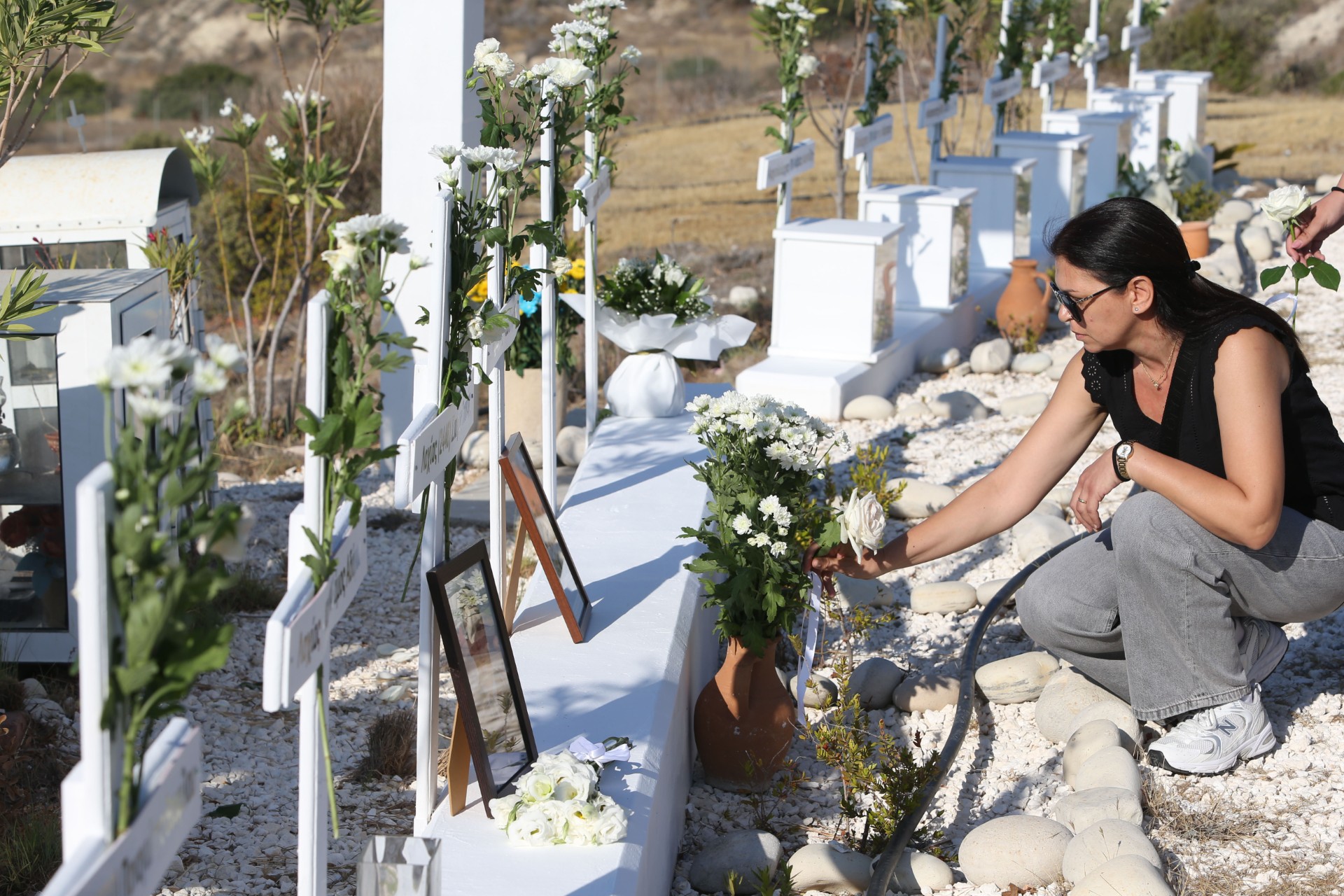
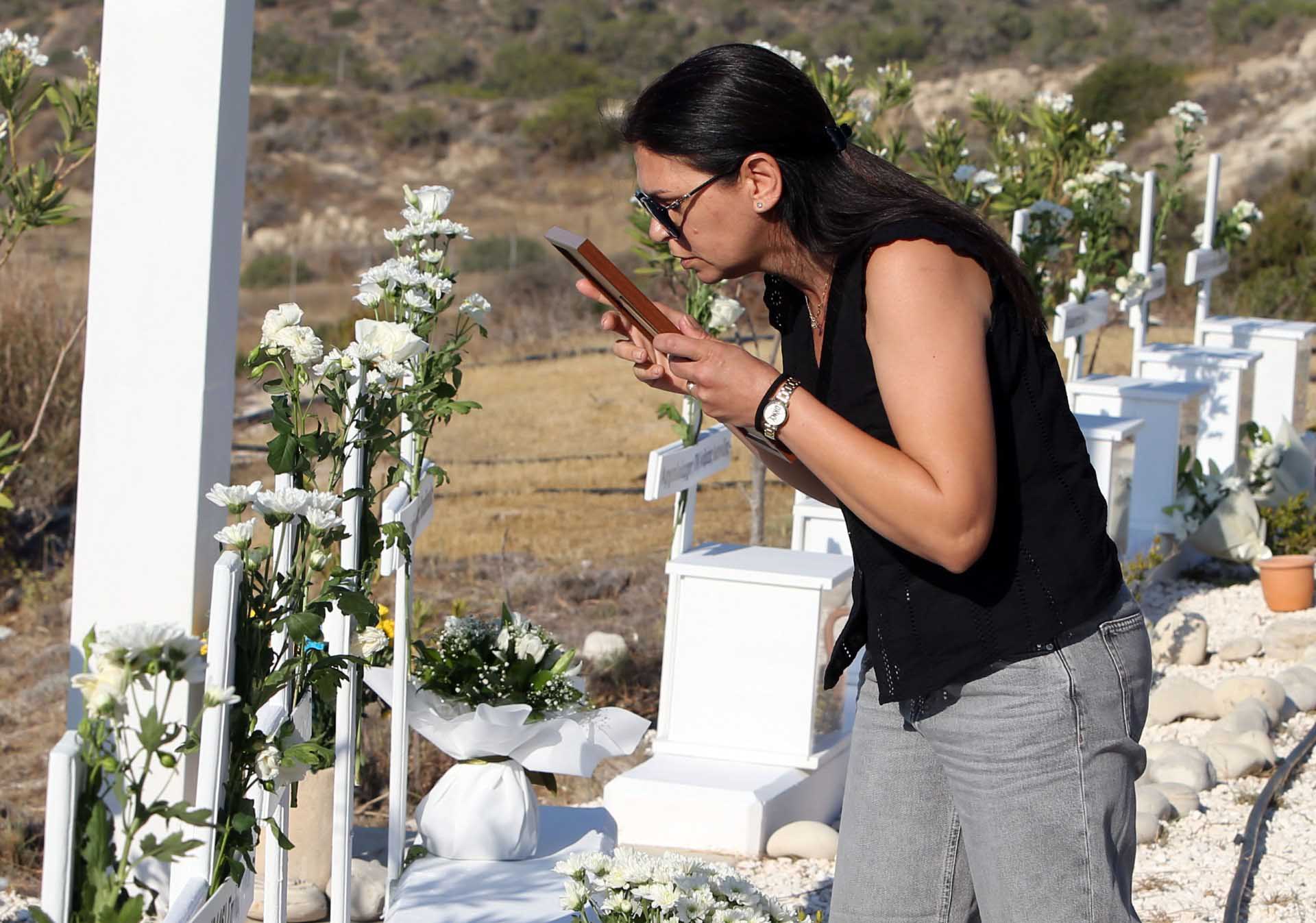
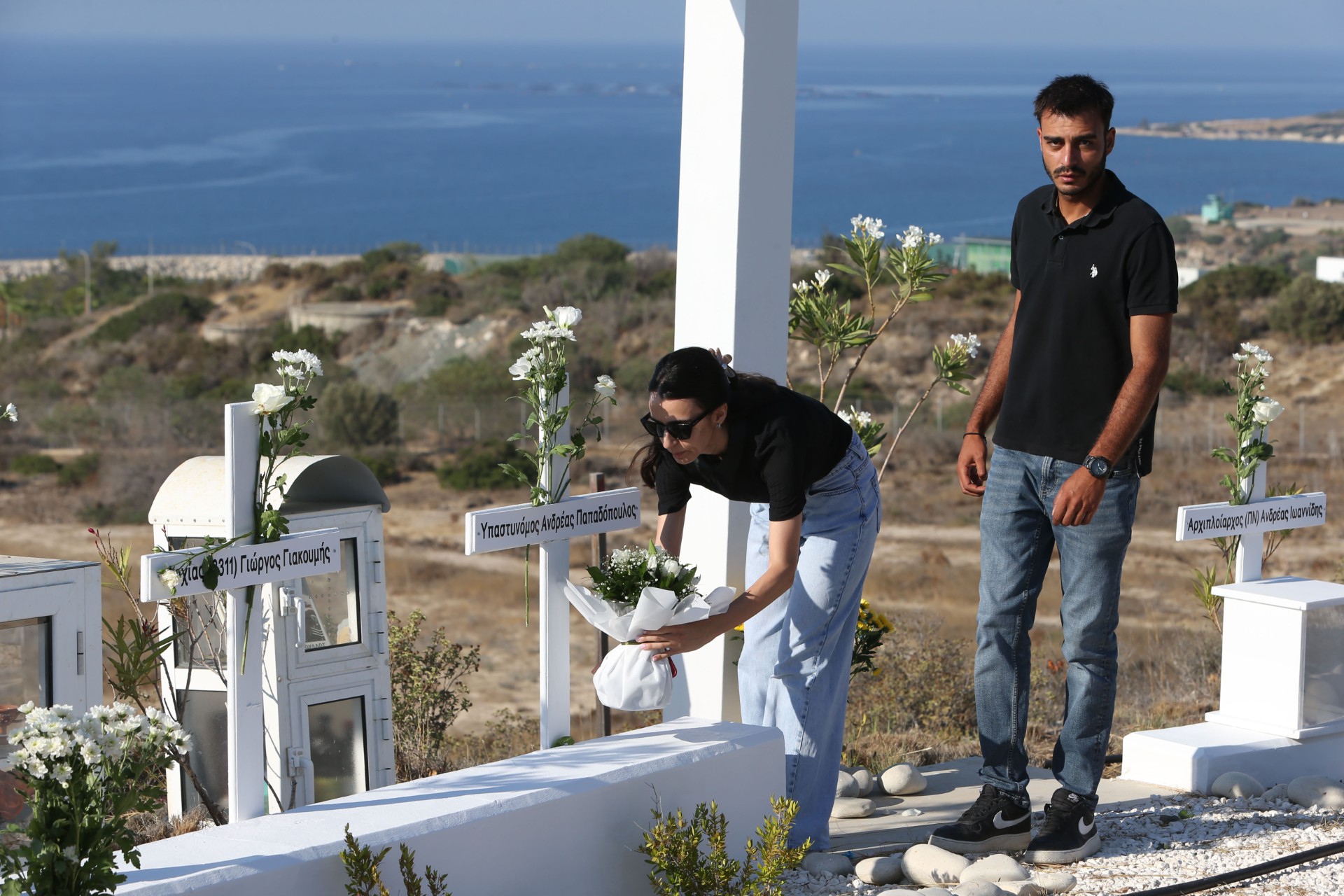
The Mari explosion occurred on July 11, 2011, and was caused by munitions which had been haphazardly stored in 98 containers at the Evangelos Florakis naval base in Mari for over two years. It also severely damaged the nearby Vasiliko power station, causing rolling power cuts across the island.
The munitions had been confiscated in 2009 from a Cyprus-flagged ship en route to Syria and were then stacked in an open space at the base and left exposed to the elements for two years until the explosion occurred, despite repeated warnings about risks.
Following the disaster, the government of the day, under late president Demetris Chrisfotias declared the deceased to be heroes who lost their lives in the line of duty.
Meanwhile, lawyer Polys Polyviou was appointed, as a one-man committee, to carry out an investigation into the circumstances that led to the blast and establish who was politically responsible.
Polyviou found Christofias to be mainly responsible, while the foreign and defence ministers of the day, Marcos Kyprianou and the late Costas Papacostas, were also found culpable.
However, Christofias rejected the findings and accused Polyviou of overstepping his mandate.
A three-judge panel ruled that Papacostas had been responsible for safeguarding the containers and was aware of the danger posed by the manner of their storage but failed to take any action.
Papacostas was sentenced to five years in jail for manslaughter in 2013, with the Larnaca court saying he had “closed his eyes to the danger”. He died in hospital in 2015.



Click here to change your cookie preferences