
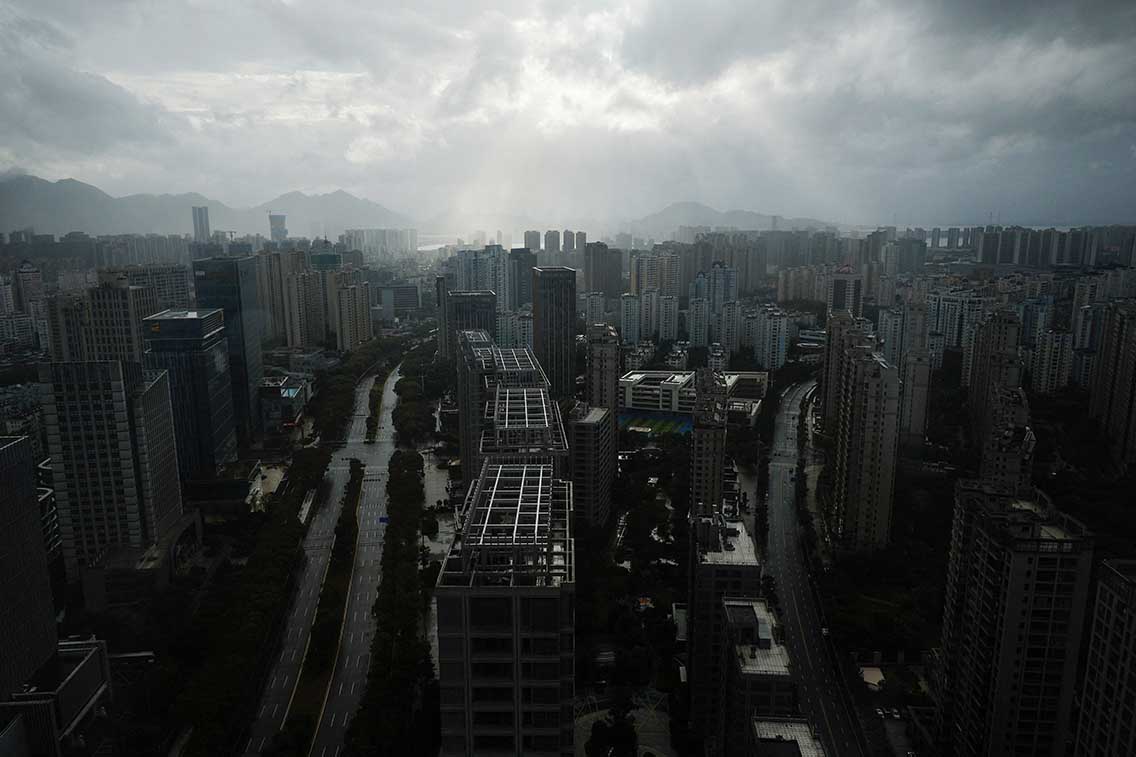
China evacuated more than 600,000 people on Saturday ahead of Typhoon Bavi hitting the major eastern city of Wenzhou after pummelling Japan’s southern Sakishima island chain with heavy rain and violent winds and brushing past northern Taiwan.
Even as Bavi continues to slow and weaken on its northwesterly path over cooler seas, the typhoon is still a potent risk due to the sheer volume of moisture it holds within its rain bands, about the size of France from end to end.
Bavi is forecast to make landfall around Wenzhou, home to some 10 million people, in the early hours of Sunday.
State media said more than half a million people had been evacuated in Zhejiang province, where Wenzhou is located, and more than 100,000 in neighbouring Fujian province.
“I’m a little worried, but I think it’ll be OK. We’ve been through typhoons before. We’ll get through it,” said Wenzhou resident Huang Xinghuan, 50, out buying groceries at a traditional wet market before it closed ahead of the typhoon.
Huang said his family had stocked about two to three days’ worth of water. “I think supplies are well guaranteed now. There’s no need to panic or stockpile a lot of food or other supplies,” he added.
While Japan and Taiwan have not so far reported any deaths from the typhoon, 17 people died in the Philippines due to heavy rains brought by an enhanced southwest monsoon, worsened by Bavi’s impact.
In Wenzhou, Chen Qiuqin, in her 60s, walked through steady rain on her way to her parents’ home to help them prepare for the approaching typhoon but said she was not too concerned given the government’s preparations.
“I was worried about the flowerpots on my mother’s balcony, so I’m going to help move them inside. My parents are both elderly and they’re home alone, so I wasn’t at ease,” she said.





Click here to change your cookie preferences