
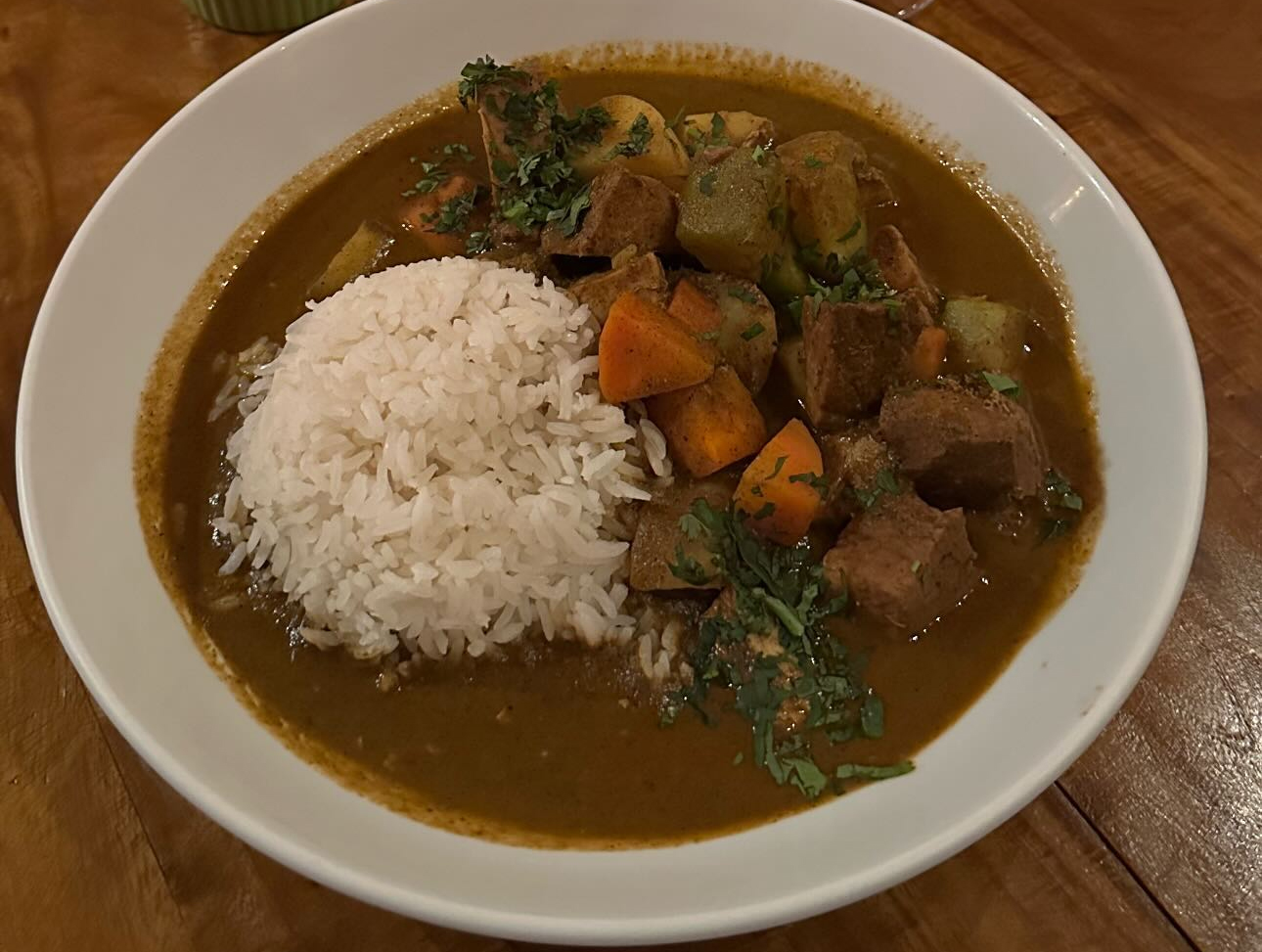
Pepián is one of Guatemala’s most enduring traditional dishes, a richly spiced stew with origins in the fusion of pre-Hispanic Maya cooking and Spanish colonial influence. It is widely regarded as one of the oldest mestizo dishes in Central America, reflecting centuries of cultural blending and adaptation.
Traditionally it is prepared with chicken, beef or pork simmered in a thick sauce made from roasted seeds, tomatoes, chillies and aromatic spices, producing a deep earthy flavour that defines Guatemalan home cooking. Historically pepián evolved from Maya ceremonial dishes that used toasted seeds and native chillies combined later with European spices introduced after the sixteenth century.
Over time it became a staple of family cooking, particularly in the central highlands where it is often prepared for Sundays and special gatherings. Its preparation is typically slow and communal, with ingredients ground using traditional tools, reinforcing its connection to indigenous culinary heritage.
Pepián is usually served with rice and corn tortillas, both of which reflect the central importance of maize in Mesoamerican culture.
Regional variations of pepián exist across Guatemala, with some versions favouring green sauces made from tomatillos and green chillies, while others are darker and richer depending on the blend of roasted seeds used. Coastal areas may incorporate different meats or local vegetables, while highland communities often preserve more traditional methods of preparation.
Despite these differences, the essential character of pepián remains consistent across the country, valued for its depth of flavour and cultural resonance. In modern Guatemala it continues to be prepared for celebrations and family events.
In contemporary cuisine, pepián has also found new interpretations in restaurants that refine its presentation while preserving its essential character. Chefs have introduced lighter versions and modern plating techniques, yet the dish remains firmly rooted in home cooking traditions.
It is increasingly recognised internationally as a signature example of Guatemalan cuisine, contributing to wider appreciation of Central American food culture. In Cyprus, pepián resonates with local slow cooked dishes such as beef stews prepared with tomatoes wine and spices, reflecting a shared Mediterranean appreciation for layered comforting flavours that bring people together around the table.
Today it remains a cherished dish in both rural and urban homes, symbolising resilience, hospitality and continuity within Guatemalan culture while also adapting to new tastes and global interest in traditional Latin American cuisine.
Across generations it continues to be shared in gatherings large and small, preserving culinary knowledge passed down through families and reinforcing a sense of identity that connects modern Guatemala with its ancestral past in a single enduring recipe still remains central to national heritage and everyday life today.





Click here to change your cookie preferences