
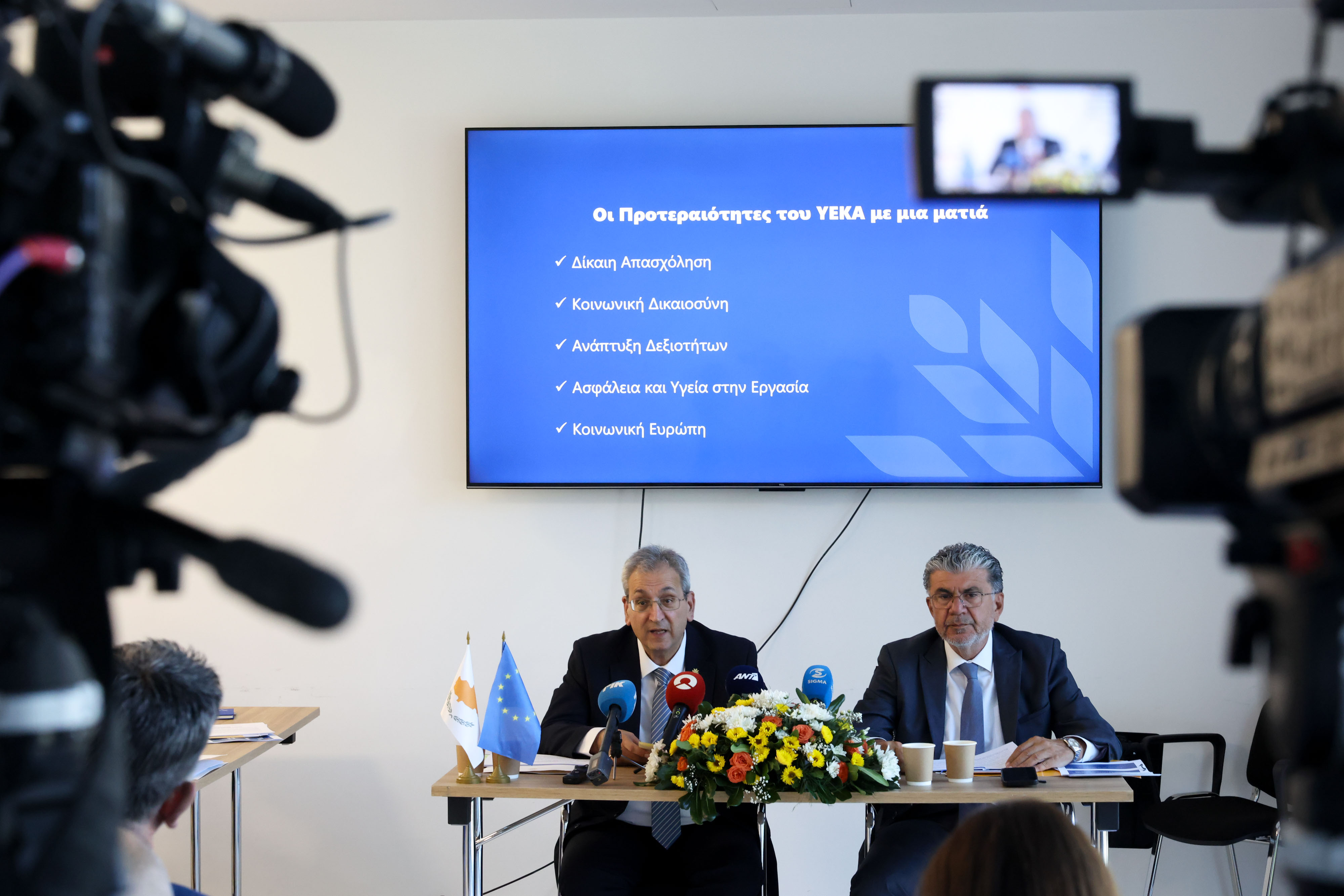
Pension reforms are progressing as planned, with pensioners expected to see higher payments from February 1, 2027, Labour Minister Marinos Mousiouttas said on Friday.
The minister said the bill covering the first pillar of the pension system, relating to the social insurance fund, will be presented to the social partners “very soon”. After receiving their feedback and cabinet approval, it is expected to be submitted to parliament when MPs return from their summer recess in September, with implementation planned for early 2027.
“On February 1, 2027, the people will feel the increase in pensions,” Mousiouttas said.
Presenting the labour ministry’s work during Cyprus’ presidency of the Council of the European Union, Mousiouttas said the Labour Advisory Body would meet in early August to finalise the remaining details before the bill is circulated to the social partners.
He said the meeting could not be held earlier because of the absence of Finance Minister Makis Keravnos.
He pointed out that any increases in one benefit would mean reducing others, as “priorities must be set”.
“Since it is generally accepted that the retirement age will not be increased and thus the contributions will not increase … the revenue of the fund will remain stable,” he added.
He added that the actuarial study underpinning the reform projects the social insurance fund’s sustainability over a period of around 50 years.
“Any change or suggestion is welcome,” he said, adding that “we are open to discussion, not only with the social partners.”
The minister said the government remained open to suggestions from the social partners and political parties before the bill is debated in parliament.
“Everyone must keep in mind that the fund has specific resources, it has specific revenue and so anything we do must be within these specific limits. Anything else cannot be met because there is not enough money,” Mousiouttas pointed out.
He added that the human-centered philosophy of the reform should not be altered. The aim, he said, was to increase pensions and correct distortions.
In general terms, Mousiouttas said he was confident a common ground would be found with the social partners.
Turning to the second pillar, covering provident funds, the minister said reform would take considerably longer. Even if the legislation were completed within four years, he said, it would take a further five to ten years for workers to build up meaningful savings.
He added that trade unions want discussions on the second pillar to begin in September, despite the longer implementation timetable.
The minister also said there were two schools of thought regarding the second pillar. One was the trade union point of view that the provident funds should be mandatory and the other supported by the employers was that they should be optional and implemented on a voluntary basis.
“This is black and white. Reaching grey, the common ground, is more difficult. What we want is for the first pillar to move forward and at the same time discuss the second pillar,” he said.




Click here to change your cookie preferences