
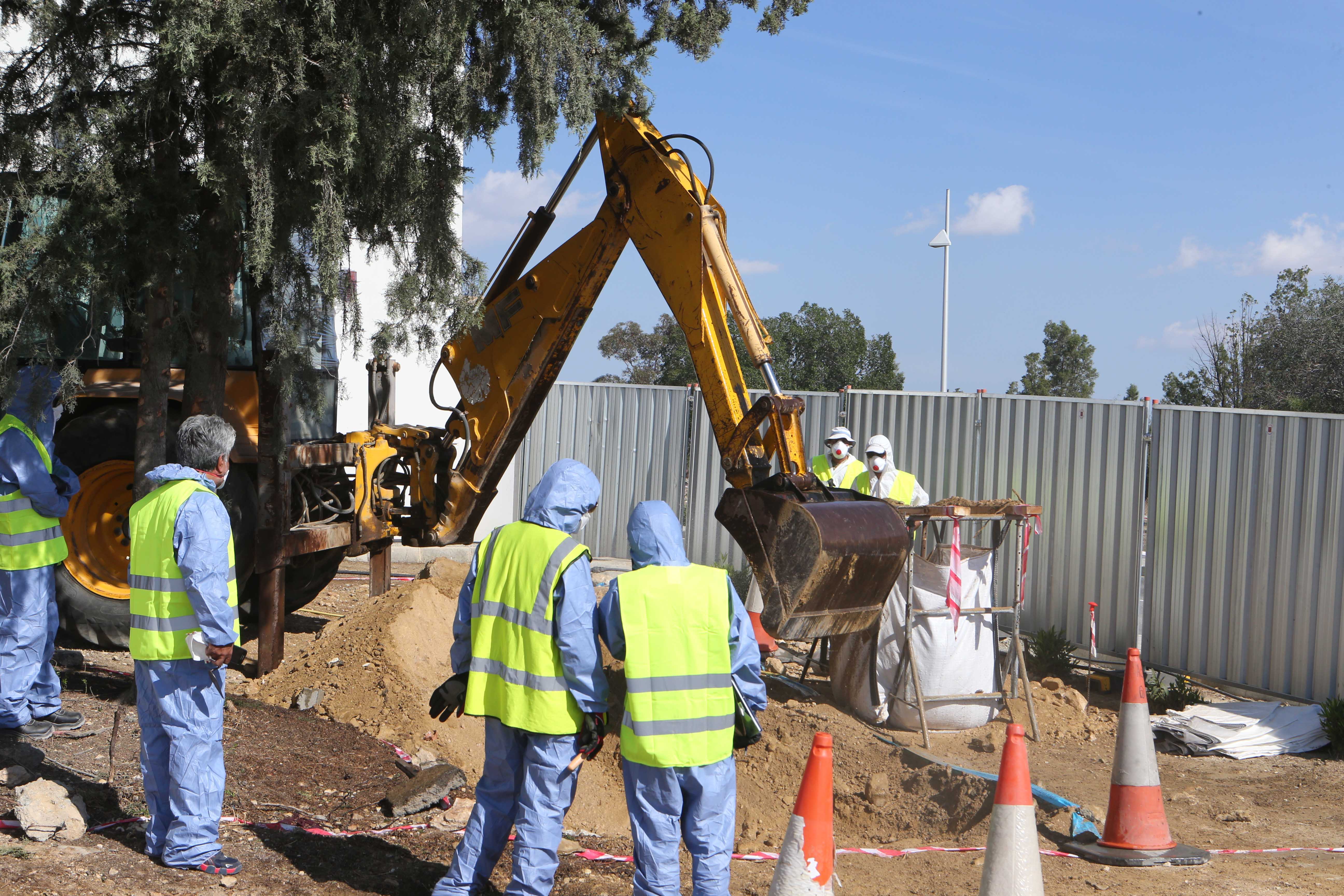
Hours of bombing at Nicosia’s Athalassa hospital in July 1974 left a crater in the ground while a series of makeshift burials took place of those who had died, leading a team of investigators in 2017 to begin a search there for missing people.
Archaeologist Michalis Iacovides on Monday described to the Cyprus News Agency what he had seen during this operation.
“Some were found with shards of glass embedded in their bodies. One was still clutching a Serenace medicine ampoule in his folded hand. We recovered as many as 30 such ampoules. They were exactly as witnesses had described them – their bodies wrapped in blankets and sheets. One female patient’s red dress had not deteriorated at all because it was made of nylon,” he said.
The excavations began in November 2017 and continued for several weeks, seeking to recover the remains of patients killed when the Turkish Air Force bombed two wards of the hospital on July 20, 1974, claiming the lives of 33 people.
Thirty-one of those killed were patients, including three Turkish Cypriots, while two nurses also lost their lives in the bombing. The remains of two victims were returned to their families at the time and buried in their home villages.
The intended target is believed to be a nearby military camp used as an ammunition depot, explaining why the greatest loss of life occurred in Wards 1 and 2, the buildings closest to the military storage facilities.
Iacovides said the exhumations were the culmination of years of determined efforts by the late Xenophon Kallis, who campaigned for excavations to locate the remains of missing persons with the support of then Presidential Commissioner Photis Photiou.
“Xenophon Kallis had placed the Athalassa hospital exhumations among his highest priorities,” the archaeologist said.
The bombardment of the hospital lasted continuously from 9am until 1.30pm on July 20, 1974.
When the attacks finally ceased, the nurses on duty realised that Ward 1 had been completely destroyed, while Ward 2 contained numerous injured patients.
“One of the bombs that struck Ward 1 weighed 500 pounds. It left behind a crater that swallowed almost half the ward, and decades later we excavated it,” Iacovides said.
Around ten or eleven of the victims died instantly and were buried in a makeshift grave behind what is now the mortuary of Nicosia general hospital.
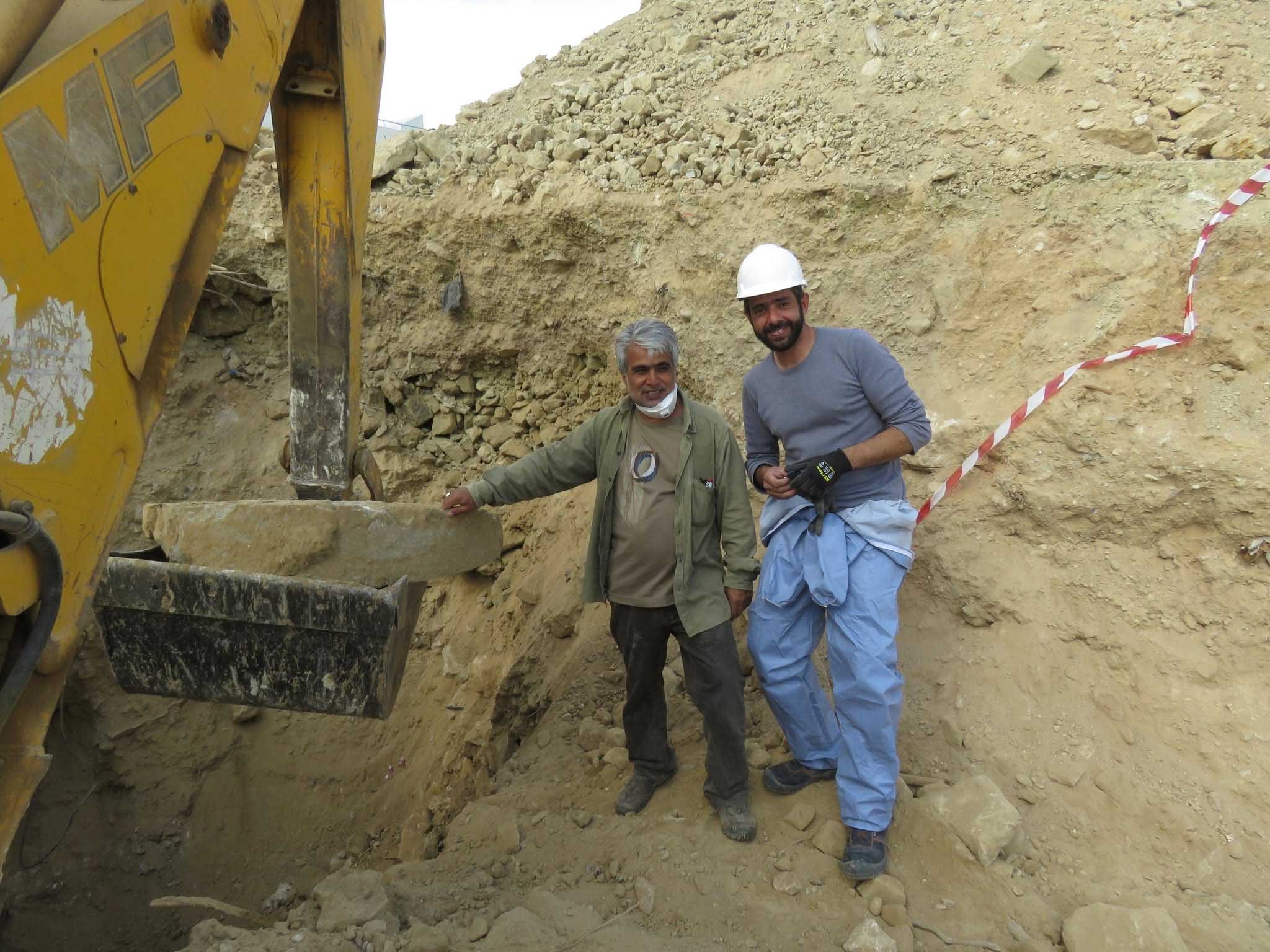
“The crater had been created by the bomb itself. When we excavated it, we found evidence of intense burning. The earth still smelled of sulphur,” he said.
Hospital staff had kept meticulous records and documented all 33 fatalities.
“They wrapped the dead in those brown woollen blankets that never seem to wear out. They moved them onto beds in other wards before wrapping them again in sheets. Because of the summer heat, the bodies quickly began to decompose and they had to be buried. In those circumstances there were no formal burial protocols. It was summer, and they had to be laid to rest. Many had been burned. The smell was indescribable.”
Witness testimony later proved invaluable to the excavation team. The victims were buried together in the crater, and the excavation revealed that some had been dismembered by the blast, with skeletal remains scattered throughout the impact site.
The long process that led to the 2017 exhumations began in May 1993 with Takis Agathocleous, a nurse who had been on duty during the bombing, returned to the site with former colleagues and planted 11 cypress trees, believed to correspond to the number of victims buried in the crater.
“It was a way of marking the area,” Iacovides said. “When we carried out the excavation, we found the remains of ten individuals, possibly 11 if the skulls discovered are taken into account. The final figure will only be confirmed once the pending anthropological examinations are completed.”
An initial exploratory trench was opened at the site on August 3, 2017.
“Three archaeologists carried out a trial excavation to determine whether the witness testimony was accurate. It was there that they first uncovered the blankets and human remains,” Iacovides recalled.
The full-scale excavation began on November 1, 2017. “The manual recovery of the skeletal remains was completed on November 16.”
Following the excavation, Kallis remained troubled because one witness had provided a list naming 31 victims.
The archaeological team therefore expanded its research, including the cemetery’s archival records, in which funeral contractor Andreas Kekkouris identified several locations where additional victims from the hospital were likely to have been buried.
“Six of them died between July 23 and 25, 1974, while the others died as late as October. They were most likely injured during the bombing and later succumbed to their wounds. This suggests that only ten or eleven victims died instantly. The casualty list, however, included many more people,” Iacovides explained.
Although it was well known patients were killed in the bombing, for decades few searched for them, largely because of the stigma attached to psychiatric illness at the time.
In February 2023, a memorial bearing the names of all those who died in the attack was erected near the mortuary of Nicosia general hospital, on the site where the hospital wards and other buildings once stood in 1974.
Commissioner Photiou, under whose tenure the exhumations began, publicly apologised “for the way the cases of the Athalassa Hospital patients, as well as the burial sites in the surrounding area, were handled.”
He acknowledged that answers for the victims’ families “could and should have been provided many years ago, but unfortunately that did not happen.”
Click here to change your cookie preferences