
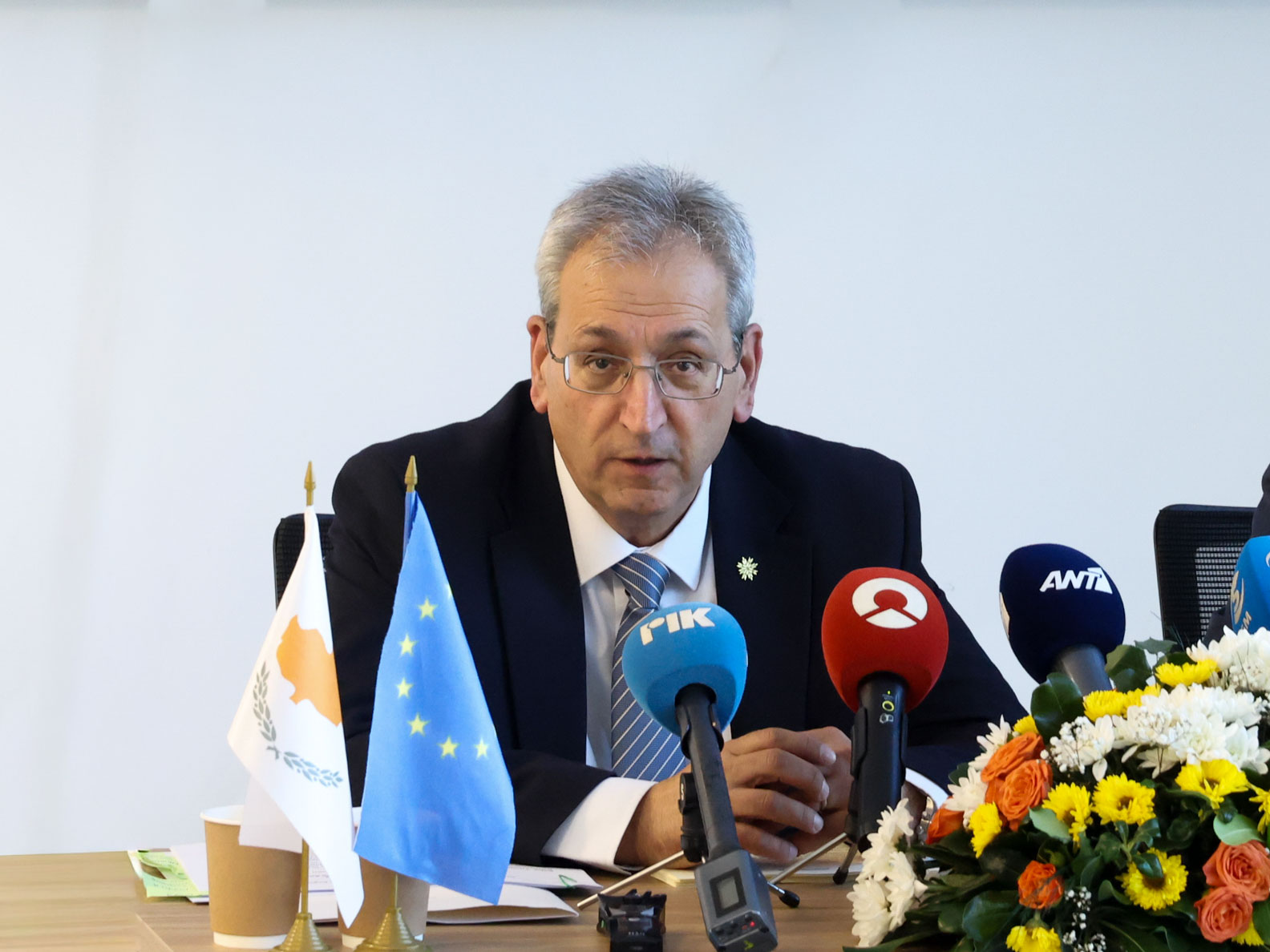
Labour Minister Marinos Mousiouttas said on Friday that pension reform was on track to be implemented at the start of 2027. He admitted that there was still a legal obstacle, but this would be overcome in the next few days so the reform bill can be submitted to the council of ministers for approval.
In other words, the reform bill which the government presented in mid-August, making a big song and dance about the higher pensions 123,000 people would receive, will go to the cabinet in the second half of November. As a result, the legislature would have four weeks, at most, to study, discuss and approve what President Nikos Christodoulides described as “the largest and most substantive reform of the pensions system since 1980.”
This may be the case, although the government’s handling of the most substantive reform of the system in 46 years does not inspire any confidence. Mousiouttas had said the bills would be submitted to the House for approval in September, then it became October and now it might not even be November. And the parties are expected to rush the bills through before the Christmas recess so the reform is implemented at the start of the year.
Regrettably, this slapdash approach has been the main feature of the reform effort, from the moment Mousiouttas and Christodoulides announced it in August, focusing exclusively on how much more money pensioners would get. Some 50,000 would receive more than €100 per month extra, we were told. The minister also said that the increases would be funded by the state at €50 million per year for five years, that is a total of €250m.
A month later, after unions and employers’ organisations demanded detailed costings of the reform Mousiouttas announced the total cost would be spread over six years and amounted to €820m. The state would contribute €486m – almost double the initial amount – and the Social Insurance Fund €334m which would come from the repayment of government debt to the Fund. There was no actual plan and the reform was being improvised from week to week.
In October, the minister was involved in twice-weekly meetings with unions and employers’ groups at the Labour Advisory Council, haggling about the pension increases, chopping and changing the payment arrangements to keep the social partners happy. It was an indication of the confused thinking that marked the reform plan. In the middle of October, after a meeting of the Council, Mousiouttas announced three amendments, which he claimed were a step forward. Pension payment increases would be over three years instead of five, the transitional period would be extended from five to 15 years and criteria for widow and disability pensions would be changed.
As we have said several times, it is astonishing that pension reform did not account for increasing life expectancy and the low birth rate, both of which would have an impact on the Social Insurance Fund and its sustainability. These factors were largely ignored and only on Friday did Mousiouttas finally acknowledged their existence, saying the government’s intention was to encourage people to remain in employment longer because of the increasing life expectancy and labour shortages.
“We believe it is in the interests of both the economy and social insurance fund to discourage people from leaving employment before 65, the retirement age,” he said. Incentives would also be introduced for private sector employees to stay in in work until 67, he said. How is this consistent with the government’s decision to reduce the penalty for taking a pension at 63 from 12 per cent to 7.5 per cent? Has the minister not realised that he strengthened the incentive to retire at 63 while wanting people to carry on working until 67?
Government incompetence has made a complete mess of the pension system reform, the only concern being to see pension increases in the year leading up to the presidential election. For the sake of the country, the political parties must not approve this sloppy, improvised reform plan. They must not allow the government to pressure them into voting the bills through before Christmas because this slapdash reform could cause irreparable damage to the social insurance fund and the economy.
.





Click here to change your cookie preferences