
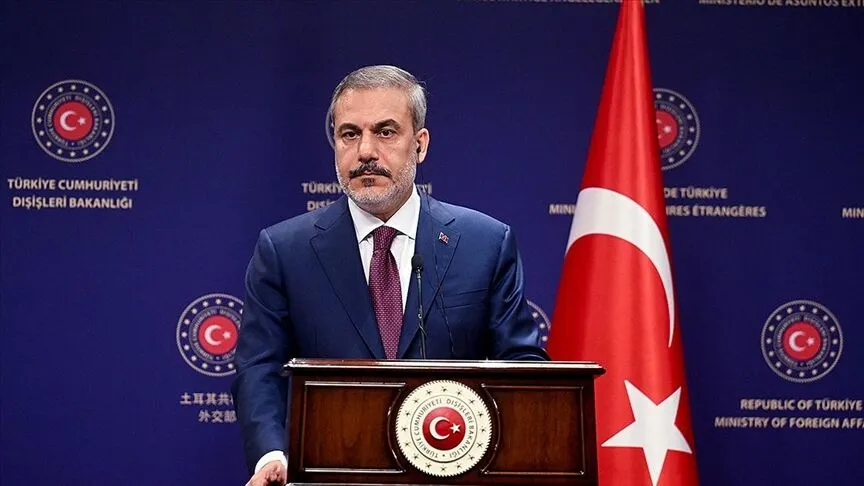
Turkish Foreign Minister Hakan Fidan on Saturday night said he believes the Greek Cypriot side will never agree to any power-sharing agreement to solve the Cyprus problem, and as such said that he believes a two-state solution constitutes a more realistic path to a settlement.
“We have always seen that the Greek Cypriot side will never agree to equal power-sharing, authority-sharing, prosperity-sharing, or state-sharing with the Turkish Cypriots. This is a matter of absolute certainty,” he told Turkey’s Anadolu Agency.
On this front, he stressed that the Greek Cypriots “already have a state, are a member of the European Union, are represented at the United Nations, and benefit from all the advantages”.
“Now, apparently, they are going to go and share this with someone else. They know this is a lie, and when we ask the international community, they know it, too. Continuing such a lie is not rational,” he said.
In addition, he said that “the Greek Cypriot side is using its rights stemming from being recognised as a state to obstruct all the benefits which the Turkish Cypriots may receive from the international community”, before adding that “they are hindering, trade, transportation, and all those things”.
He also said that when proposals for talks or confidence-building measures on the Cyprus problem are put forward, the Greek Cypriot side “first looks at who made the proposal, and if it comes from [United Nations Secretary-General Antonio] Guterres, they listen to it”.
“We support all forms of dialogue which include the Turkish Cypriots. It is necessary, however, to explain to this new generation, repeatedly and clearly, why the Turkish Cypriots established a state, and that they were subjected to unjust isolation,” he said.
Nonetheless, he said, Turkey will in the coming years continue to bolster its own presence on the island as an investor, quoting Turkish President Recep Tayyip Erdogan as having said that “there is no need to wait for a permanent solution to achieve certain interests”.
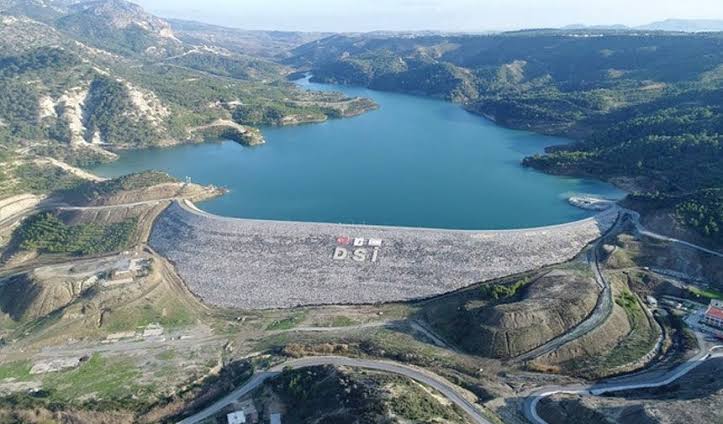
“The north and the south of the island need water, energy, electricity, and tourists. Joint projects and collaborative efforts can be undertaken to this end. We expressed this to the secretary-general. In other words, this can be considered in terms of confidence-building measures between the two sides,” he said.
As such, he added, “the necessary responses have been given to the obstacles created by the Greek Cypriot administration in the way of the TRNC, and these obstacles must be overcome”.
“Therefore, what are we doing in response? We do not recognise the Greek Cypriot side as a state. In other words, if you do not recognise the Turkish Cypriots’ rights, I will not recognise your statehood. Because you are not the state which was established in 1960. Everyone knows this. Therefore, our non-recognition is perfectly legitimate,” he said.
This lack of recognition, he said, “also brings certain disadvantages to the Greek Cypriot side”.
“In fact, in the long run, it is possible for both sides to leave these issues aside and take steps which will build mutual trust without changing their legal positions. We have also told the other side this, and come with very courageous and creative ideas,” he said.
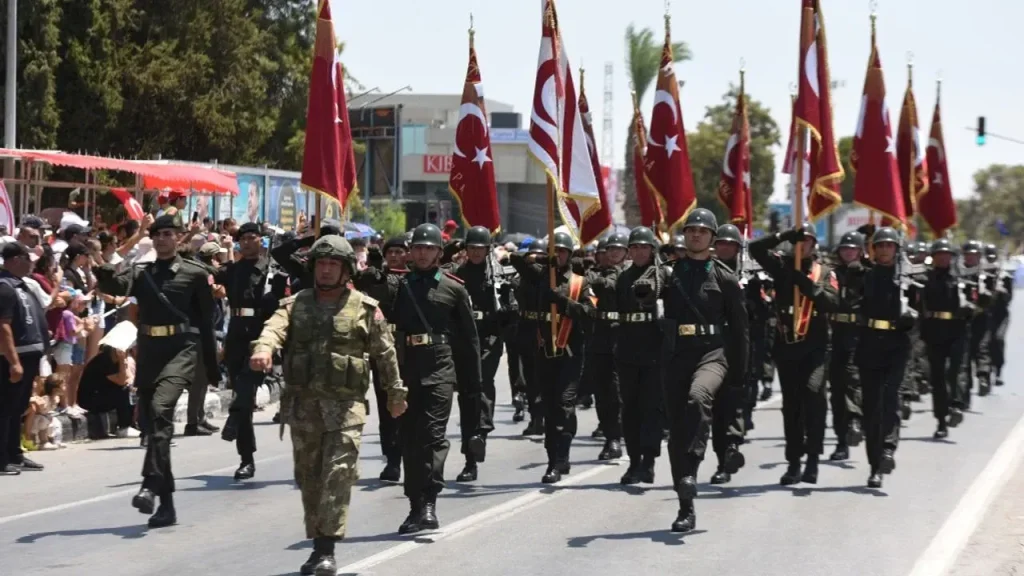
Regarding the presence of Turkish troops on the island, he said their remaining in Cyprus “has not changed the status quo at all”, and stressed that “the status quo has been the same for 50 years”.
“This means that the stability and peace on the island today are down to only one reason: the presence of Turkish soldiers on the island,” he added.
Asked whether the presence of Turkish troops going forward is therefore a “must-have” for Cyprus, he responded, “under these circumstances”, and “under conditions where neither side agrees to a lasting settlement”.
“The Greek Cypriots say that the whole island belongs to them. Now, if you use those overwhelming powers against the Turkish Cypriots, who will come to their aid? We will go again. Therefore, in a situation where this is not resolved permanently, where the conditions remain the same, you cannot expect the equation to change, and it will not change,” he said.
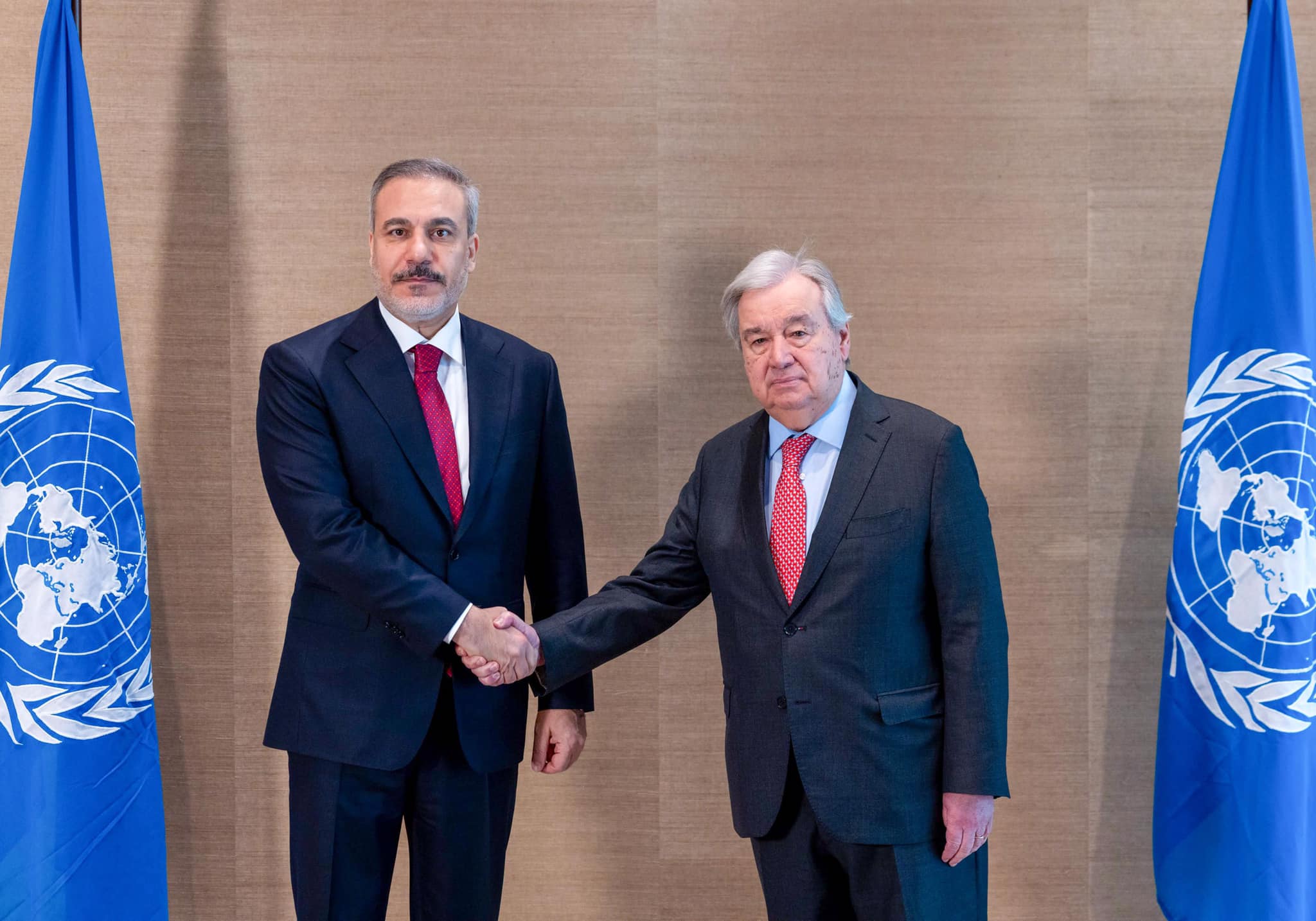
Given this to be the case, he said, “for us, the solution is essentially the recognition of a two-state solution”.
“This is the ideal solution. The ideal solution is the implementation of a two-state solution. That is, a structure where both Greek Cypriots and Turkish Cypriots have their own states, and these two states coexist in peace and harmony together on the island, contributing both to the prosperity of the island and to regional peace and stability,” he said.
He stressed that throughout his ten-year tenure as UN secretary-general, Antonio Guterres has “always prioritised human dignity, and has always strived to stand on the side of truth” both on Cyprus and on other matters, before adding that Erdogan “trusts Guterres’ character”.
“We believe that fairness should be ensured in the initiatives put forward here,” he said.
He added that “the Cypriot state established by the 1960 agreement is not the same Cypriot state which the European Union accepted as a member in 2004”.
“At this point, the Greek Cypriot side is recognised as a state representing all of Cyprus, but the Turkish Cypriots living in the north are being neglected in this regard,” he said.
“We have recognised the Turkish Republic of Northern Cyprus as a sovereign and independent state. Okay, we are the only ones who recognise it, but this is not something which will change our position.”



Click here to change your cookie preferences