
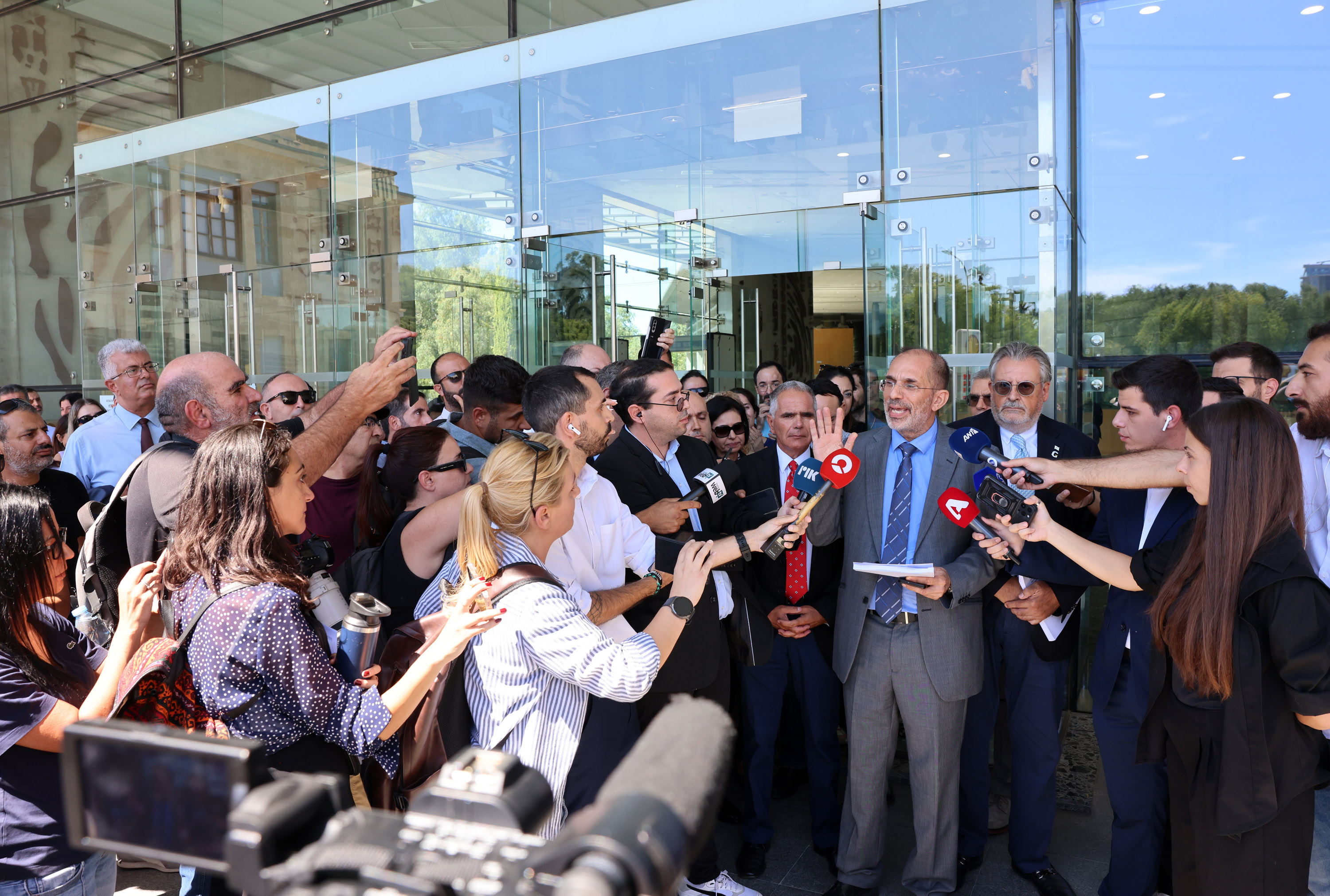
The European Court of Human Rights has sent a list of questions to the parties involved in the dismissal of former auditor-general Odysseas Michaelides in the context of his appeal against the Republic of Cyprus lodged on December 9, 2024.
As was made known on Monday, the Republic was notified of the list on August 20, 2026, in which the court sets out two questions.
The court asks if there had been any intervention in the appellant’s freedom of expression, as guaranteed by the ECtHR’s paragraph 1 of article 10 – which protects freedom of expression – and, if yes, if such an intervention was in accordance with the law, whether it pursued one or more of the legitimate aims referred to in the second paragraph of article 10 and whether it was “necessary in a democratic society”.
On September 4 it was made known that the ECtHR had notified Cyprus of part of Michaelides’ appeal against his dismissal, concerning an alleged violation of his right to freedom of expression.
In a social media post on X, Michaelides described the development as positive, while acknowledging that it does not prejudge whether the case will ultimately be admissible or the court’s final ruling on the substance of his complaint.
Michaelides’ appeal follows his dismissal by the Supreme Constitutional Court in September 2024.
In a unanimous ruling, a panel of eight judges found his conduct had been inappropriate and thus he was unfit for his duties.
The 209-page decision was hard-hitting, saying Michaelides repeatedly misinformed the public, crossed the line and did not even do the bare minimum his role demands of him in terms of conduct.
He was found to have repeatedly sought to undermine Attorney-General George Savvides’ legal opinions.
Michaelides rejected the judgment and has since characterised his dismissal as politically motivated.
Shortly after his removal, he said he had been ousted because he could not be silenced and described the ruling as an attempt to place restrictions on the audit office.
Michaelides has previously said his ECtHR appeal would cover three areas, including due process, his right to reputation and freedom of expression.
He described himself as “modestly optimistic” and said he had “absolute respect” for the process now under way.





Click here to change your cookie preferences