
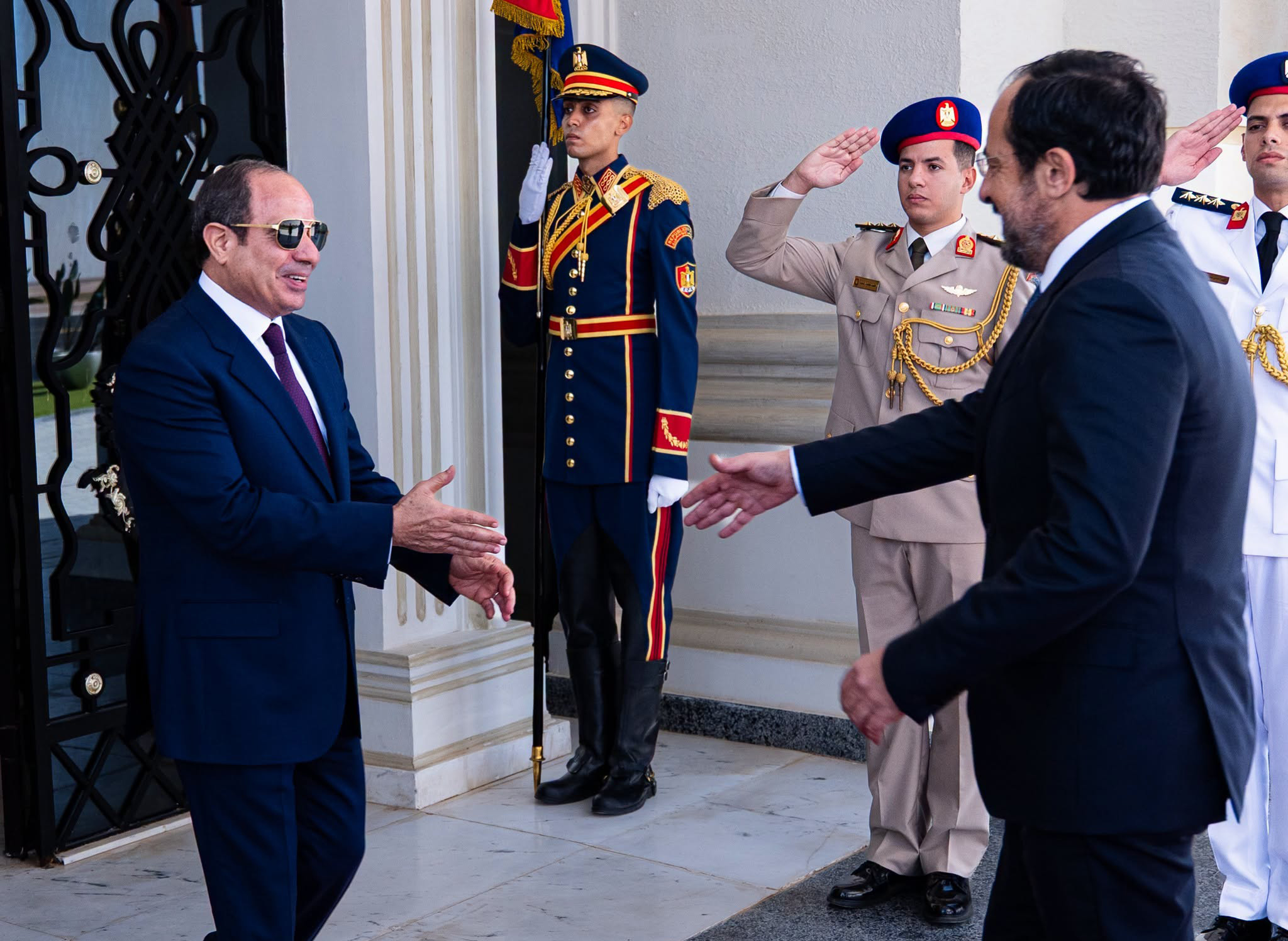
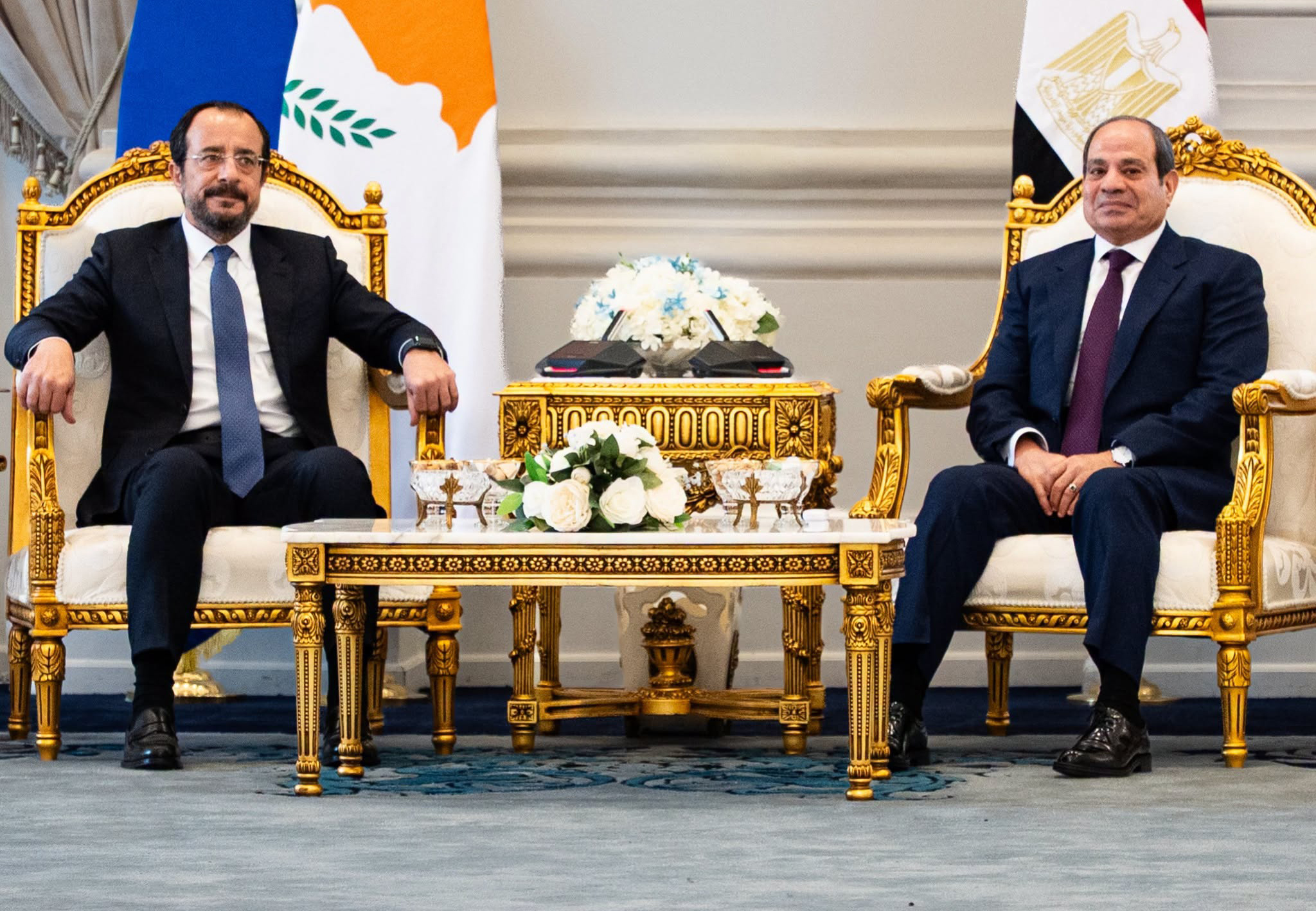
President Nikos Christodoulides, his Egyptian counterpart Abdel Fattah El-Sisi and Greek Prime Minister Kyriakos Mitsotakis on Tuesday declared their joint intention to “uphold security and stability in the region” after they met in the Egyptian Mediterranean coastal city of El Alamein.
“We affirm our collective will to uphold security and stability in the region, as well as to resolve disputes and crises through political and diplomatic means, and reject any actions which would increase tension and undermine regional stability or threaten peace and security in the region,” a joint declaration said.
The three added that they “underline the importance of respecting national sovereignty, the independence and territorial integrity of states, refraining from the threat or use of force, and fully adhering to the rules of international law and the principles and charters of the United Nations”.
“We reiterate the importance of fully respecting international law and the commitment of all states to uphold its principles, in a matter which safeguards the rights of all states concerned and contributes to peace, security, and stability in the eastern Mediterranean,” they said.
They then added that “any agreements or memoranda of understanding on the delimitation of maritime jurisdiction should be agreed on the basis of international law, including the United Nations convention on the law of the sea (Unclos)”.
The reference to Unclos is a pushback against Turkey’s position on maritime borders, with Turkey not presently a signatory to Unclos, arguing that it gives too much weight to islands.
The three leaders on Tuesday also made direct reference to the Cyprus problem, saying that they all “welcome the efforts” made by UN Secretary-General Antonio Guterres and his envoy Maria Angela Holguin, “and express our support for the ongoing efforts to achieve a comprehensive solution to the Cyprus problem”.
“We emphasise that achieving a final settlement of the Cyprus problem would significantly contribute to strengthening peace and stability in the region,” they said.
‘Unwavering support for the legitimate rights of the Palestinian people’
On the Middle East conflict, they said that “we reaffirm our unwavering support for the legitimate rights of the Palestinian people and the need to achieve a just, lasting and comprehensive peace based on a two-state solution”.
“We reiterate our support for the establishment of an independent and sovereign Palestinian state within the lines of June 4, 1967, with East Jerusalem as its capital, in accordance with the United Nations’ resolutions,” they said.
They also offered their support for United States President Donald Trump’s plan to end the conflict in Gaza, saying that the implementation of the plan’s second phase “would ensure the start of reconstruction and early rehabilitation in Gaza, as well as the preservation of the unity of the Palestinian territories”.
“We remain deeply concerned about the humanitarian situation in Gaza and stress the need for humanitarian assistance to reach the population safely, swiftly, and on a large scale,” they said.
On Lebanon, they said that they “stress the need for the cessation of all attacks and for the withdrawal of Israeli forces from Lebanese territories”, while calling for “the withdrawal of all foreign forces and mercenaries” from Libya.
The three leaders then stressed that “energy security is a common interest and a key pillar of trilateral cooperation”, stressing their “willingness to continue the development of electricity interconnection projects”, including the Gregy interconnector, which will link the energy grids of Egypt and Greece.
This interconnector, they said, will “enhance the energy security and the interconnection of the eastern Mediterranean with European markets”.
‘Full compliance with international law in the Nile Basin’
Additionally, they highlighted the “importance of strengthening cooperation in the gas sector”, attaching particular importance to “recent developments regarding the connection of the Cypriot gas fields to the Egyptian gas infrastructure”.
On the matter of water security, they said they wished to “enhance cooperation … in light of growing challenges facing the region, including water scarcity and climate change”.
In addition, the three leaders agreed to “attach particular importance to strengthening economic, trade and investment cooperation” between their countries, while also agreeing to a “holistic and balanced approach” to the matter of irregular migration.
They also called for the existing strategic partnership between Egypt and the European Union to be “strengthened”, while emphasising their “determination to continue our joint efforts for a more secure, stable, and prosperous region” going forward.




Click here to change your cookie preferences