
Cyprus must defend the international legal framework it helped shape, as the Turkey-Libya memorandum and the Great Sea Interconnector test its maritime rights
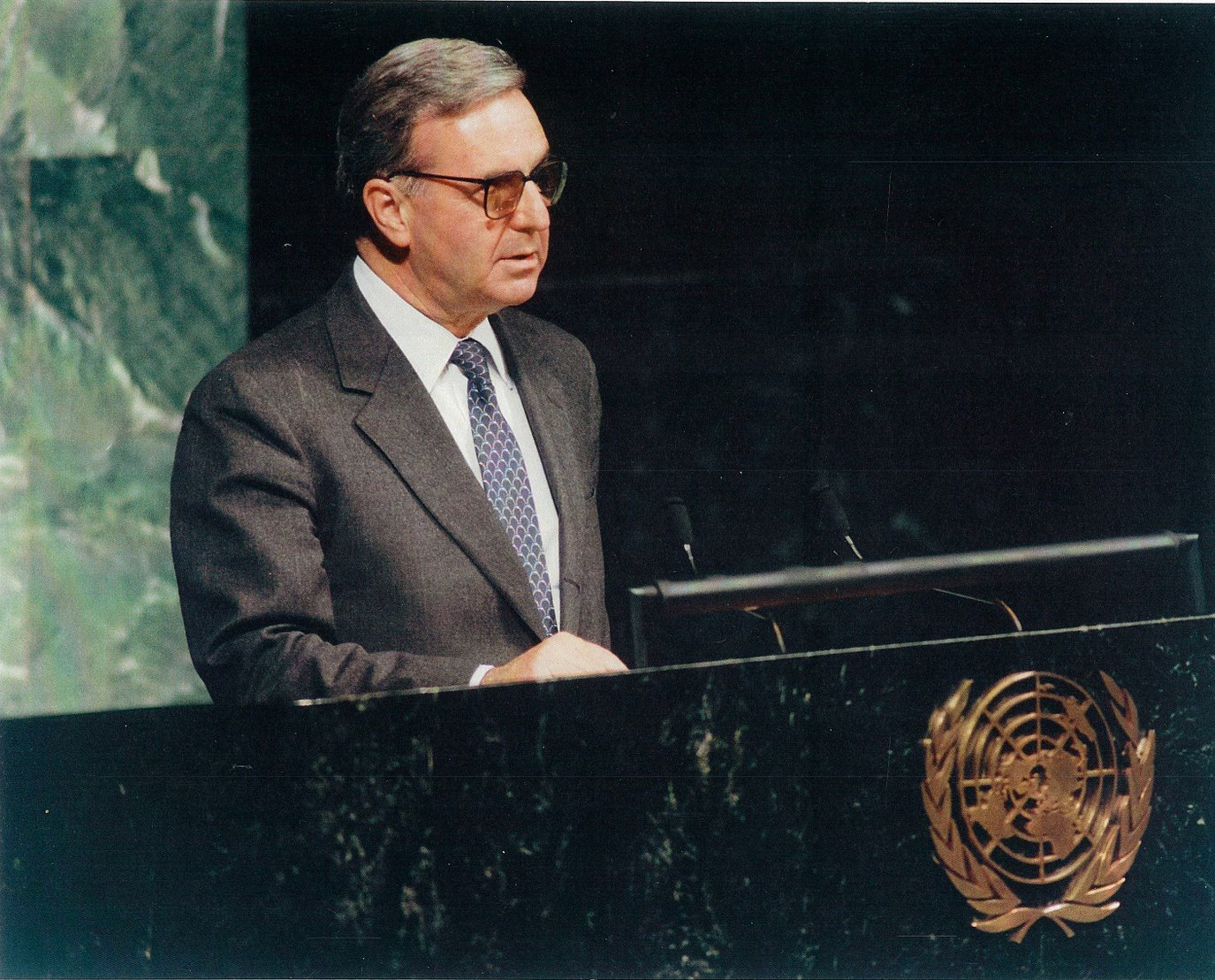
In December 1982, ambassador Andrew Jacovides signed the United Nations Convention on the Law of the Sea (Unclos) for the Republic of Cyprus (RoC) at Montego Bay, Jamaica. It crowned years of negotiations in which Cyprus played an active, and at times, leading role.
I served under him on the Cyprus delegation from 1976 to 1981. His command of international law and his negotiating skills were exceptional. A gentleman and a real scholar.
At 22, I was still in my diplomatic pampers. Working at UN headquarters in New York, I learnt through osmosis from ambassadors Zenon Rossides, Andrew Jacovides, consul general Charalambos Christoforou and diplomats from around the world. Above all, by watching diplomacy in action. Jacovides challenged me to think, to question, to look beyond the obvious.
I came to understand that diplomacy goes beyond facts and protocol. It requires understanding people and national interests, the complexities of negotiation, what is said and left unsaid. Above all, sound judgement. What an education! Lessons that have stayed with me ever since.
Unclos was a remarkable feat of multilateral diplomacy, turning competing national interests into a common legal framework. It established rules to constrain arbitrary power and bring greater predictability to international relations.
Cyprus and Unclos
Three issues mattered particularly to Cyprus: the regime of islands, maritime delimitation and pacific settlement of disputes.
Article 121 recognises that islands have the same maritime entitlements as other land territory, including an Exclusive Economic Zone (EEZ) and continental shelf. The exception concerns rocks unable to sustain human habitation or economic life of their own.
Where maritime claims overlap, delimitation generally starts with the median line, adjusted where necessary to achieve an equitable solution. Unclos also provides for peaceful settlement of disputes, including binding procedures subject to exceptions.
Cyprus concluded EEZ delimitation agreements with Egypt, Israel and Lebanon. All three are now in force. Cyprus did not merely assert its rights. It exercised them.
Turkish military occupation has a maritime dimension, of course. We speak of the 36.2 per cent of RoC territory under Ankara’s de facto control since 1974. But approximately 57 per cent of its coastline is also occupied.
The implications extend beyond the coastline to the territorial sea, contiguous zone, EEZ and continental shelf, with consequences for maritime rights, resources and security.
Time does not turn occupation into sovereignty.
Turkey neither signed nor ratified Unclos. Year after year, it votes against the annual omnibus UN General Assembly resolution on Oceans and the Law of the Sea. On December 9, 2025, 166 states voted in favour. Turkey alone opposed it. A minority of one.
The US and Israel are also outside Unclos, yet recognise important rules of the Law of the Sea. The 2010 Cyprus-Israel EEZ agreement illustrates this.
Many Unclos principles, including those governing islands and maritime delimitation, are customary international law, binding all states. Peaceful settlement of disputes is likewise enshrined in the UN Charter and Unclos.
Turkey may remain outside Unclos. It cannot place itself outside international law.
The Turkey-Libya memorandum
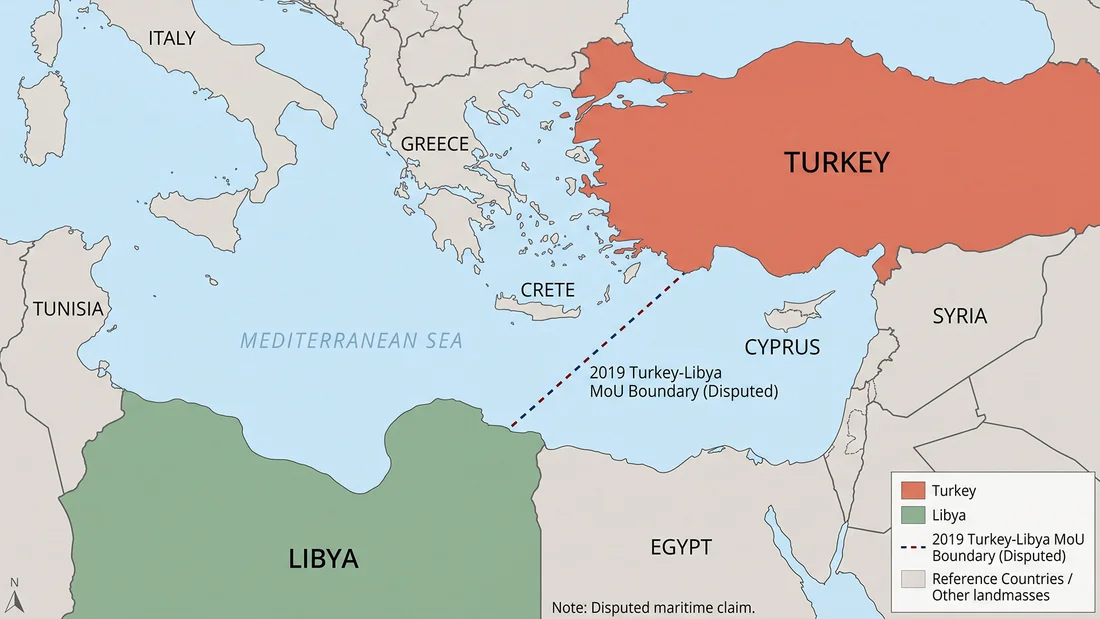
In November 2019, Turkey signed a maritime delimitation memorandum with the Tripoli-based Libyan government, disregarding third-state rights.
On October 20, 2026, Libya’s eastern-based House of Representatives approved it, reversing its earlier rejection.
But creating a fait accompli at sea does not confer legal entitlement. This is the danger of unchecked auto-interpretation: states treating their own legal claims as conclusive, disregarding the rights of others and independent scrutiny.
No state can be judge, jury and executioner in its own cause.
On October 26, Greece, Cyprus, Egypt, Bahrain, the UAE and the EU issued a joint statement at the UN, declaring that the Turkey-Libya memorandum was “null and void”, contrary to international law and incapable of producing legal consequences for third states.
Asked about maritime agreements in Cairo, UN Secretary-General António Guterres stressed that violations of international law were unacceptable and that UNCLOS must be respected.
In 2019, the US called the memorandum “unhelpful and provocative”, a criticism it repeated on October 25 while continuing to call for Greek-Turkish dialogue.
The Great Sea Interconnector (GSI)
The proposed electricity cable linking Greece and Cyprus, with a planned extension to Israel, would help end Cyprus’ electricity-grid isolation and strengthen European connectivity.
Turkey claims jurisdiction over parts of the route. Having demanded authorisation, it now speaks of prior written notification and coordination. Turkish naval pressure has already complicated surveys.
An EEZ is not territorial sea. Coastal states have defined rights, not unrestricted sovereignty. Article 79 of Unclos protects the laying of submarine cables on the continental shelf; consent to the course is required for pipelines, not cables. Preliminary surveys may raise separate legal questions.
A contested maritime claim does not itself confer a legal veto over a cable. That is where law meets power. Gunboat diplomacy can delay surveys, raise costs and deter investors, creating a de facto veto without legal legitimacy.
Turkey has also proposed supplying Cyprus with electricity, gas and water. Why not? Under present conditions, that would be unwise. Costs matter. So does dependence. More fundamental is Turkey’s persistent refusal to abide by commonly accepted rules of international law. A supplier can turn off the tap. European energy integration offers greater security and freedom of action.
GSI has financial, regulatory and technical difficulties. They must be addressed, but cannot excuse coercion or obscure the EU’s stake in connecting two member states.
Jacovides knew that rules do not enforce themselves. He understood the limits of diplomacy without power. Yet a rules-based international order serves all states, powerful and weak alike. Even great powers need predictability and stability. Power alone cannot guarantee either.
Cyprus helped shape the legal order governing the seas. Contested claims, backed by threats of force, must not become accepted limits on its rights.
The Turkey-Libya memorandum and GSI are two tests. There will be others.
Perhaps the best tribute to ambassador Andrew J Jacovides is not merely to remember what he helped achieve, but to uphold the principles he defended.
Dedicated to Ambassador Andrew J. Jacovides, whose expertise, vision and diplomacy shaped the maritime policy of the Republic of Cyprus


Click here to change your cookie preferences