
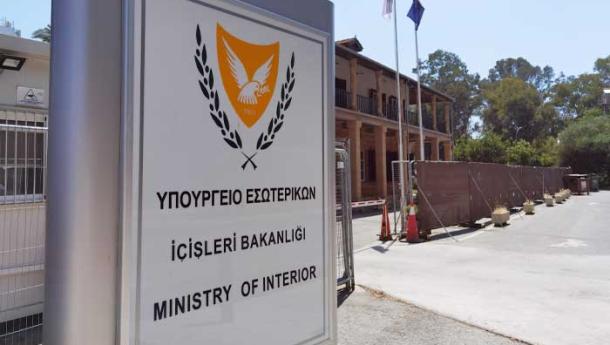
The interior ministry on Thursday provided a series of clarifications on two new schemes designed to boost affordable housing, announced earlier this week.
The first scheme concerns the allocation of state-owned plots to families based on income criteria, with the dual objective of supporting households struggling to acquire a home while strengthening local communities.
The second will allow owners of existing homes, subject to specific conditions, to construct an additional floor for children or grandchildren, even where the existing building has exhausted its permitted building density.
Regarding the first scheme, the ministry said those eligible are Cypriot nationals who comprise a household. A household is defined as a couple with children, a couple without children, or single-parent families.
Applicants must be under the age of 45 at the time of applying. They must be permanently residing within the administrative boundaries of a community in which the available land plots are located, or residing at a distance of less than 15km from the boundaries of the community.
Another condition is that applicants must not have registered in their name, or in the name of their parents, any land plot or parcel in a designated building zone. In addition, to be eligible, applicants and/or their parents must not have sold any immovable property three years or less prior to applying for the scheme.
As far as means-testing goes, a family’s gross annual income must not exceed €45,000 for couples or single-parent families; €50,000 for a family of three persons; €55,000 for a family of four persons; and €65,000 for a family of five persons or more.
The selection process will give priority consideration depending on the applicant’s place of residence, then to native-born Cypriots, displaced persons and repatriated persons.
Wherever applicants score the same in terms of priority based on where they live, other factors will kick in, giving priority to large families (with four or more children).
Plots on state-owned land will be made available at 25 per cent of the market value. This will not include expenses for the plot subdivision – infrastructure works such as roads, or connecting to the water and electricity grids.
In addition, the plot subdivisions made available will have an area of between 325 and 371 square metres. Successful applicants may build a house on it, but its usable area may be no greater than 150 square metres.
Land plots will be made available in rural communities.
The scheme stipulates that a house must be built within three years of the successful applicant signing the agreement. Local district administrations may extend this period by one year, wherever deemed justified. The objective, said the ministry, is for these plots to be used genuinely for housing needs, to avoid committing state land that’s left unused.
Also, successful applicants may not transfer to any other person the land plot until such time as the house on it has been finished. Once completed, the house may be sold only after five years have passed.
The ministry said that approximately 500 plot subdivisions would be made available.
Regarding the other scheme – expanding an existing home’s building density with no penalty – the ministry said this will be valid until the end of 2027. As such, authorities will consider any application submitted by December 31, 2027.
The buildable area of the extra floor, or extension to a house, will be up to 150 square metres. By way of exception, for land plots or parcels with a net area of at least 1,000 square metres, the buildable area may reach 180 square metres.
The ministry clarified that once a planning permit is obtained, an application for a building permit must be filed within one year at the most. Otherwise, the planning permit will be invalidated.
In addition, the planning permit will include a condition that the title deed is amended to restrict the sale or transfer of the expanded house. The expanded house may not be sold or transferred for a period of ten years, except in inheritance cases.
The government described the two new schemes as part of an ongoing drive to increase the housing stock and give people more opportunities to secure a home.





Click here to change your cookie preferences