
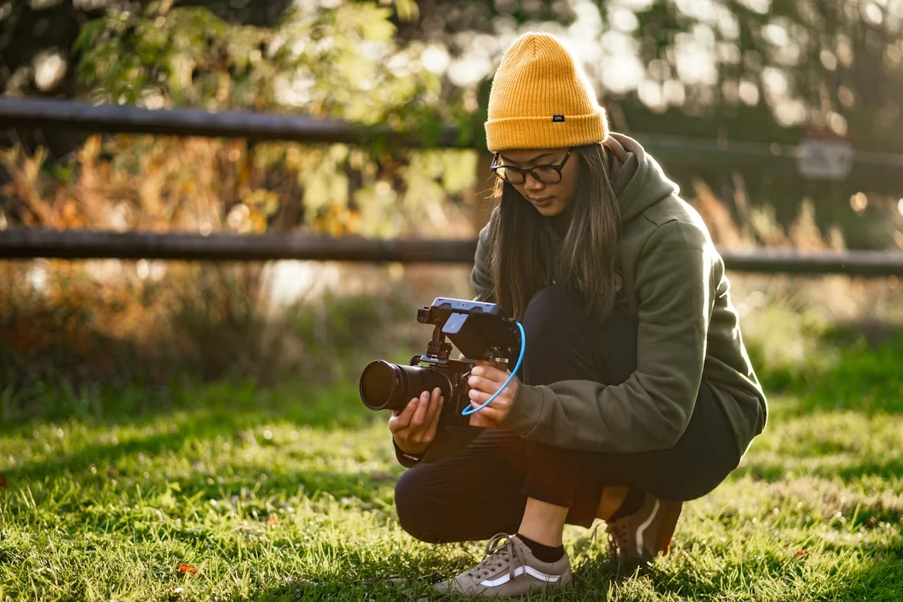
A portrait can look noticeably different from the face you saw in the mirror only minutes earlier. That does not always mean the camera “got it wrong.” Lens distance changes perspective, phone processing can sharpen fine detail, HDR can redistribute contrast, and directional light can make one part of the face appear more prominent than it did in person.
This is where a face retouching app can be useful: not to redesign the subject, but to soften specific effects created by the way the image was captured or processed.
The camera can exaggerate what the eye barely noticed
Close shooting distance changes apparent proportions because features nearest the lens become more prominent while those farther away recede. Phone cameras can add another layer through sharpening, local contrast, portrait-mode separation, or automatic exposure adjustments.
Those changes are easy to misread as facial flaws. A sharper patch of skin, a deeper shadow beside the nose, or an unusually pronounced contour may simply come from the image-making process rather than from how the person normally looks.
Computational photography can complicate the comparison further. Modern phones may combine several exposures, recover shadows, brighten faces, or apply local sharpening before you ever open an editing tool. Two frames taken seconds apart can therefore render the same face differently even under nearly identical conditions.
Start by identifying the source of the problem
Before editing, it helps to separate three different causes:
-perspective created by camera distance and angle;
-tonal changes introduced by lighting and exposure;
-processing effects such as sharpening, HDR, or local contrast.
That distinction keeps the correction tied to the photograph. If the issue comes from harsh local contrast, there is little reason to alter facial shape. If perspective is the cause, smoothing the skin will not solve it.
A useful comparison is another frame from the same sequence. If a shadow, contour, or patch of texture changes noticeably while the person and setting remain the same, the camera or light is probably contributing more than anatomy.
Some capture problems cannot be rebuilt convincingly
Editing can rebalance an image, but it cannot recover detail that was never recorded. Missed focus on the eyes, clipped highlights with no remaining skin tone, or extreme perspective from a camera held too close may leave too little reliable information to reconstruct naturally.
There is also a difference between correcting a rendering problem and inventing information. A slightly harsh contour may be softened; a completely blurred eye cannot be restored with the same confidence because the original detail is missing.
In those cases, another frame from the same sequence may be the better choice. Retouching is most effective when it corrects smaller photographic distortions while preserving the expression, proportions, and character that made the portrait worth keeping in the first place.
DISCLAIMER – “Views Expressed Disclaimer – The information provided in this content is intended for general informational purposes only and should not be considered financial, investment, legal, tax, or health advice, nor relied upon as a substitute for professional guidance tailored to your personal circumstances. The opinions expressed are solely those of the author and do not necessarily represent the views of any other individual, organization, agency, employer, or company, including NEO CYMED PUBLISHING LIMITED (operating under the name Cyprus-Mail).


Click here to change your cookie preferences