
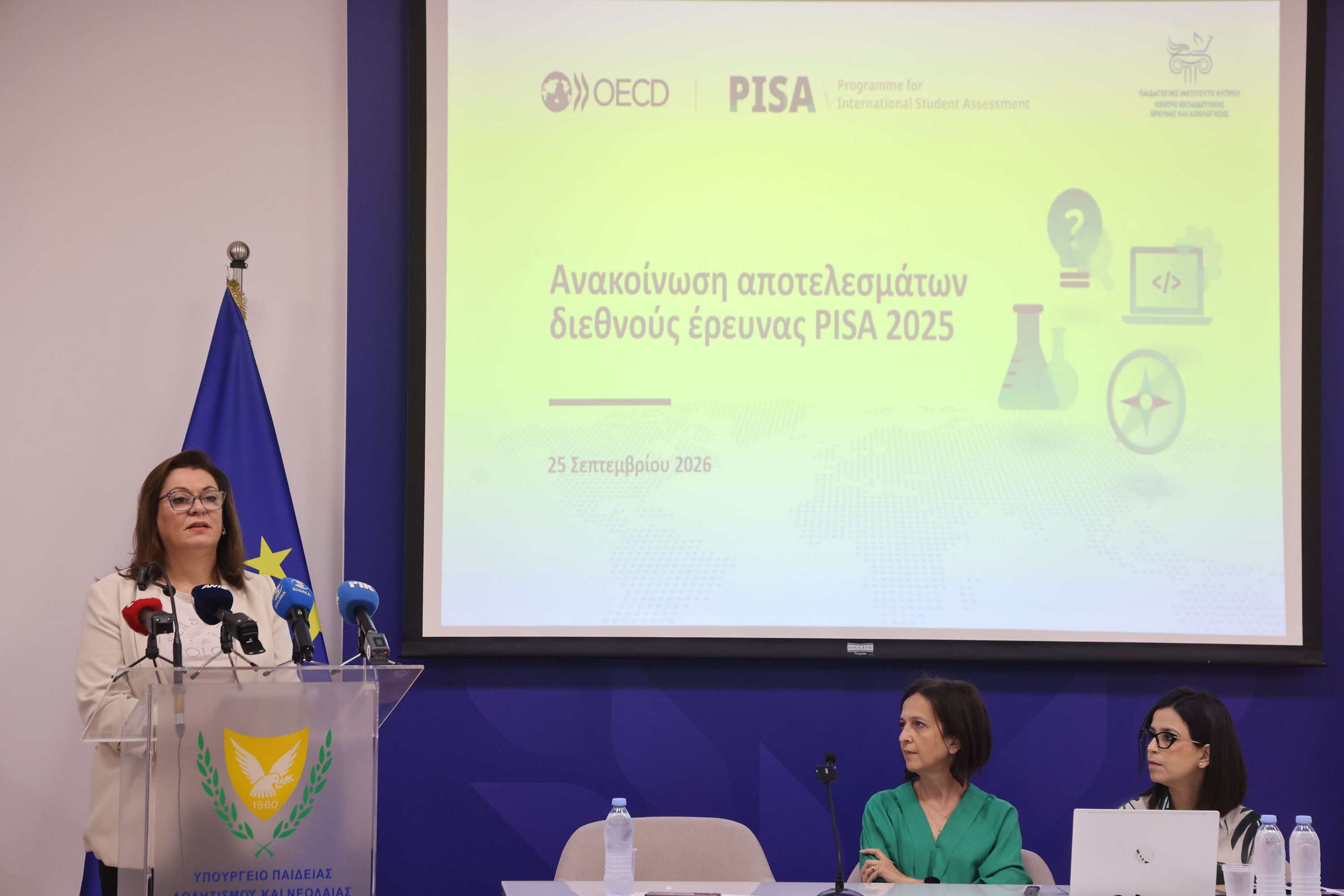
Students with a migrant background scored higher than their Cypriot peers across reading, mathematics and science in the latest PISA survey, according to results presented by the education ministry on Friday.
In reading comprehension, first generation migrant students from higher socioeconomic backgrounds scored 486 points, against 424 for second generation students and 415 for Cypriot students.
Among students from poorer backgrounds, first generation migrant students scored 369 points, ahead of Cypriot students and second-generation migrant students, who scored 367 points each.
A similar pattern held in mathematics and science, with first generation migrant students outperforming both Cypriot students and second-generation migrant students at every socioeconomic level.
Educational research centre head, Yiasemina Karagiorgi, said the findings challenged a common assumption in public debate.
“Over time this impression prevails that our results are excellent and that immigrants are spoiling them when in fact it is quite the opposite,” she said.
The survey also found that 24.9 per cent of Cyprus’ students answered exercises in under ten seconds, the highest proportion recorded among participating countries.
Research centre officer Modestina Modestou said the figure suggested a large share of students had not engaged seriously with the assessment, pointing that a high proportion of children had also left questions unanswered.
She said 43.5 per cent of Cyprus’ students scored below level two in all three subjects, well short of the European Commission’s 2030 target of 15 per cent, and above the EU average of 21.3 per cent.
Just 0.7 per cent reached the highest proficiency level, level five, across all three subjects.
Cyprus’ overall averages stood at 411 in science, 412 in mathematics and 379 in reading, below both the EU averages of 481, 463 and 459 respectively, and the OECD averages of 482, 463 and 461.
Compared with the 2022 results, Cyprus’ science and reading scores remained stable, while mathematics fell by six points.
Both the EU and OECD recorded steeper declines over the same period.
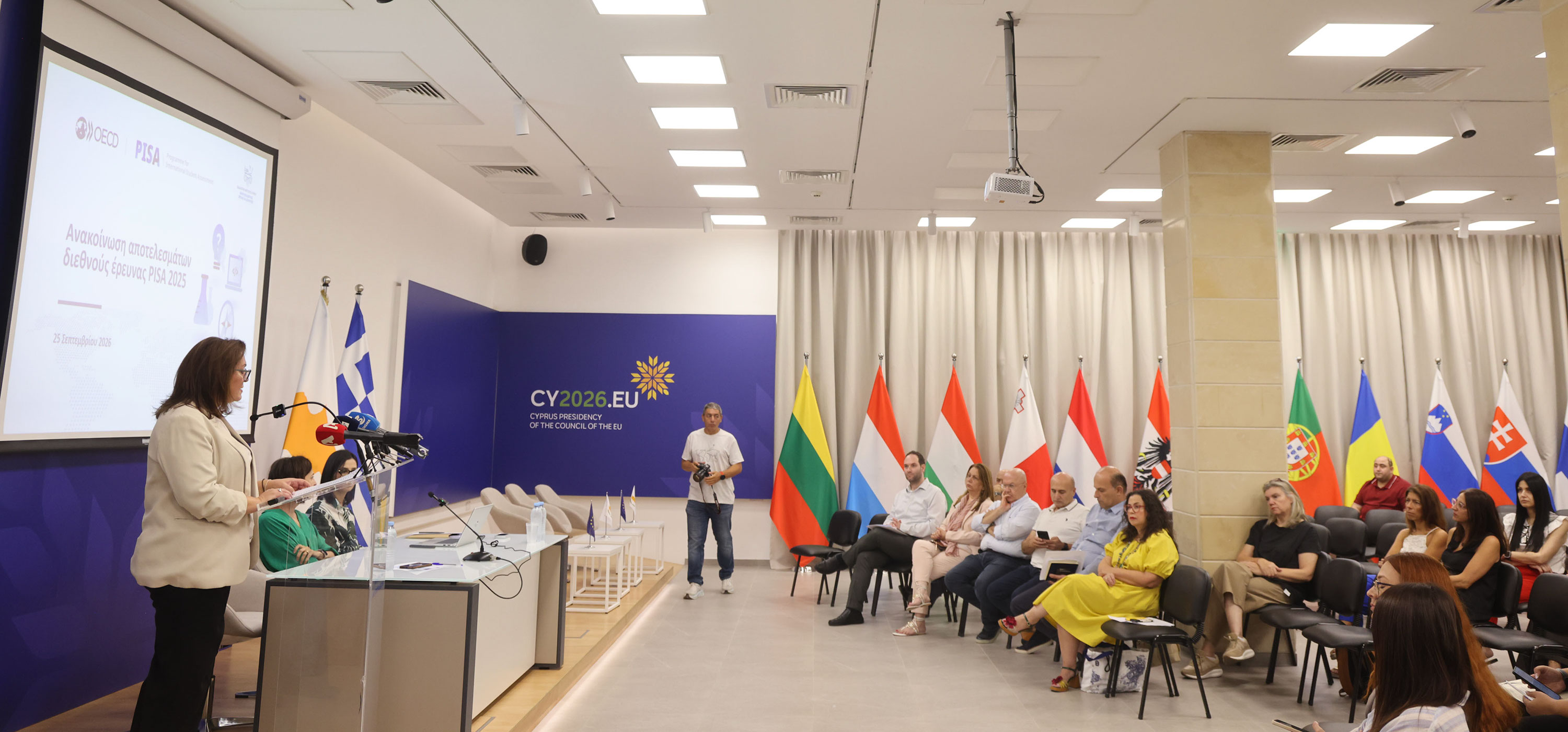
Education Minister Athena Michaelidou found consolation in pointing out the gap in performance linked to socioeconomic background was narrower in Cyprus than in the EU as a whole.
“You come to school with specific challenges from home, in terms of your socioeconomic background, but that does not prevent you from being a good student,” she said.
Michaelidou said reforms already under way were aimed at reducing reliance on memorisation and strengthening critical thinking and problem solving.
“No matter what we do, we may have the perfect curricula, excellent tools, perfect classrooms, air conditioning, everything, if the teacher has no soul, no zeal, no impact, then we lose the game,” she said.
On the high rate of rushed answers, Michaelidou said Cypriot students had less experience with electronic assessments than their counterparts abroad, adding that the ministry was preparing students ahead of the next PISA cycle in 2028 to take the process more seriously.



Click here to change your cookie preferences