
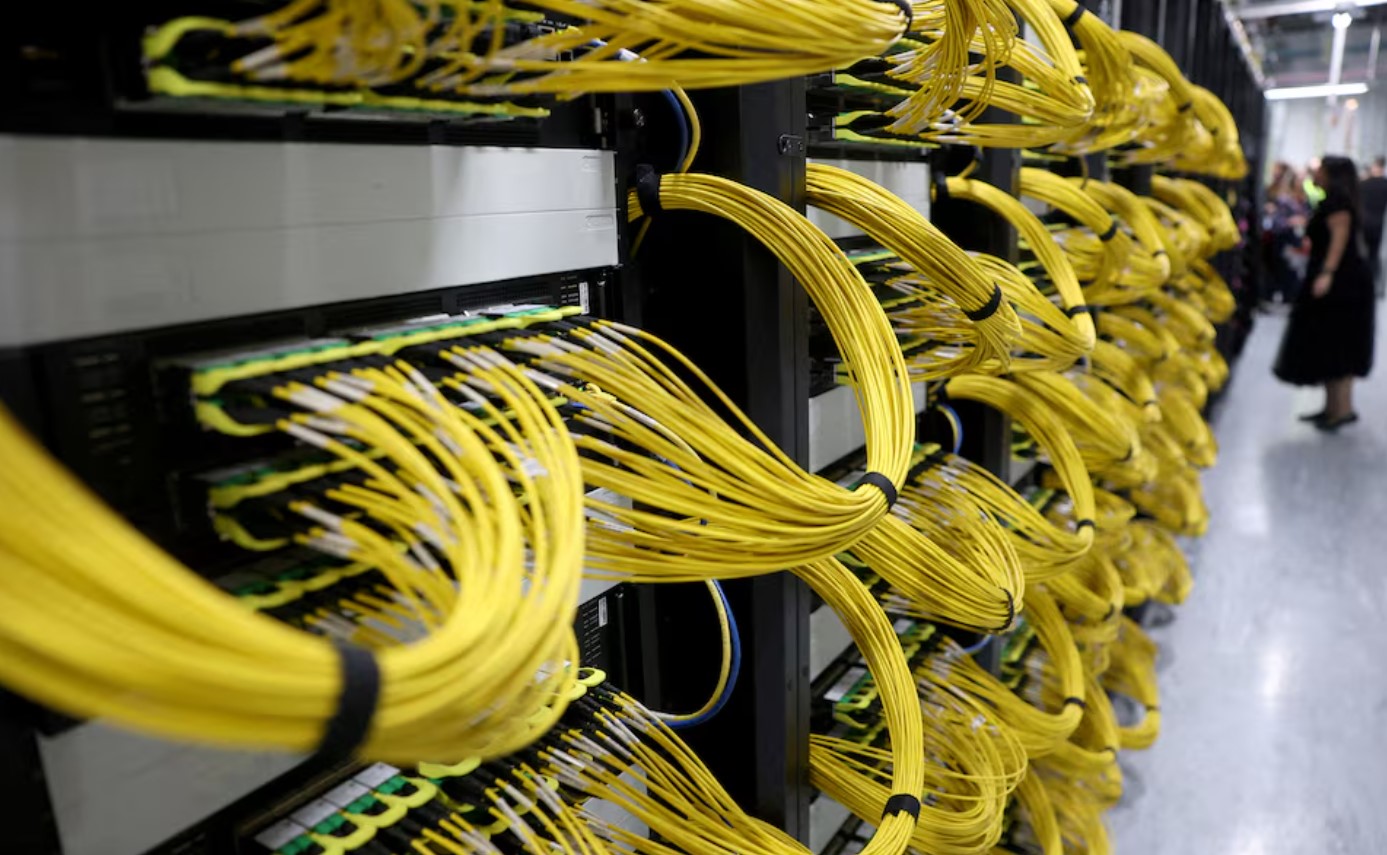
The European Commission proposed rules this week requiring data centres in Europe to disclose how efficiently they use energy and water, as concerns grow over their consumption of resources.
The EU wants to triple its data centre capacity over the next seven years, to support the rapid development of artificial intelligence and attempt to cut reliance on US Big Tech.
That risks straining Europe’s energy grids, depleting water resources and increasing CO2 emissions, if the huge facilities’ use of energy and water is not controlled.
To attempt to incentivise companies to build more energy- and water-efficient data centres, the Commission has proposed a rating scheme for facilities, to make this information more transparent.
The scheme would not impose limits on their energy and water use or require data centres to disclose their total power use, but would require operators of facilities with a capacity of 500 kW to disclose their energy and water efficiency using an EU-designed labelling system.
Data centres would also have to disclose information on the relationship between their water use and levels of water stress in the local area, and whether they are able to offer services to the local energy system, such as by re-using their waste heat.
The new label could serve as a precursor for mandatory minimum standards on data centres’ water and energy efficiency in Europe, which the EU is developing.
Data centres currently account for around 2.5 per cent of EU electricity consumption, the EU said in a report in June.
That share is expected to jump, as EU data centre capacity is expected to more than double by 2030, to 28 gigawatts compared with 12 GW last year.
EU countries and lawmakers have two months to object to the rules, or they will enter into force.




Click here to change your cookie preferences