
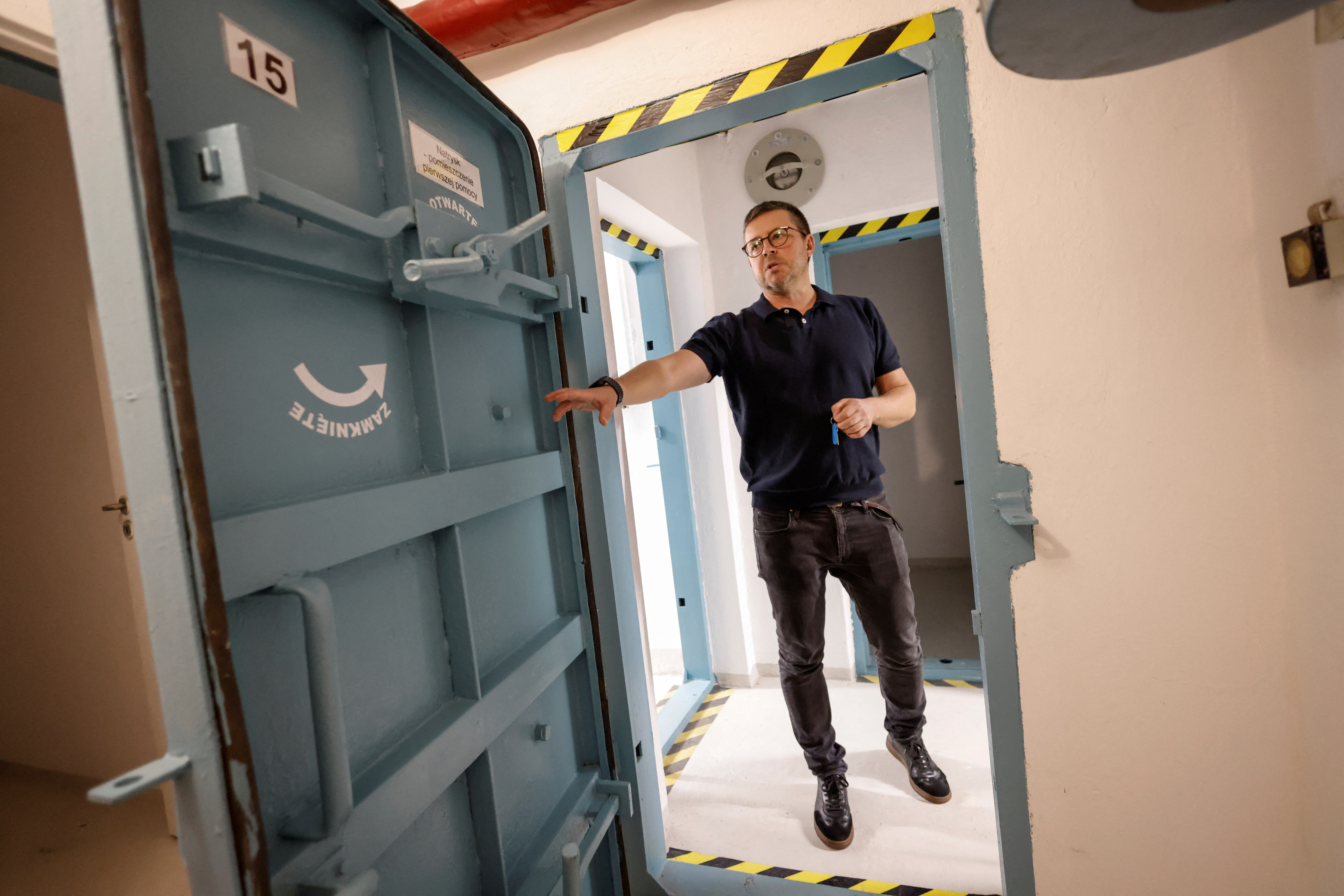
The Polish city of Lublin has revived a Cold War-era air raid shelter as Russia steps up attacks in Ukraine, with one symbolic change reflecting a shift in perceived threats: its emergency exit now faces west, not east.
Poland, once part of the Soviet bloc and now a member of NATO, is on heightened alert after several Russian missile and drone incursions into its airspace. Residents of eastern regions have been issued warnings to seek shelter during Russian airstrikes on neighbouring western Ukraine.
The alerts have become an increasingly familiar part of life near the border. Last week, a regional television station interrupted a live broadcast for about 20 minutes after journalists evacuated to a shelter during an air raid warning.
One of the shelters available during recent alerts is a modernised facility beneath the premises of municipal bus operator MPK in Lublin. Built in the mid-1980s at the height of Cold War tensions, it was upgraded to meet current standards.
“It provides shelter for 200 people for up to 72 hours, ensuring access to air, water and electricity independent of external power grids,” Kamil Rzad, a civil defence inspector at MPK Lublin, told Reuters.
POLAND REPEATEDLY SCRAMBLES AIRCRAFT
The upgrades reflect growing efforts to bolster civil defence preparedness during Russia’s war in Ukraine. Yet many residents remain unsure where they would seek refuge in the event of an attack.
The number of shelters is estimated by the government at around 2,000, enough for about 300,000 people. Poland also has over 86,000 places of refuge offering a lower level of protection such as basements, underground garages or subway stations, and catering for around 23 million people.
“I actually doubt we even have a shelter. I’d probably run to the basement or my own bathroom,” said 77-year-old Elzbieta Woznica.
“For many years I was accustomed to peace and quiet. I couldn’t imagine something like this could happen.”
Prime Minister Donald Tusk this week said Russia’s military campaign in Ukraine was moving ever closer to Ukraine’s border with Poland.
“We are repeatedly forced to scramble our aircraft, night after night and day after day, because Russian attacks near the border have become a constant occurrence,” Tusk told a cabinet meeting.
“We remain fully focused on ensuring that nothing untoward happens on the Polish side.”




Click here to change your cookie preferences