
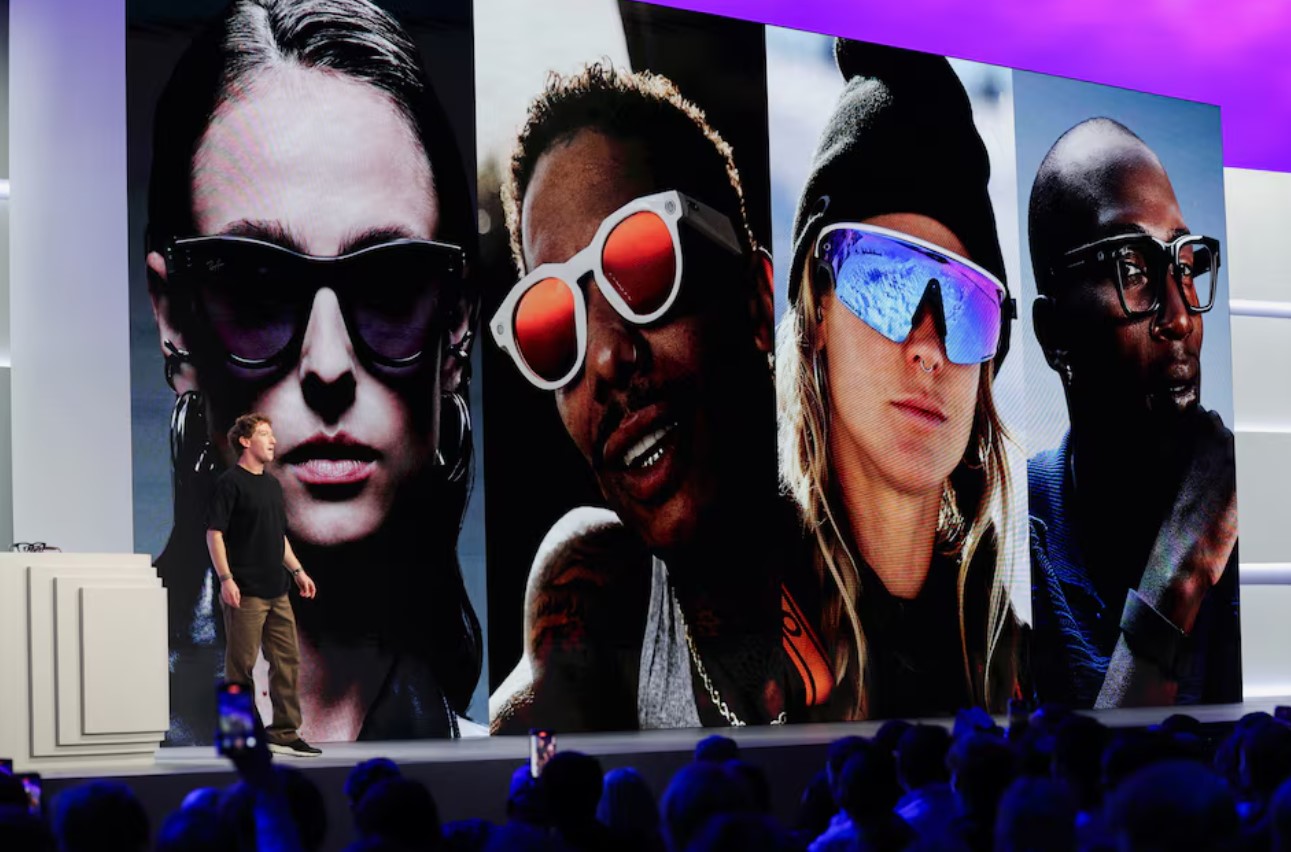
Global AI glasses shipments reached 4.2 million units in the first half of 2026, marking a 127 per cent year-on-year increase according to research firm Omdia.
The market remains an emerging category with growth stabilising as it expands from a very low base, whilst facing a complex environment driven by intensifying competition across frame designs and mounting privacy scrutiny.
“Growth in the AI glasses market in 1H26 was driven by Meta’s continued market momentum and a wave of new market entrants from China,” Omdia Senior Analyst Qiran Ju said.
“Just as critically, vendors have made the value proposition immediately clear to buyers by focusing on hands-free photo and video capture, open-ear audio, and AI assistance within everyday frames,” Ju added.
Meta retained its dominant position by shipping 3.4 million units to capture an 81.3 per cent market share.
Smaller competitors contributed to overall growth through alternative frame designs, with Even Realities climbing from fifth place in late 2025 to second in early 2026 by shipping 102,000 units of its G2 series across North America and Western Europe for a 2.4 per cent market share.
“Even Realities takes a different frame design from most AI glasses,” Ju stated.
“By removing both the camera and speakers, and focusing instead on a slimmer design, a small monochrome display and productivity features such as real-time transcription, it shows how vendors are exploring different ways to make AI glasses useful in everyday life,” Ju added.
The United States remains the largest market, but mainland China serves as a pivotal supply chain hub and testbed, where shipments surged 306 per cent year-on-year.
The Chinese market remains highly fragmented, with Alibaba, INMO, and Xiaomi collectively accounting for just 46.1 per cent of shipments.
“What we are seeing in China provides early but definitive signs that there is no single, one-size-fits-all solution in the AI glasses space,” Omdia Research Director Jason Low said.
“As the category continues to diversify across different form factors and feature sets, this will inevitably become the defining trend for the global market,” Low added.
Low noted that privacy concerns and user preferences drive this fragmentation.
“As scrutiny of camera-equipped AI glasses intensifies, tighter privacy settings and clearer messaging will not be enough,” Low stated.
“Companies must define exactly what always-on cameras capture, show users how that content is used, and guarantee it never reaches third parties,” he concluded.





Click here to change your cookie preferences