
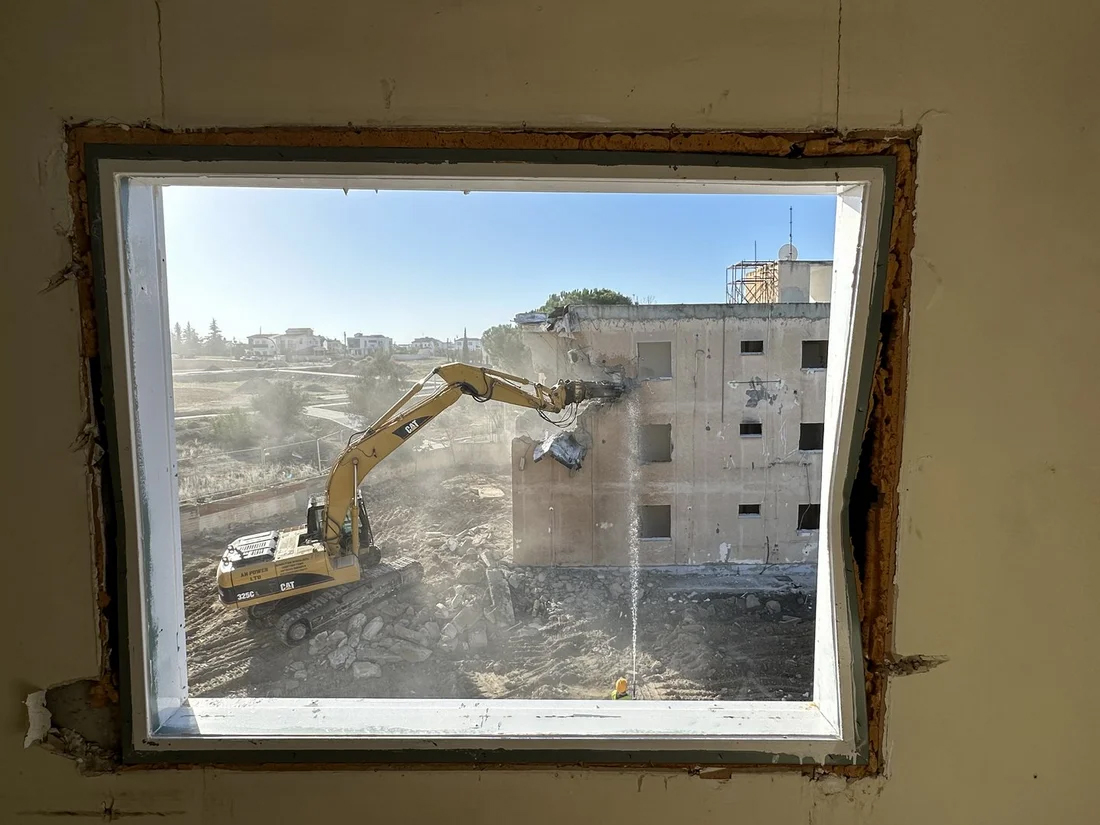
The Ktizo scheme, affording refugees the option to move into better and safer housing, is proceeding at a snail’s pace, MPs said on Tuesday.
In April 2023, amid much fanfare the government launched Ktizo, a €130 million long-term project to provide “respectable living conditions” on refugee estates. The scheme involves giving incentives to tenants to relocate to new housing.
There were 358 refugee apartment buildings across the government-controlled areas. Living conditions in some of them were described as dangerous, with refugees fearing the apartments were on the brink of collapse.
Of the 358 buildings, 245 were deemed to be in satisfactory condition and 70 had problems requiring upkeep. The remaining 43 had severe structural issues and their renovation was deemed unsustainable and financially unviable.
Tenants of these 43 unsafe buildings, opting out of being relocated to new housing, would receive a one-off grant.
For those beneficiaries choosing to participate and move into new government-subsidised housing, they would contribute out of pocket €10,000 for a single-bedroom apartment, €20,000 for a two-bedroom apartment, or €25,000 for a three-bedroom apartment.
The co-pay amounts to approximately 10 per cent of the value of the new apartment.
But on Tuesday, the House refugees committee noted with dissatisfaction that only one new apartment building has been built.
Committee chair Nikos Kettiros (Akel) said one more building is expected to be delivered in November.
This is a far cry from the 19 new buildings planned, replacing the 43 slated for demolition.
“If it takes some three years to deliver just two buildings, you can imagine how many years it will take to get to 19,” Kettiros told media.
Another issue is the co-pay, which Kettiros said many refugee families simply cannot afford.
It was previously suggested that the amount be subsidised via the Central Agency for the Equitable Distribution of Burdens.
Established in 1989, the agency is a public legal entity dealing with economic disparities resulting from the 1974 Turkish invasion. It supports displaced persons and those affected by the occupation through housing loans, interest rate subsidies, and financial aid, funded partly by a 0.4 per cent levy on property sales.
But as Kettiros noted, although the agency has deliberated on the matter of the co-pay, it has yet to take a decision.
“It’s a shame that people remain in limbo, getting stressed out because they don’t have the €20,000 or €25,000 to contribute so that the process can move forward.”
Asked whether the state could itself undertake the construction of the buildings, the MP said the committee is ready to discuss any changes to the scheme.
Next week the committee will summon the interior minister to continue discussing the issue.
Under the scheme as it stands, private contractors undertake demolition, site clearance, removal of hazardous debris, and construction of new buildings.
Bottlenecks have shown up due to delays in contractor execution, rising material costs, or minor disputes with specific tenants over contributions.



Click here to change your cookie preferences