
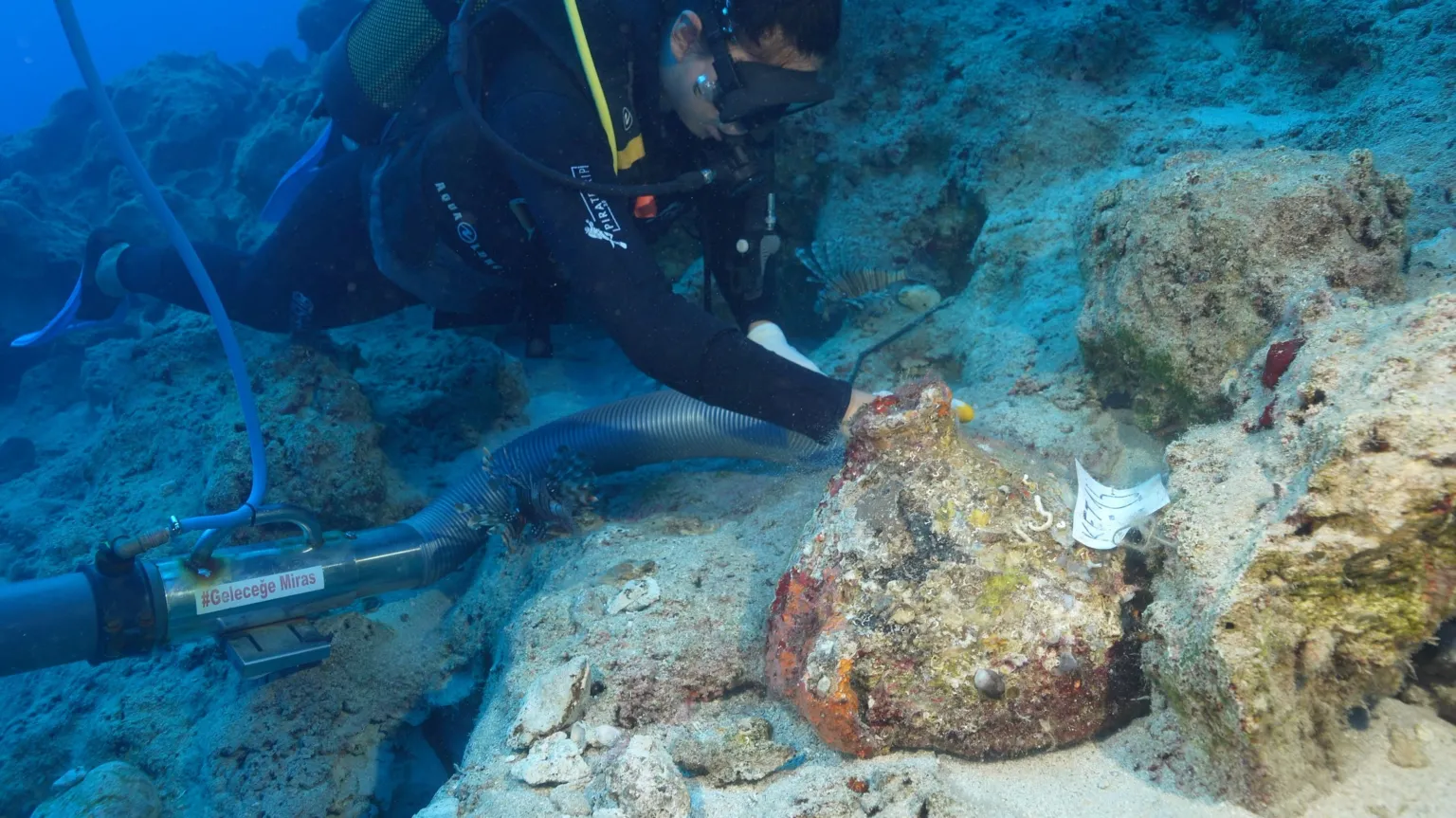
Archaeologists have discovered what they believe to be the world’s oldest shipwreck off the coast of Turkey, dating to the Early Bronze Age, at the time of the Great Pyramid of Giza’s construction.
The wreck lies some 30 metres below the surface near Kekova Island off the west coast of Anatolia, with more than 30 ceramic amphorae and three stone anchors recovered from the site.
Although the ship’s wooden structure has not survived, the pottery remains remarkably well preserved, with some vessels still containing traces of their original contents.
The expedition was led by Professor Hakan Oniz of Akdeniz University, who described the wreck as “a time capsule at the bottom of the sea”.
Archaeologist Karin Sowada of Macquarie University in Australia said some of the recovered amphorae contained substantial amounts of a glossy residue.
Researchers are investigating whether it could be olive oil, wine or tree resin, although the containers may have been reused over time.
The ship is believed to have sailed from the Levant, possibly carrying goods towards Troy, or the Minoan civilisation in Crete.
The recovered artefacts are being conserved and are expected to go on display at the new mediterranean underwater archaeological museum in Antalya when it opens in the coming months.
The previous oldest known shipwreck was found off Dokos, a Greek island, and dates to about 4,200 years ago.
The oldest known intact wreck, with its wooden structure preserved, was discovered in the Black Sea off Bulgaria and dates to about 2,400 years ago.





Click here to change your cookie preferences